
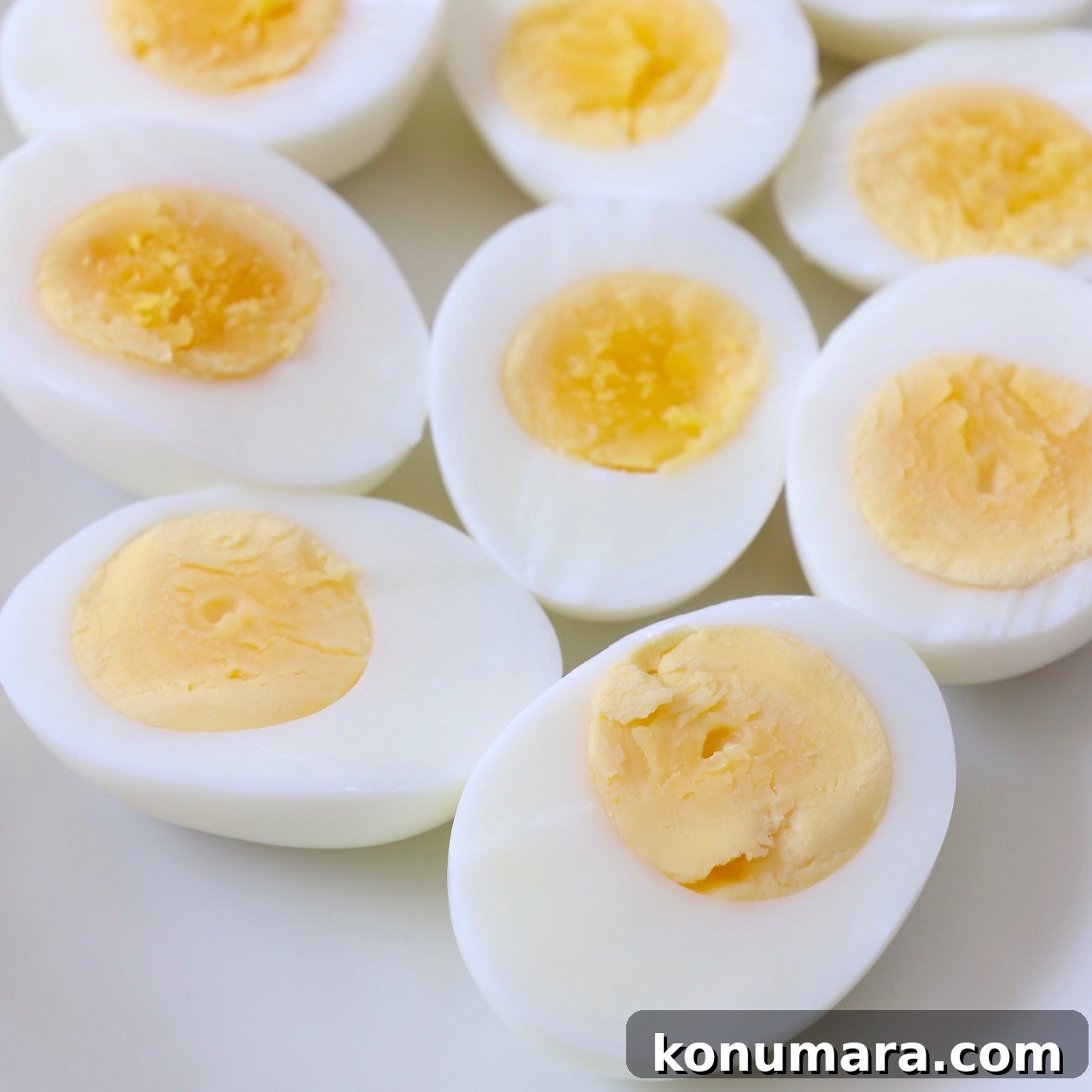
Learn how to hard boil eggs perfectly every time with these tested, reliable methods. This stovetop technique yields eggs with creamy yolks and tender whites — ideal for deviled eggs, egg salad, Cobb salad, sandwiches, or a healthy snack.
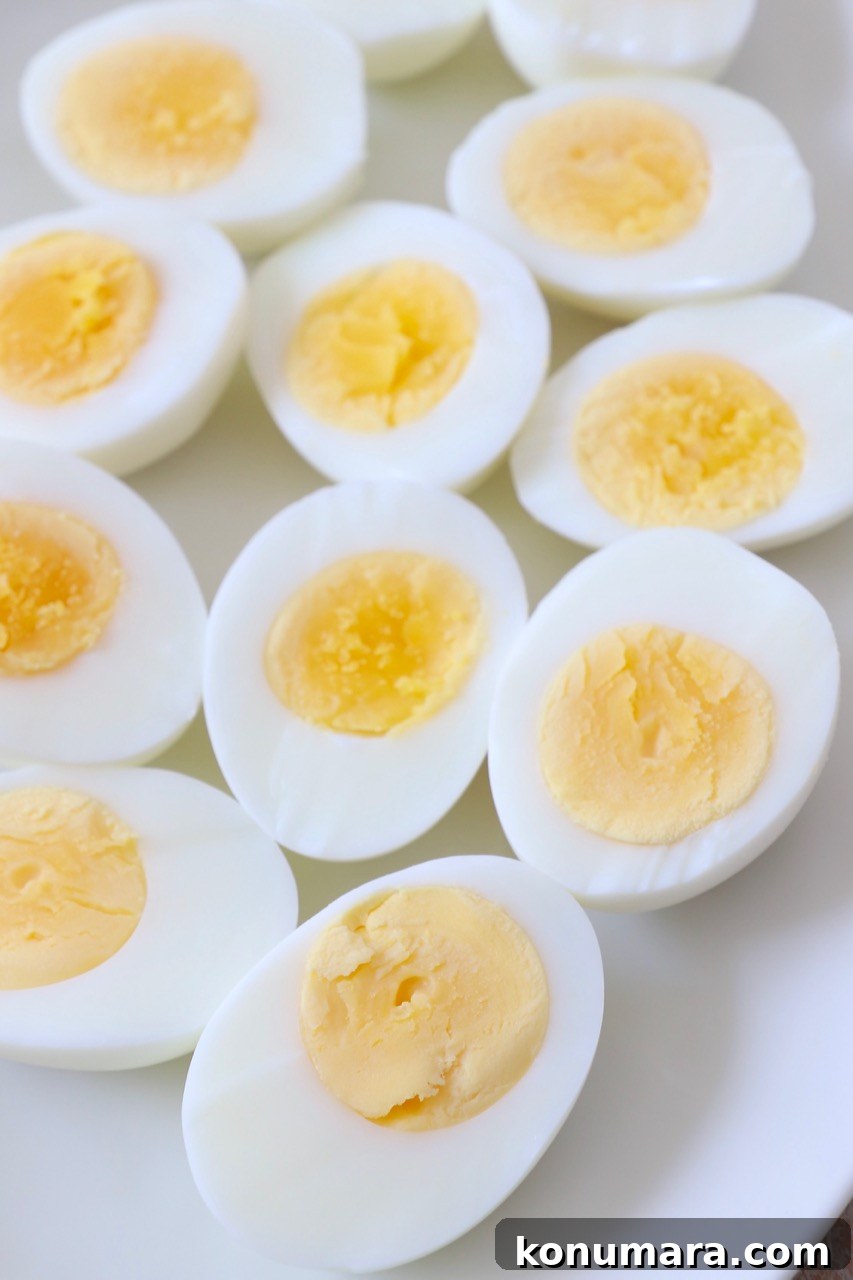

Get all my best tips for making hard boiled eggs!
When you have a carton of eggs, cooking a batch of hard boiled eggs is one of the easiest ways to add quick protein to your week. With the right technique you’ll get eggs that are easy to peel, without the green ring around the yolk, and with a creamy, perfectly cooked center.
Hard boiled eggs are versatile: slice them over salads, mash them into egg salad for sandwiches, halve them for deviled eggs, or enjoy them plain with a sprinkle of salt and pepper. The method below is straightforward and consistent.

Instructions
- Prepare the water. Add enough cold water to a large pot to cover the eggs by about an inch or two (roughly 6–8 cups for a standard pot). Place the pot on high heat and bring the water to a rolling boil.
- Add baking soda. Once the water reaches a rapid boil, stir in 1 teaspoon of baking soda. This helps the shells release from the whites for easier peeling.
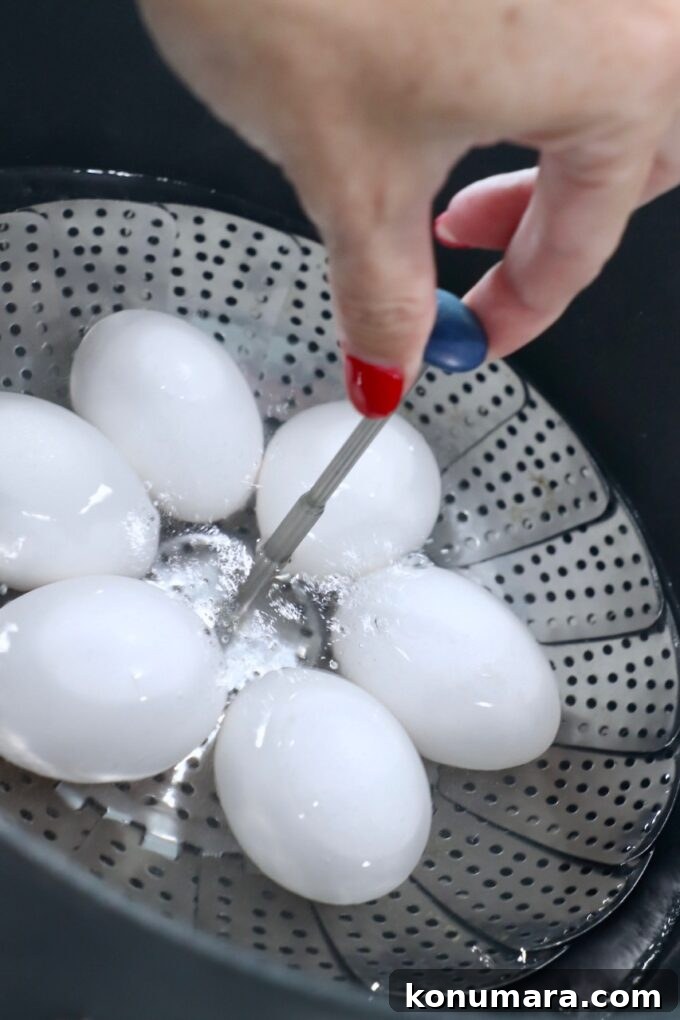
- Cook the eggs. Gently lower large eggs into the boiling water in a single layer using a slotted spoon, or place them in a steamer basket and lower the basket into the water. Cover the pot with a lid, reduce heat to medium to maintain a gentle simmer, and cook for 11 minutes for fully set yolks.
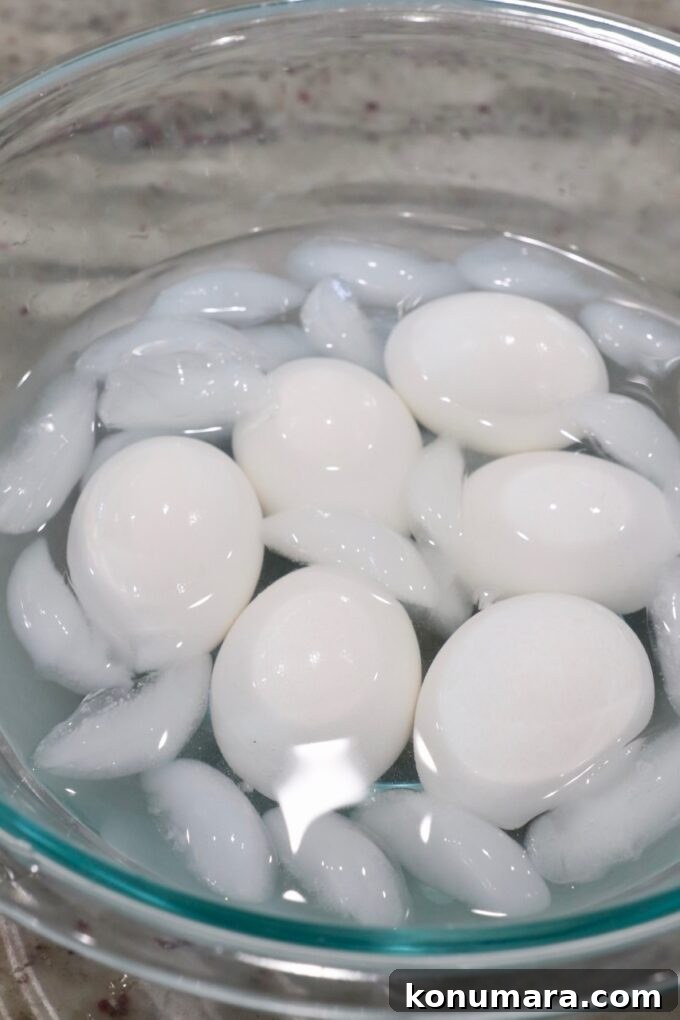
- Shock in ice water. Immediately transfer the eggs to a large bowl of ice water using a slotted spoon. Let them rest in the ice bath for 15 minutes to stop the cooking and make peeling easier.
- Store or serve. Peel the eggs to use right away, or refrigerate them unpeeled for up to one week. Peeled eggs are best eaten within 2–3 days.
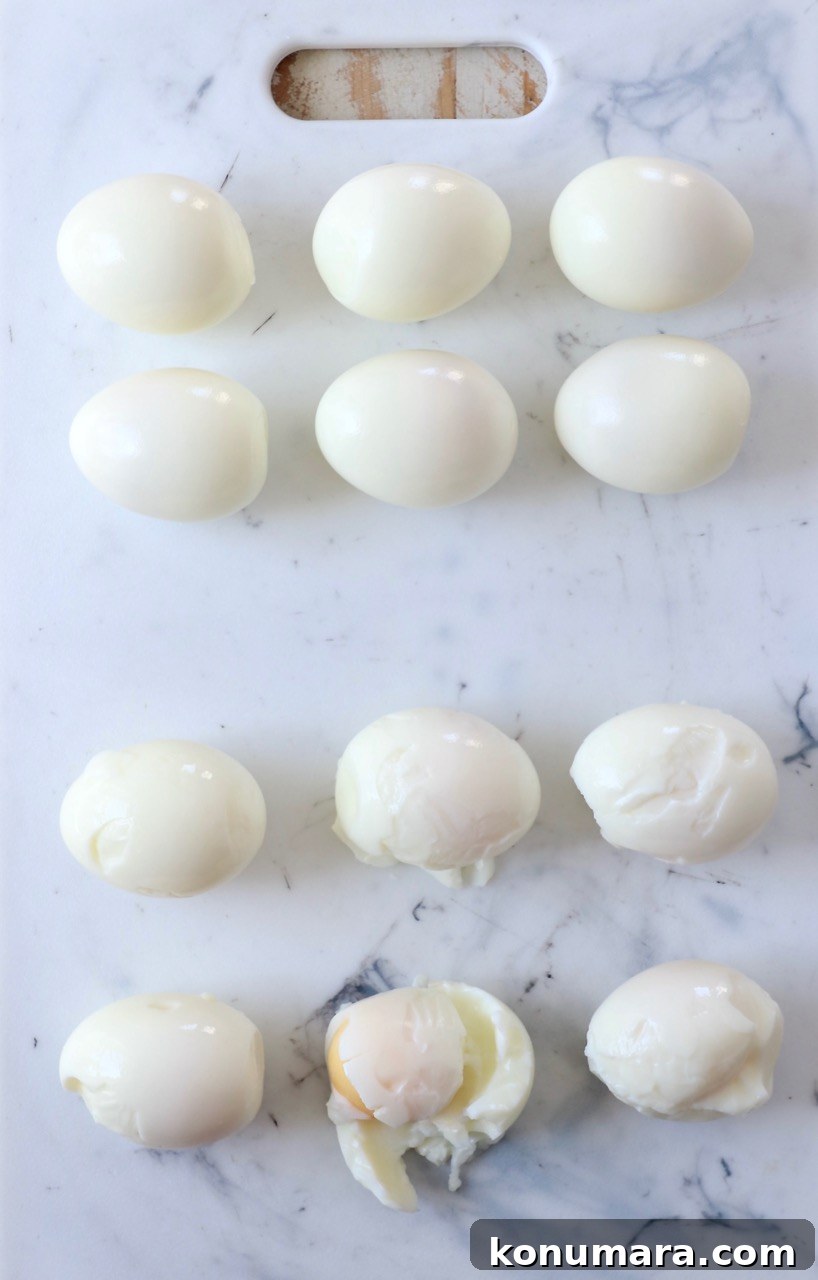
How to peel the eggs
Peeling can make or break your hard boiled egg experience. A small addition of baking soda to the boiling water raises the pH of the water slightly and helps separate the membrane from the shell. In practice this often results in cleaner, easier-to-peel eggs.
Follow these steps for consistent peeling results:
- After the 15-minute ice bath, remove an egg and gently tap it on a hard surface to crack the shell at both ends and along one side.
- Peel the shell away, starting at the larger end where an air pocket usually forms; the membrane often separates more easily there.
- Peel the egg over a colander or sink to catch shell fragments. Rinse the peeled egg briefly to remove any remaining membrane or shell pieces.
- If a shell sticks, place the cracked egg in a bowl of water or hold it under running water for a minute to let water slip under the membrane.
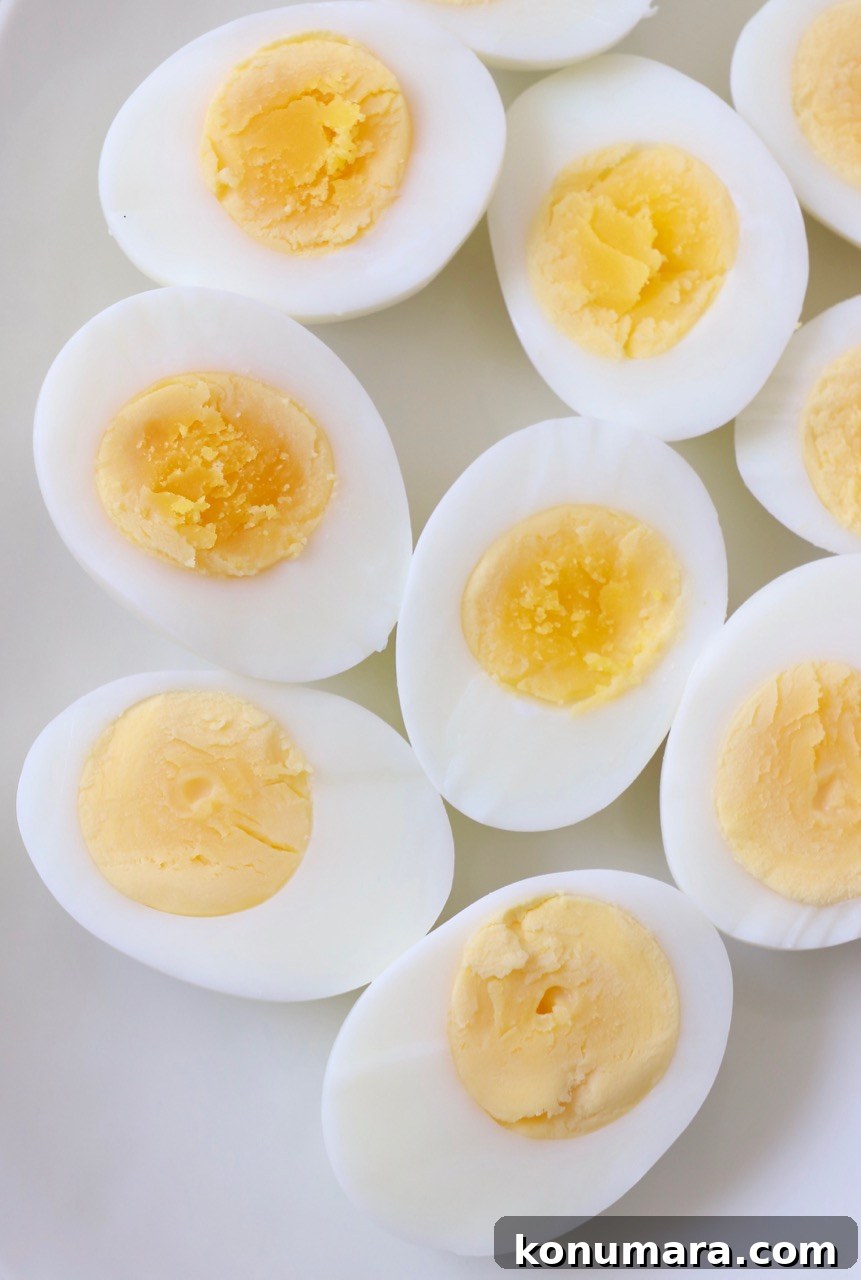
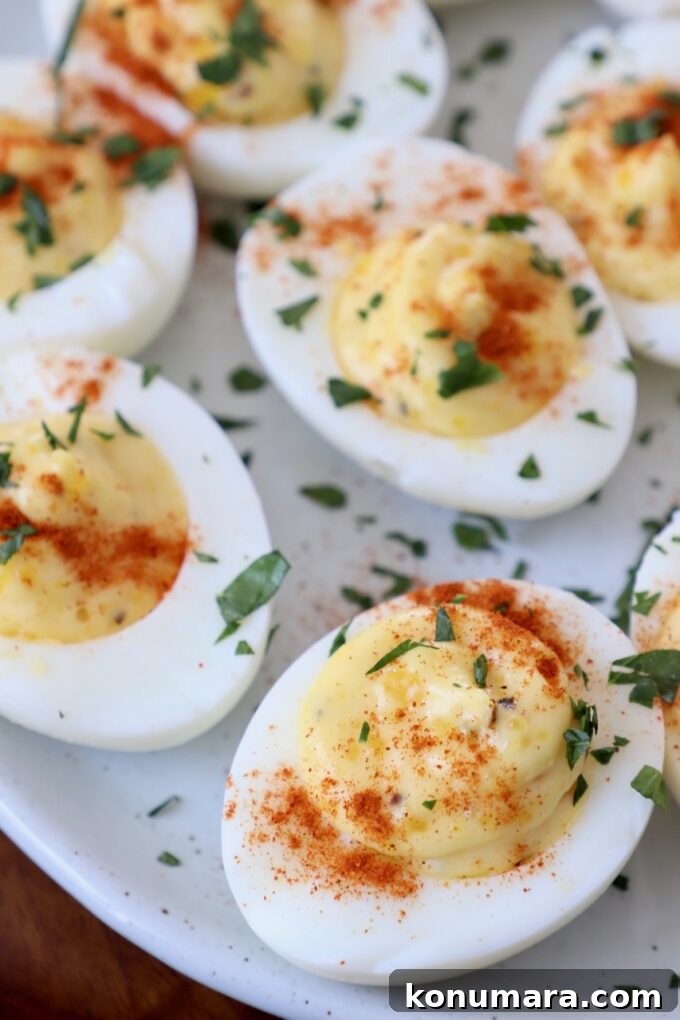
Ways to use them
Hard boiled eggs are ready to eat as-is or to incorporate into many recipes. Below are simple serving ideas and recipe uses to get the most out of your batch.
- Serve halved with salt and pepper, a drizzle of olive oil, or a dash of hot sauce.
- Top sliced or mashed avocado toast with sliced hard boiled eggs.
- Spread hummus on toast and top with egg halves for a protein-packed snack.
- Sprinkle everything bagel seasoning over halved eggs for an easy flavor boost.
- Add sliced eggs to green salads, grain bowls, sandwiches, or ramen.
- Use them in egg salad, deviled eggs, potato salad, or pasta salads that call for cooked eggs.

Hard Boiled Eggs
6 hard boiled eggs
Ingredients
- 6 large eggs
- 1 teaspoon baking soda
Instructions
- Add 6–8 inches of cold water to a large pot so the eggs will be fully covered.
- Bring the water to a rapid boil over high heat.
- When boiling, stir in the baking soda.
- Carefully lower the eggs into the boiling water using a slotted spoon or a steamer basket.
- Cover the pot, reduce heat to medium to maintain a gentle simmer, and cook for 11 minutes for large eggs.
- Remove the pot from the heat and transfer the eggs immediately to an ice bath.
- Chill the eggs in the ice bath for 15 minutes, then peel to use or refrigerate unpeeled for later.
- To peel: tap at both ends and along the side, then gently remove the shell and rinse the egg to remove any remaining bits.
Notes
- Bring eggs closer to room temperature first: Let refrigerated eggs sit a few minutes before boiling to reduce cracking risk.
- Timing is for large eggs: If using smaller or extra-large eggs, adjust cook time slightly.
- Don’t skip the ice bath: It stops the cooking process to avoid the gray-green yolk ring and helps separate the membrane from the white.
- Older eggs peel more easily: Eggs that are a week old are typically easier to peel than very fresh eggs.
- Soft boiled option: For soft-boiled yolks, simmer for about 6 minutes instead of 11 and then use the same ice bath.
- Storage: Unpeeled hard boiled eggs keep up to 1 week in the refrigerator. Peeled eggs are best within 2–3 days.
- Freezing: Freezing whole hard boiled eggs is not recommended — the whites become rubbery. Egg yolks freeze well if separated and stored airtight.
Nutrition Facts (per large egg)
Calories: 63 kcal • Protein: 6 g • Fat: 4 g • Cholesterol: 164 mg • Sodium: 245 mg • Carbohydrates: 0.3 g