
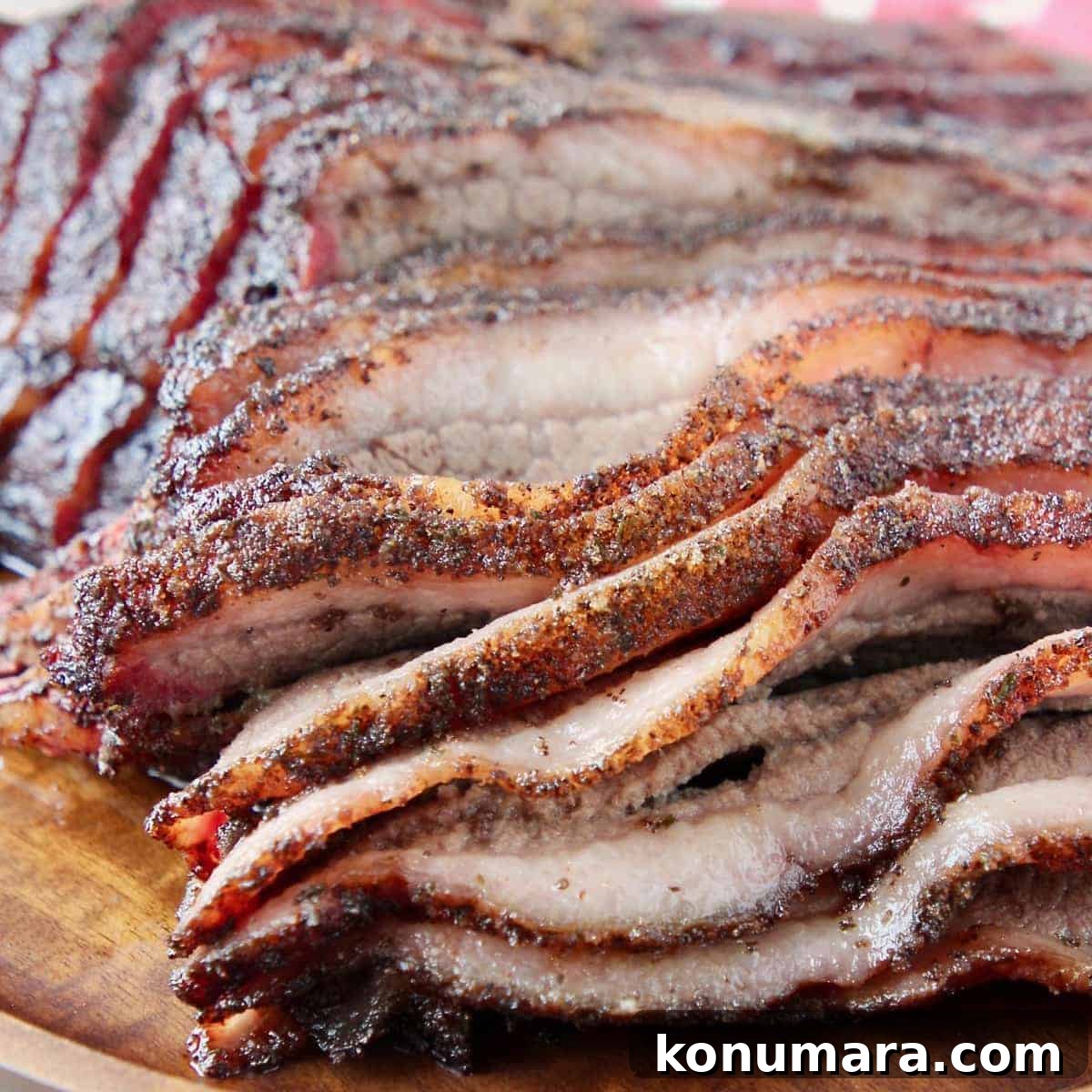
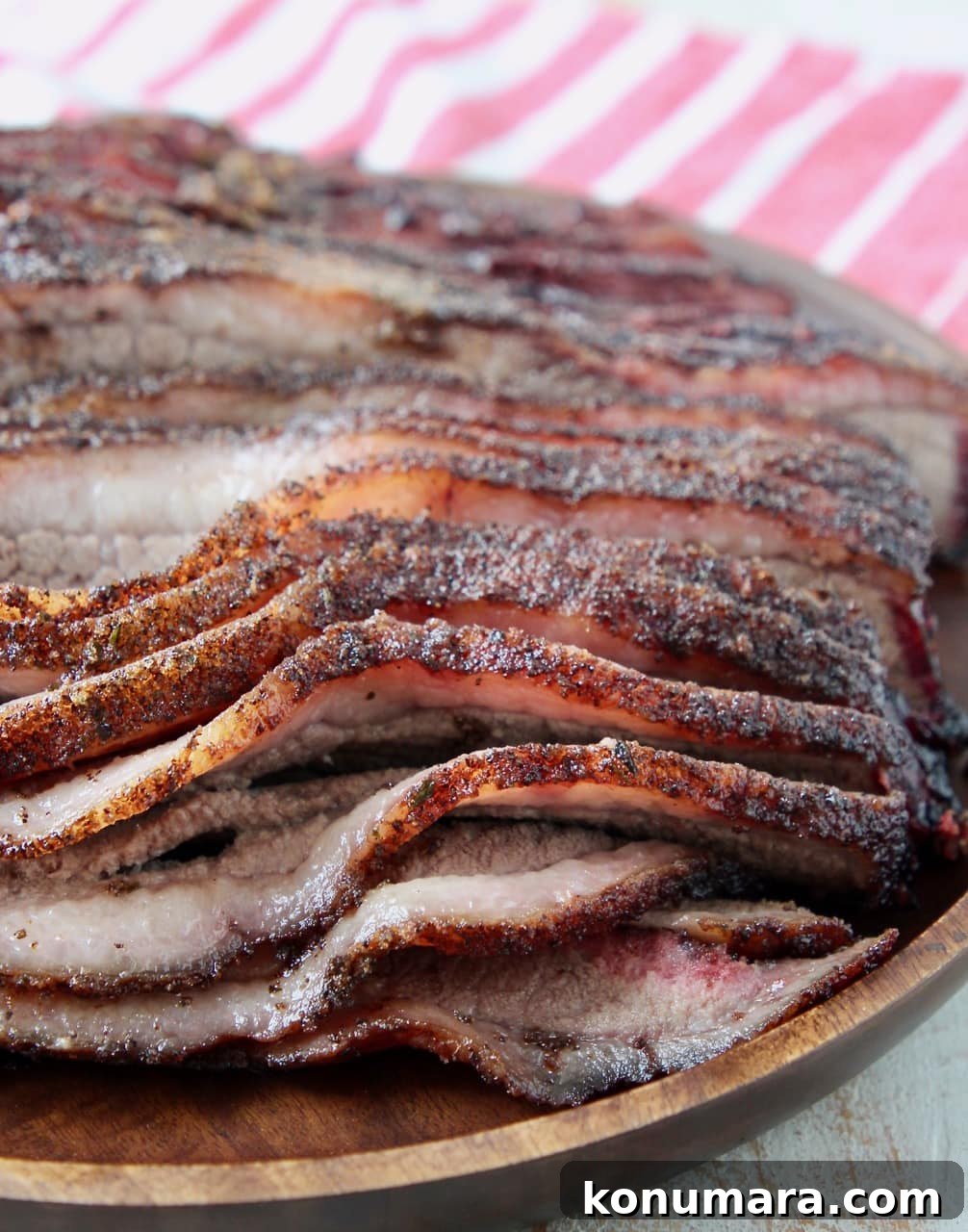
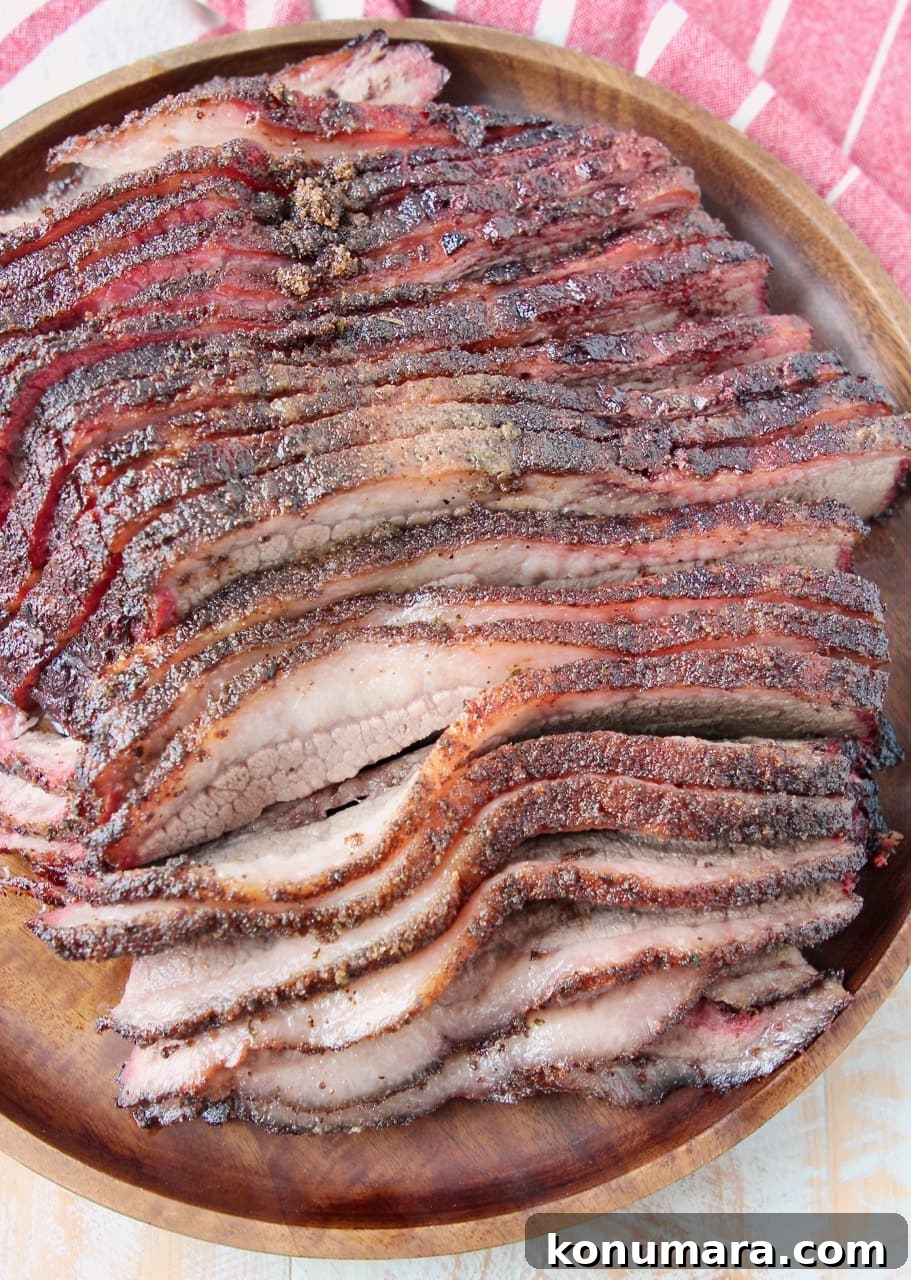
Create mouthwatering Smoked Brisket on a wood or pellet smoker using straightforward techniques plus flavorful marinade, dry rub, and wet mop recipes. This method has been tested and refined over decades within my family.
It’s an ideal centerpiece for any BBQ, and the leftovers make fantastic sandwiches. Serve the tender, juicy brisket with classic sides like potato salad, mac and cheese, or a refreshing summer salsa.
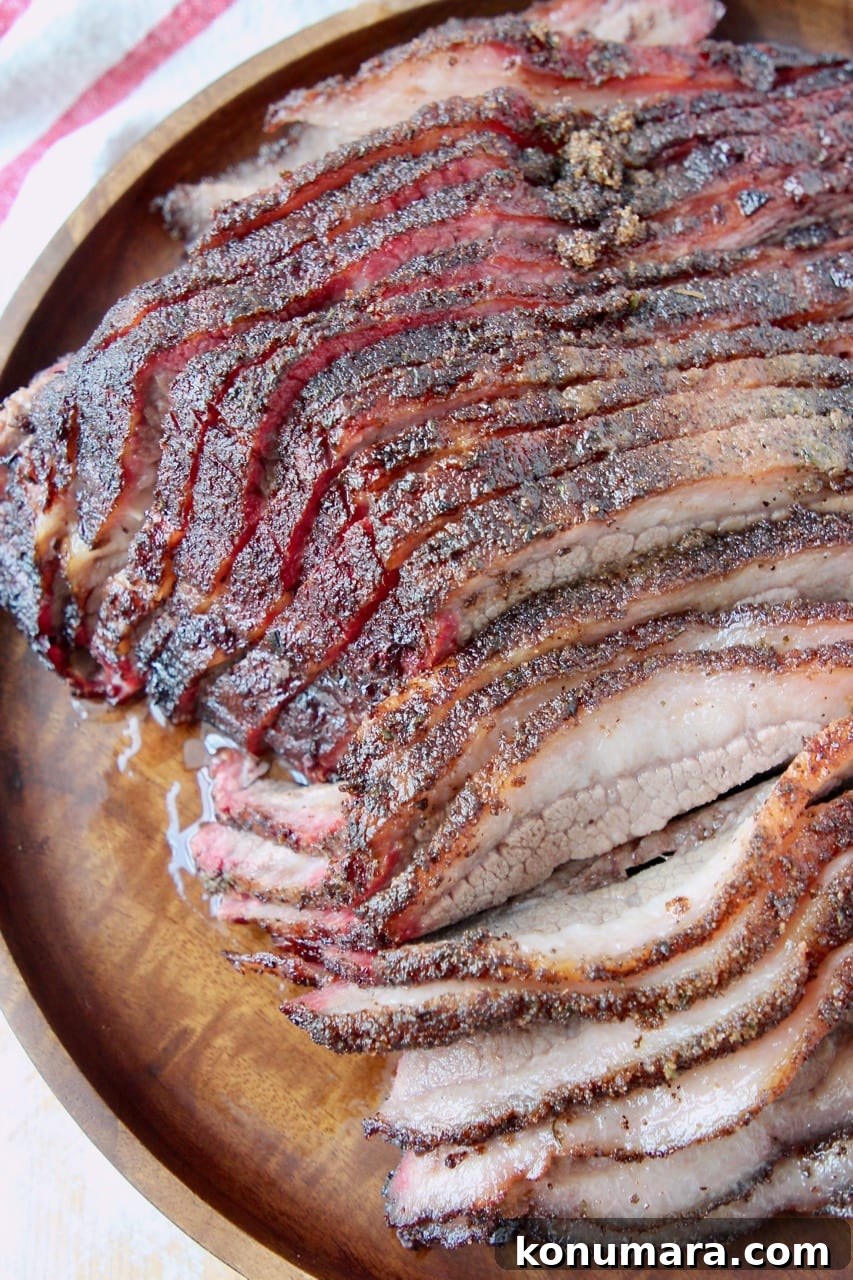
Table of contents
- Step by step instructions
- Smoked brisket marinade recipe
- Rub recipe and instructions
- Wet mop recipe and instructions
- Recipe tips and tricks
- Tools you’ll need
- What to serve with brisket
Growing up in Oklahoma, smoking meats was a fixture at family gatherings. My grandfather owned an Oklahoma Joe’s smoker, which later passed to my dad. When I showed interest in cooking, my dad taught me how to smoke using that smoker. For years we smoked brisket, pulled pork, and ribs whenever I came home for the summer. More recently I switched to a Traeger pellet grill and smoker and continued refining our family recipes.
Over the last year I focused on testing and perfecting smoked brisket techniques. While I still use the same marinade, rub, and wet mop my family relied on, I added a few adjustments and tips to consistently produce tender, flavorful beef with a great bark.
Step by step instructions
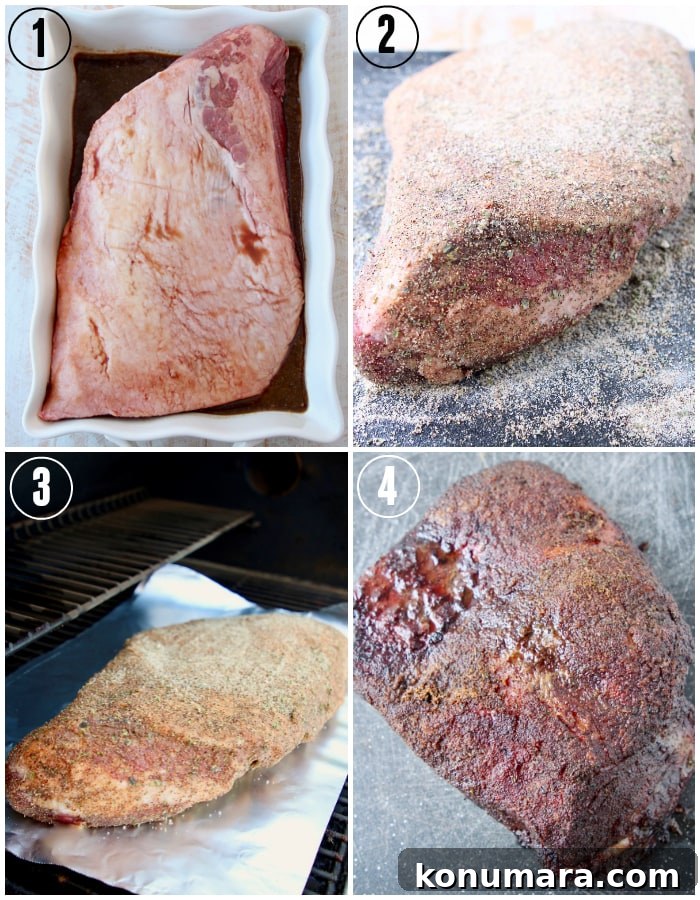
To make excellent smoked brisket, follow four essential steps:
- Marinate the brisket
- Apply the dry rub
- Smoke and wet-mop the brisket
- Rest the brisket before slicing
Smoked brisket marinade recipe
- Combine the marinade ingredients in a medium bowl: soy sauce, brown sugar, liquid smoke, garlic powder, and white vinegar.
- Place the brisket in a large dish and pour the marinade over it so the meat is well covered. A whole packer brisket (point and flat) typically runs 12–14 lbs; plan about 1/2 lb per person for serving size.
- Cover the brisket with foil and refrigerate for 8–12 hours. Flip the brisket 2–3 times during marinating so both sides absorb the flavors. Many cooks marinate overnight, flipping once before bed and again the following morning.
- After marinating, remove the brisket from the liquid and pat it dry before applying the rub.
Rub recipe and instructions
- Mix dry rub ingredients in a small bowl: kosher salt, black pepper, garlic powder, onion powder, chili powder, oregano, parsley, and a touch of sugar.
- Apply the rub generously across the whole brisket, pressing it into the meat so it adheres evenly.
- Tip: make extra rub and store it in an airtight container for future cooks — it keeps well in the pantry.
Wet mop recipe and instructions
- Combine white vinegar, canola oil, and red wine in a medium saucepan over medium-high heat and bring to a gentle boil.
- Add a sliced onion, crushed garlic cloves, sliced lemon, salt, and pepper. Reduce heat and simmer 15–20 minutes to meld flavors.
- Strain or cover the wet mop and bring it to the smoker. Brush the brisket with this mixture roughly every 30 minutes during the early and middle stages of smoking to keep the surface moist and add flavor.
Recipe tips and tricks
- Trimming the brisket: Leave at least a 1/4-inch fat cap to render during cooking; the fat adds flavor and juiciness. Whether you smoke fat-side up or down is a matter of preference — both work.
- Smoking temperature: Maintain a smoker temperature of 225°F for best low-and-slow results.
- Texas Crutch (optional): To overcome the “stall” — when internal temperature plateaus because evaporative cooling slows heating — wrap the brisket tightly in foil when it reaches about 150–160°F. Before wrapping, brush it with wet mop, then insert a probe thermometer through the foil to monitor internal temp. Remove foil and return to the smoker when the internal temp reaches about 203°F, then cook another 20–30 minutes uncovered to re-crisp the bark.
- Cooking time: Expect roughly 90 minutes per pound without the Texas Crutch, or around 60 minutes per pound if you use the crutch method. Times vary with size, smoker consistency, and ambient conditions.
- Resting: Once the brisket reaches its target internal temperature, transfer it to a cutting board, loosely tent with foil, and rest for 60 minutes. Resting lets the juices redistribute so they don’t run out when you slice.
- Slicing: Use a sharp knife or an electric carving knife and always slice against the grain for the most tender bites.
- Wood choice: Hickory is a classic pick for brisket; mesquite and apple are also excellent alternatives depending on the flavor profile you want.
Tools you’ll need
- Smoker or pellet grill — any reliable smoker that maintains low temperatures will work.
- Wood or pellets — hickory recommended; mesquite or apple are good options.
- Meat thermometer — a trustworthy probe thermometer is essential for monitoring internal temperature.
- Heavy-duty aluminum foil for wrapping (if using the Texas Crutch).
- Large cutting board for resting and slicing.
- A sharp butcher’s knife or electric carving knife for clean, even slices.
What to serve with brisket
Traditional Texas-style brisket is often served with BBQ sauce on the side, alongside slices of white bread, pickles, and raw or pickled red onions. Popular side dishes include mac and cheese, potato salad, pasta salad, and corn.
Some favorite side pairings to complement smoked brisket:
- Smoked mac and cheese — a creamy, smoky side that pairs perfectly with brisket.
- Roasted or roasted-and-seasoned cauliflower salad — a flavorful vegetable side that balances the richness of the meat.
- Fresh fruit salsa (such as watermelon salsa) — bright and refreshing while the meat smokes.
- Spicy buffalo-style macaroni or potato salads — for guests who like a little kick.
- Kale and apple slaw — a crunchy alternative to classic coleslaw.
- Smoked cream cheese or other smoked appetizers served while the main cook finishes.
Recipe card
Smoked Brisket
A tried-and-true brisket recipe using a simple marinade, balanced dry rub, and a tangy wet mop to keep the meat moist and flavorful during smoking.
Servings: 20 people
Prep Time: 1 hour
Cook Time: 9 hours (approx.)
Marinating Time: 6–12 hours
Total Time: ~10 hours
Author: Whitney Bond
Ingredients
- 12–14 lb boneless trimmed brisket
Marinade
- 1 cup soy sauce
- 1/2 cup brown sugar
- 1 tbsp liquid smoke
- 1 tsp garlic powder
- 3 tbsp white vinegar
Dry Rub
- 4 tbsp kosher salt
- 2 tbsp black pepper
- 2 tbsp garlic powder
- 2 tbsp onion powder
- 1 tbsp chili powder
- 2 tsp oregano
- 2 tsp parsley
- 1 tsp sugar
Wet Mopping Sauce
- 1/2 cup white vinegar
- 1/2 cup canola oil
- 1/2 cup red wine
- 1 onion, sliced
- 3 cloves garlic, crushed
- 1 lemon, sliced
- 1 tbsp black pepper
- 1 tbsp kosher salt
Instructions
Brisket Marinade
- Place the brisket in a large dish with room to be covered by marinade.
- Combine marinade ingredients and pour over the brisket to coat fully.
- Cover with foil and refrigerate 8–12 hours, flipping 2–3 times so all sides marinate.
- After marinating, remove brisket from liquid and pat dry.
Brisket Rub
- Mix the dry rub ingredients in a bowl and massage evenly over the entire brisket.
Brisket Wet Mop
- Combine vinegar, oil, and wine in a saucepan over medium-high heat and bring to a gentle boil.
- Add onion, garlic, lemon, pepper, and salt, then reduce heat and simmer 15–20 minutes.
- Take the wet mop to the smoker and brush the brisket with it about every 30 minutes during smoking.
Smoking the Brisket
- Add hickory, mesquite, or apple wood chips or pellets to your smoker and preheat to 225°F.
- Place two large sheets of foil on the smoker grate and position the brisket (fat side up or down) on the foil.
- Brush the brisket with wet mop and continue wet mopping approximately every 30 minutes in the early stages.
- Smoke until the internal temperature reaches 200–205°F. Timing is roughly 90 minutes per pound without wrapping, or about 60 minutes per pound using the Texas Crutch method.
- Remove the brisket from the smoker, place it on a cutting board, tent loosely with foil, and rest for 60 minutes.
- Slice the brisket against the grain and serve.
Texas Crutch Technique (optional)
- To reduce stall time, wrap the brisket tightly in double foil when it hits 150–160°F.
- If using the crutch, brush liberally with wet mop before wrapping and stop wet mopping after wrapping.
- Insert a thermometer probe through the foil and continue cooking until the internal temperature reaches about 203°F.
- Remove the foil and return the brisket to the smoker for 20–30 minutes to firm and crisp the bark, then rest and slice.
Notes
- The stall occurs when evaporative cooling causes the brisket’s temperature to plateau; wrapping in foil helps speed through this phase.
- If you choose not to wrap, expect a longer cook time but the meat will eventually come through the stall.
- Trim the brisket if needed, leaving at least a 1/4-inch fat cap for flavor and moisture.
- Adjust rub and marinade quantities if you are cooking a smaller brisket.
- Extra dry rub stores well in a sealed jar for future cooks.
Nutrition Facts (approx. per serving)
Calories: 520 kcal • Carbohydrates: 9 g • Protein: 58 g • Fat: 25 g • Saturated Fat: 7 g • Cholesterol: 168 mg • Sodium: 2619 mg