
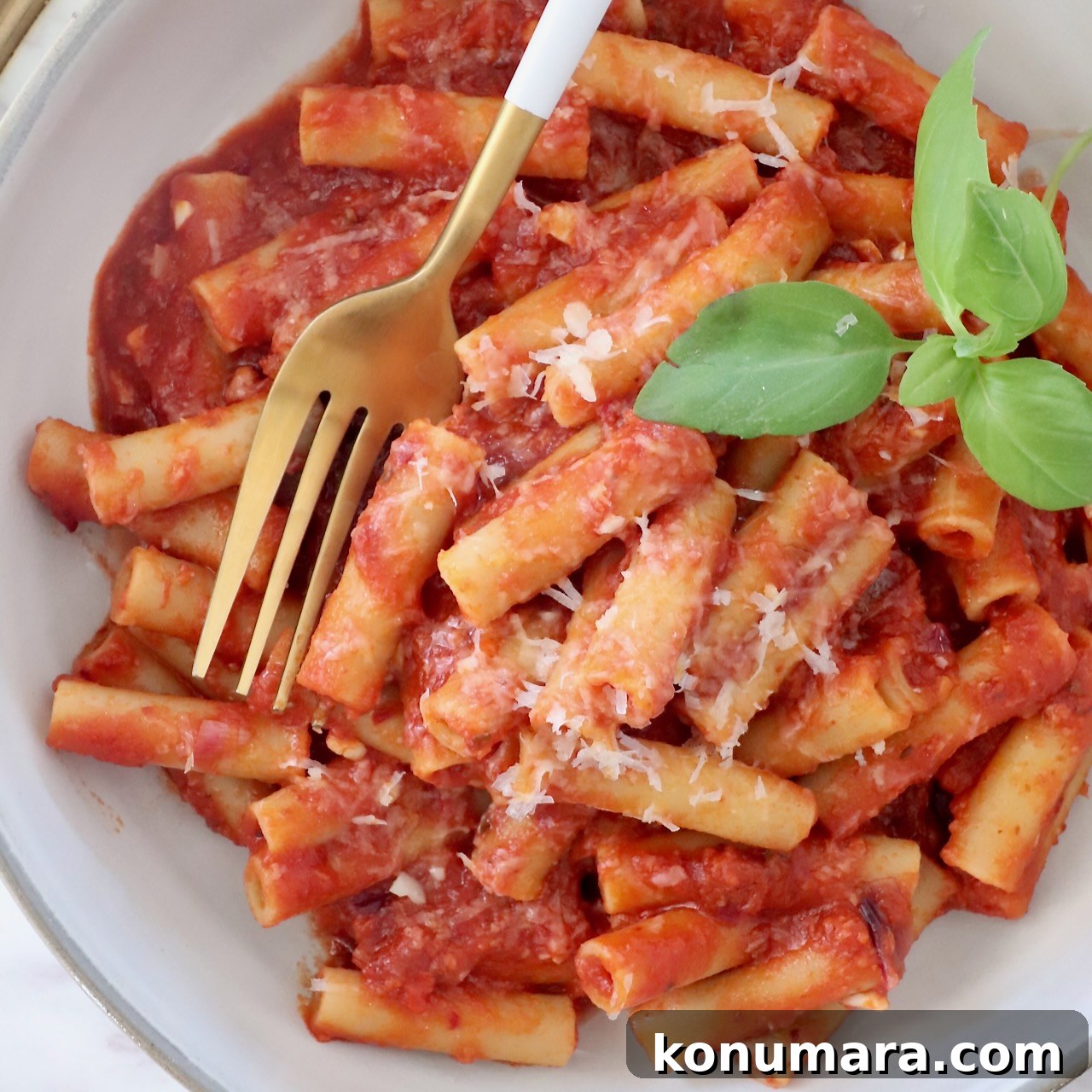
Make this spicy, flavorful Tomato Nduja Sauce in just 25 minutes to toss with your favorite pasta. Nduja is a spicy, spreadable pork sausage from Calabria, Italy. It adds heat, richness, and depth to sauces, pizzas, and more. Try it in this simple, fast pasta sauce — one bite and you’ll understand why it’s a favorite.
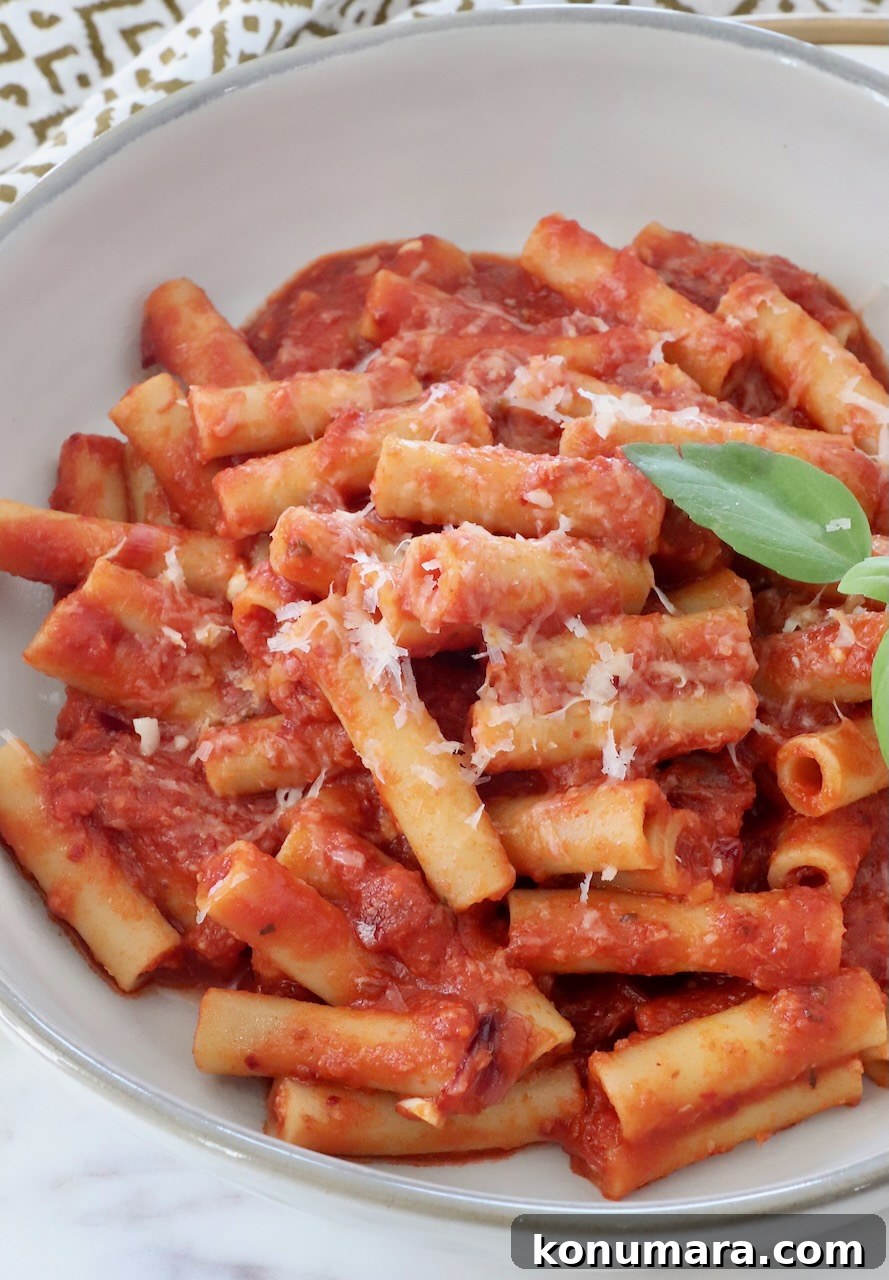
Why you’ll love this Tomato Nduja Sauce
The first time I tasted nduja I was hooked. This spreadable, cured salami is intensely flavored and slightly spicy, making it an ideal ingredient to elevate everyday tomato sauce. It melts into a silky, savory base that works beautifully with pasta, baked dishes, and as a finishing touch for pizza or crostini.
This recipe started as a more traditional tomato sauce and evolved through testing until it struck the right balance: bright tomato from passata, aromatic onion and garlic, warming Italian herbs, a touch of sugar to tame acidity, and salty Pecorino Romano to finish. The nduja brings an umami heat that replaces plain marinara in many dishes.
- Bold, layered flavor. Tomato passata gives a smooth tomato base, while nduja infuses spice and pork richness. Garlic, onion, Italian seasoning, and Pecorino Romano complete the profile.
- Versatile. Use it anywhere you’d use marinara — tossed with pasta, in lasagna, in baked ziti, on pizza, or as a dipping sauce for fried bites.
- Quick and simple. Ready in about 25 minutes on the stovetop, with minimal hands-on time.
Ingredients
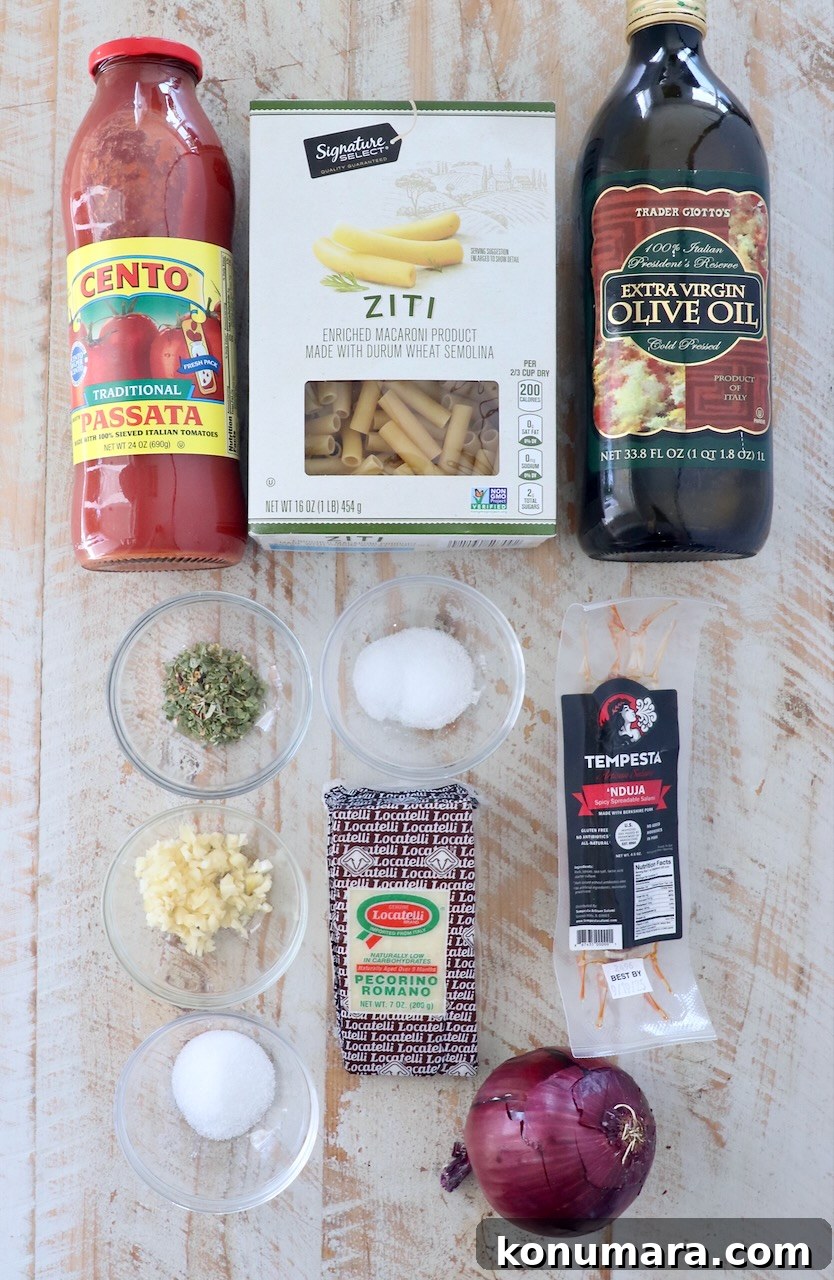
Below are the core ingredients and notes on substitutions or why each is used. For exact measurements see the recipe card at the bottom of the post.
- Extra-virgin olive oil – for sautéing the aromatics and carrying flavor.
- Red onion – commonly used in Calabria; slightly sweeter and sharper than yellow onion, it complements nduja well.
- Kosher salt – for seasoning; divide as directed in the recipe.
- Garlic cloves – minced, to build savory depth.
- Tomato passata – a smooth, strained tomato puree that provides bright tomato flavor and silky texture. If you can’t find passata, blend and strain canned whole or San Marzano tomatoes to a similar consistency.
- Italian seasoning – a blend of dried oregano, basil, and thyme (or use your favorite Italian herb mix).
- Granulated sugar – a small amount helps balance acidity in the tomatoes.
- Nduja (spreadable Calabrian salami) – the star ingredient. It’s made from pork, Calabrian chilies, and salt; look for it at specialty markets or well-stocked grocery stores.
- Pecorino Romano – finely grated for finishing; it’s saltier and tangier than parmesan. If you prefer parmesan, taste before adding extra salt.
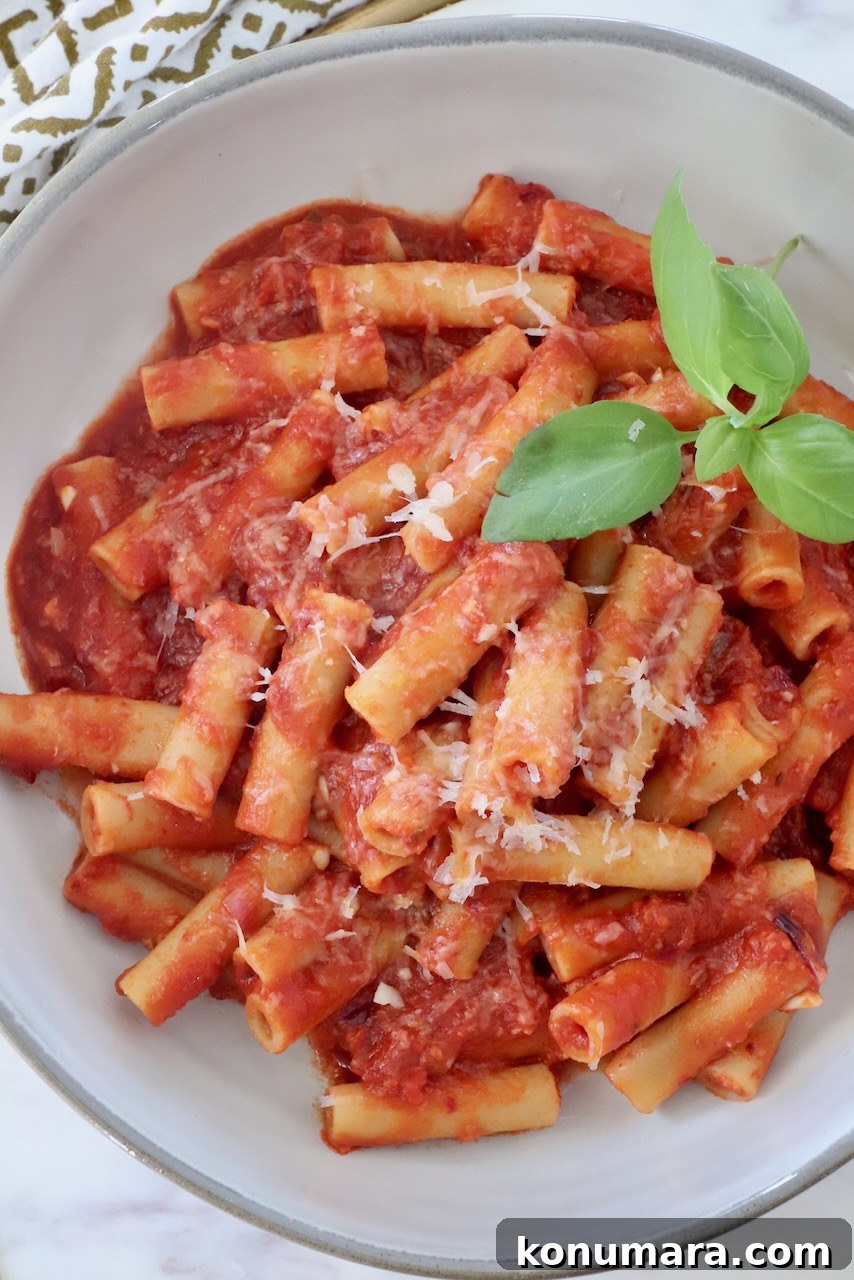
- Pasta – the sauce pairs with any shape; ziti is shown here but spaghetti, rigatoni, or pappardelle all work nicely.
Instructions
The method is straightforward: cook pasta (if serving immediately), build the sauce with aromatics and passata, emulsify the nduja into the tomatoes, and finish with pasta water and Pecorino. Below are the key steps; full recipe quantities are provided further down.
If serving immediately: bring a large pot of salted water to a boil and cook the pasta to al dente. Reserve one cup of the pasta cooking water before draining. If making ahead, cook the sauce and refrigerate or freeze for later use.
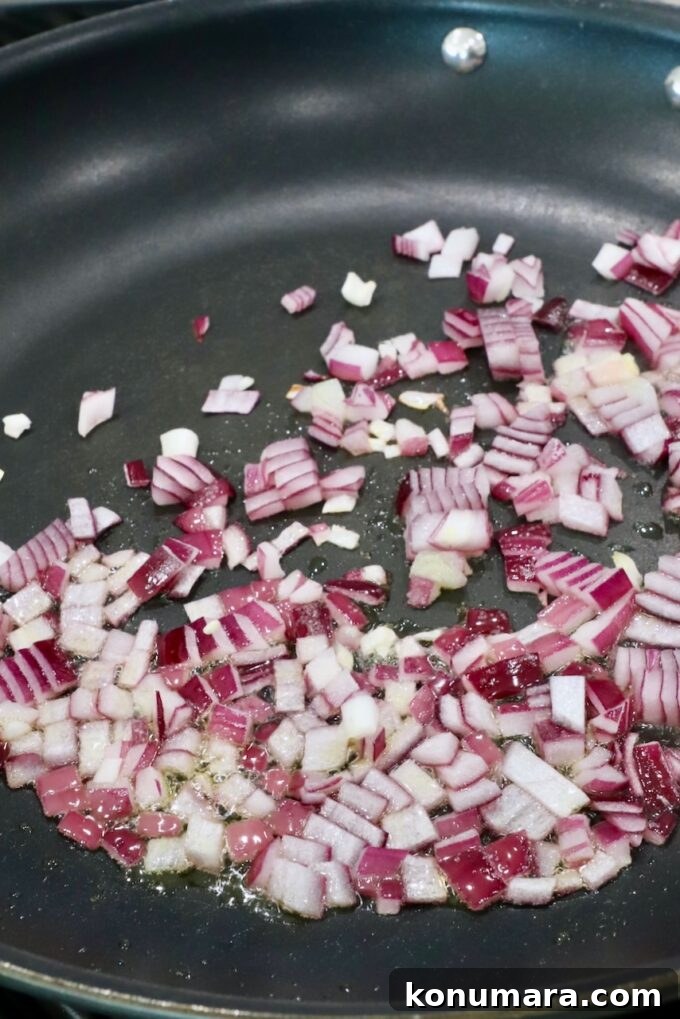
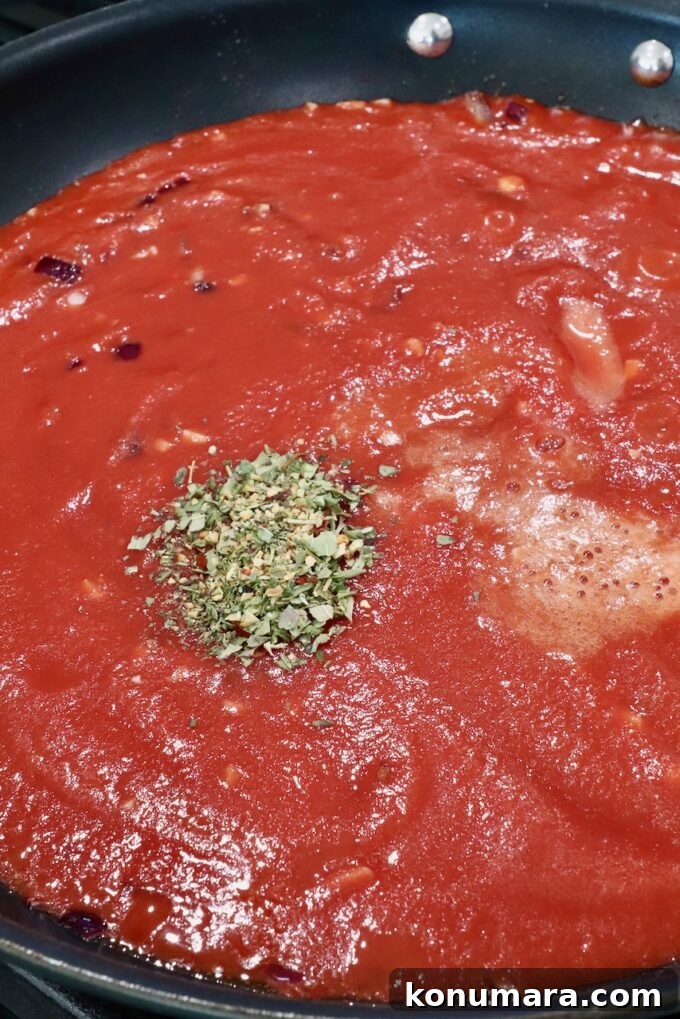
- Cook onions and garlic. Heat olive oil in a large skillet over medium-high heat. Add minced red onion and ¼ teaspoon kosher salt; cook about 4 minutes until softened. Add garlic and cook 1 minute more until fragrant.
- Add the passata and season. Pour the tomato passata into the skillet. Add ¼ cup water to the empty passata bottle, shake to loosen any remaining tomato, and pour that in as well. Season with the remaining ½ teaspoon salt, Italian seasoning, and 1 teaspoon granulated sugar. Bring to a simmer.
- Simmer the sauce. Cook, stirring occasionally, for 12–15 minutes to concentrate flavors and reduce slightly.
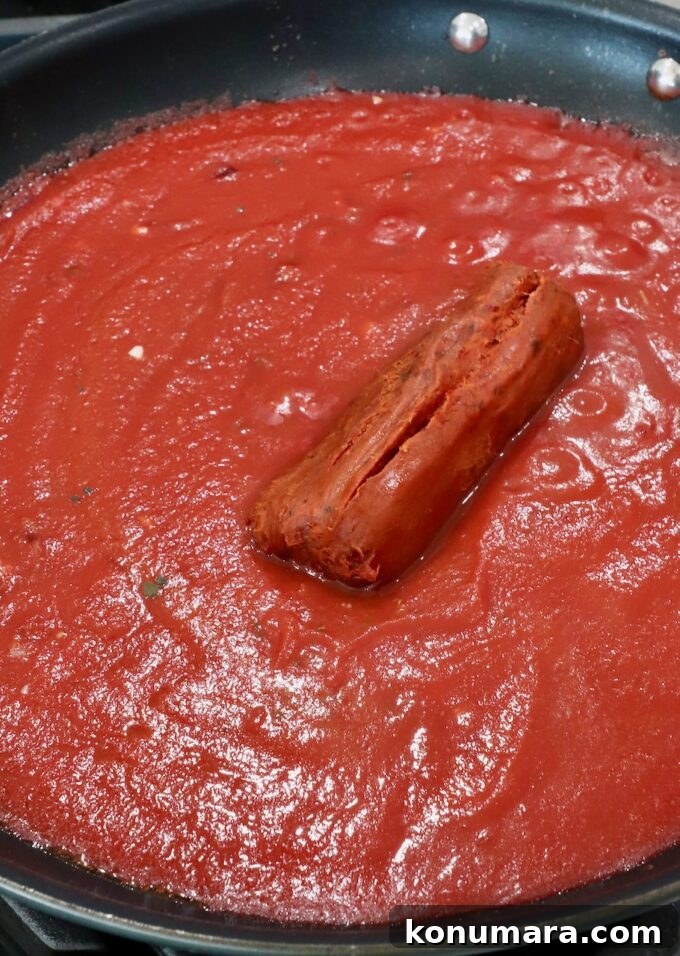
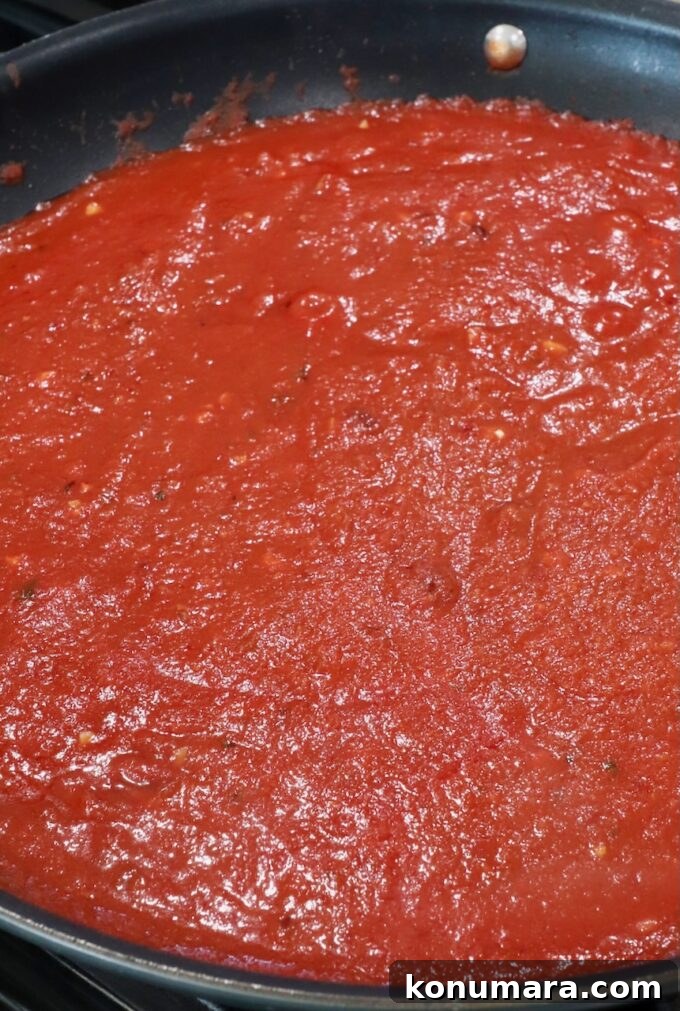
- Incorporate the nduja. Add the nduja and use a spatula to break it up and stir it until fully melted and emulsified into the sauce, about 1–2 minutes. The sauce should become smooth and show rich, spicy streaks from the nduja.
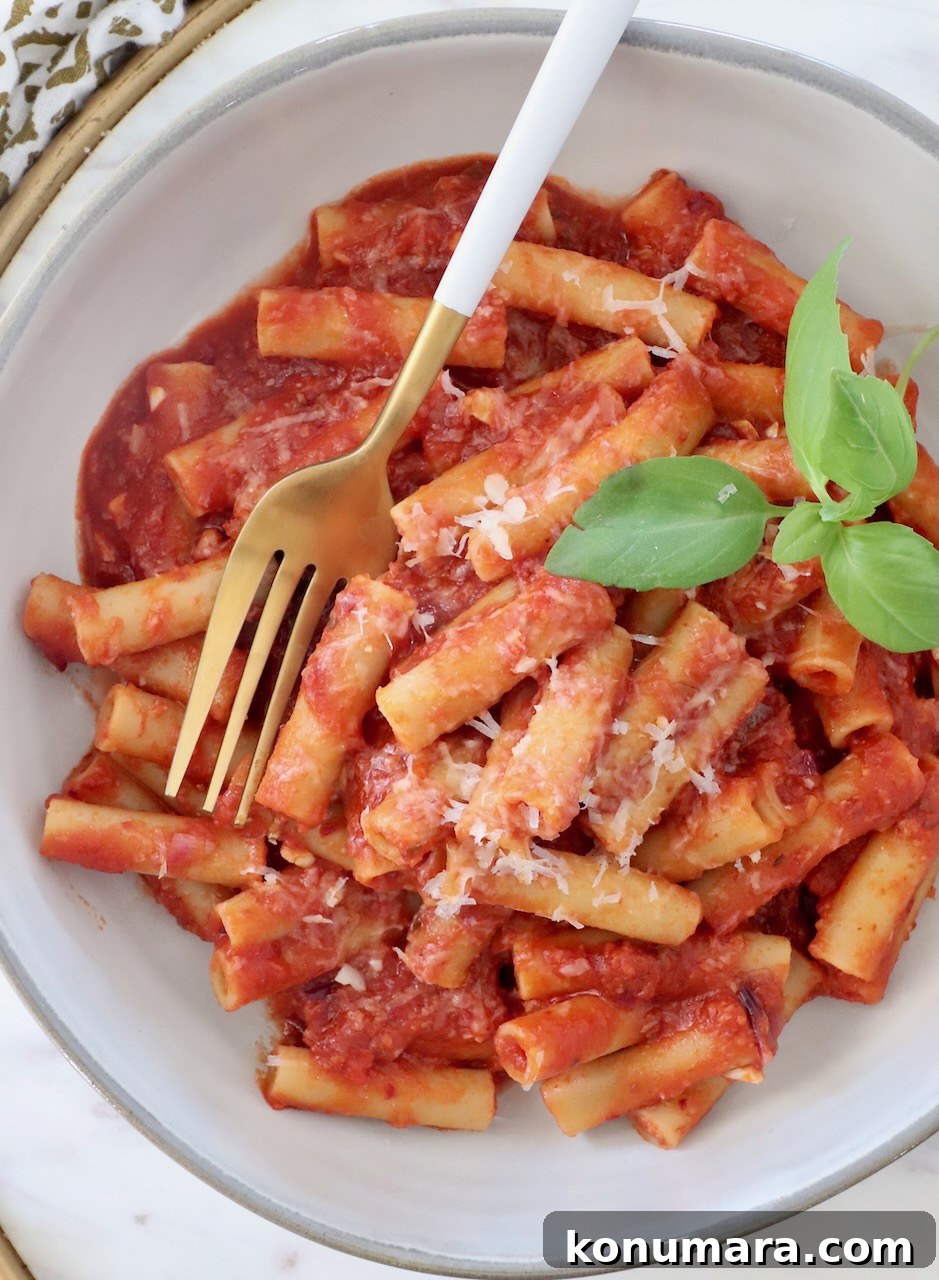
- Toss with pasta and finish. If serving right away, add cooked pasta and ¼ cup reserved pasta water to the skillet. Toss to coat, then stir in 2 tablespoons grated Pecorino Romano. Add more pasta water as needed for a silky finish. Serve with additional grated Pecorino on the side.
Ways to serve it
This sauce is shown with ziti, but it pairs beautifully with almost any pasta shape: spaghetti, rigatoni, pappardelle, or fettuccine. It’s also a great substitute for marinara in baked and layered dishes.
Baked ziti option: Toss cooked ziti with the sauce, transfer to a 9×13-inch baking dish, top with 2 cups shredded mozzarella and 1 cup grated parmesan. Mix 1 cup ricotta with 1 teaspoon Italian seasoning and dot across the top. Bake uncovered at 425°F for 15 minutes, or until bubbling and golden.
Beyond pasta, use this sauce as a pizza base, a dip for arancini or toasted ravioli, or a sauce for meatball subs — anywhere you’d reach for marinara.
Storage and reheating
Cool the sauce to room temperature before transferring to airtight containers. Refrigerate up to 7 days or freeze up to 6 months. If freezing, leave about 1 inch of headspace to allow for expansion. To thaw frozen sauce, move it to the refrigerator for 24–36 hours or submerge the sealed container in cold water until thawed. Reheat gently on the stovetop over low heat, stirring occasionally; add a splash of water or pasta cooking liquid if it has thickened.
Recipe card — Tomato Nduja Sauce (serves 4)
Ingredients
- 1 pound dried ziti (or other pasta)
- 1 tablespoon extra-virgin olive oil
- ½ cup minced red onion
- ¾ teaspoon kosher salt, divided
- 4 cloves garlic, minced
- 24.5 ounce bottle tomato passata
- 1 teaspoon Italian seasoning
- 1 teaspoon granulated sugar
- 6 ounces nduja (spreadable salami)
- 4 tablespoons finely grated Pecorino Romano, plus more for serving
Instructions
Cook the pasta (optional)
- Bring a large pot of salted water to a boil. Cook the ziti until just shy of al dente (about 2 minutes less than package directions). Reserve 1 cup pasta cooking water, then drain.
Prepare the sauce
- Heat the olive oil in a large skillet over medium-high heat. Add the minced onion, ¼ teaspoon salt, and cook 4 minutes. Add garlic and cook 1 minute more.
- Add the passata. Add ¼ cup water to the empty passata bottle, shake, and pour the tomato–water mixture into the skillet. Bring to a simmer.
- Season with the remaining ½ teaspoon salt, Italian seasoning, and sugar. Simmer 12–15 minutes, stirring occasionally.
- Add the nduja and stir until it melts and is fully incorporated, about 1–2 minutes.
- If serving with pasta, add the cooked ziti and ¼ cup reserved pasta water. Toss to coat, then stir in 2 tablespoons grated Pecorino Romano. Add more pasta water if needed for a glossy finish. Serve with remaining cheese for sprinkling.
Notes
- Nutritional information in the original recipe is based on one cup of sauce without pasta or cheese.
- Swap red onion for yellow if needed, and substitute parmesan for Pecorino if preferred, adjusting salt to taste.
- This sauce can be used as a direct replacement for marinara or pizza sauce in many recipes.
- Store in the refrigerator up to 7 days or in the freezer up to 6 months.
Nutrition Facts (per cup of sauce)
Calories: 325 kcal • Carbohydrates: 23 g • Protein: 6 g • Fat: 25 g • Saturated Fat: 8 g • Sodium: 981 mg • Fiber: 4 g • Sugar: 10 g