
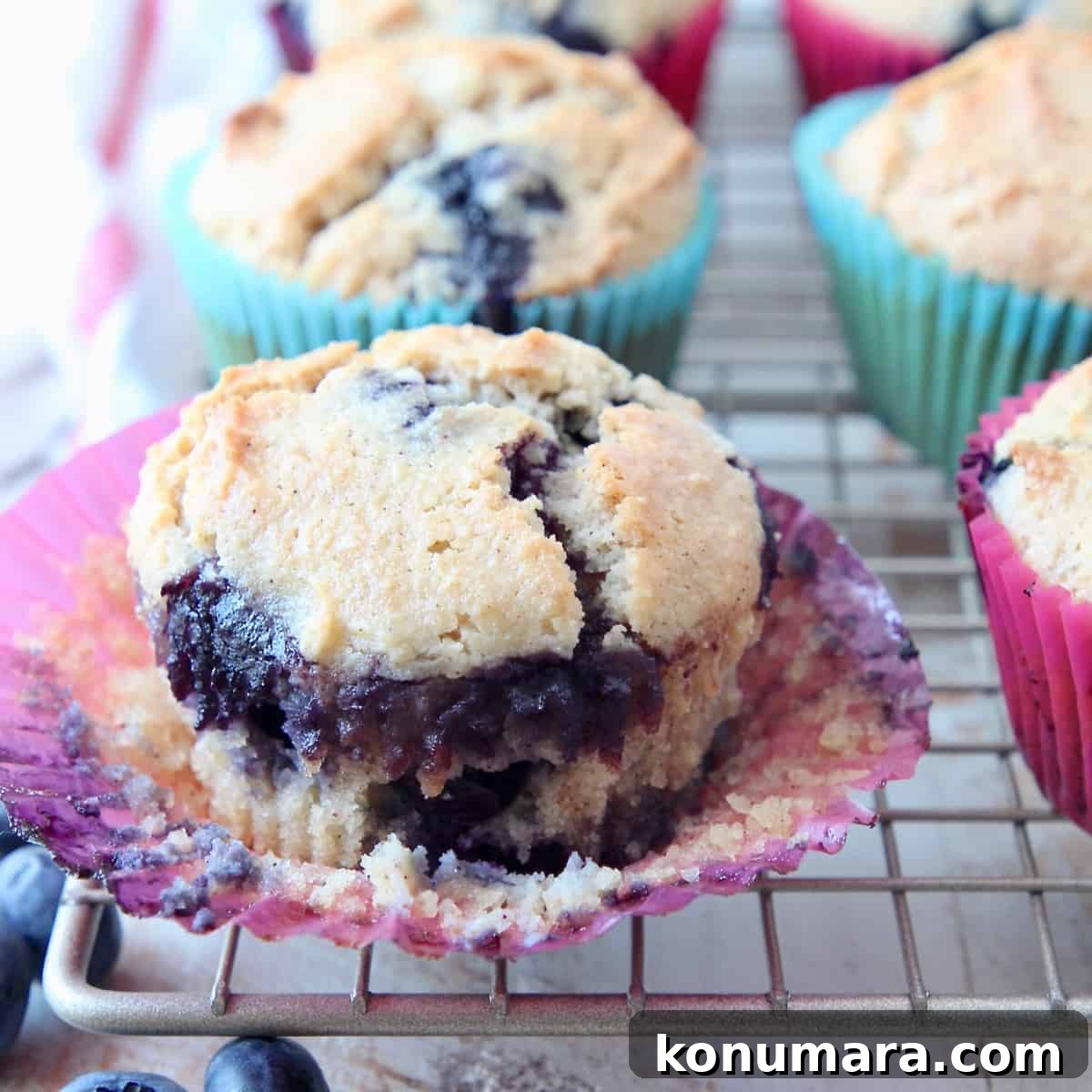
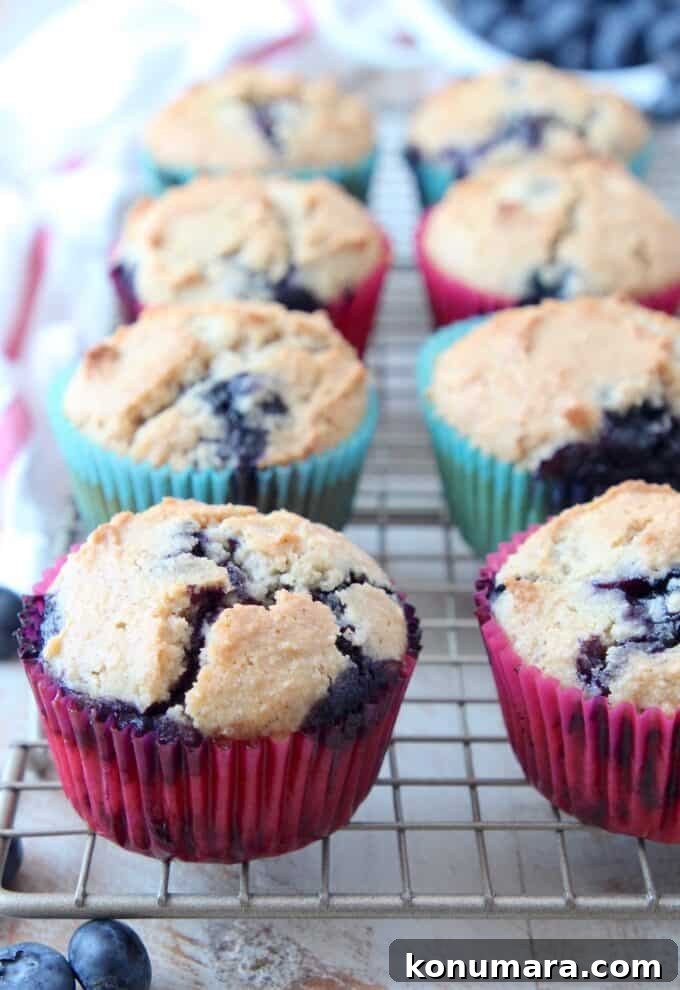
Looking for a tasty, low‑carb way to enjoy a classic breakfast muffin? These Almond Flour Blueberry Muffins deliver big blueberry flavor while keeping carbs low — just 13 net carbs per muffin as written. That’s a dramatic savings compared to many coffee shop muffins, which can have around 49 net carbs.
This recipe is shared in collaboration with Vons. All opinions are my own.
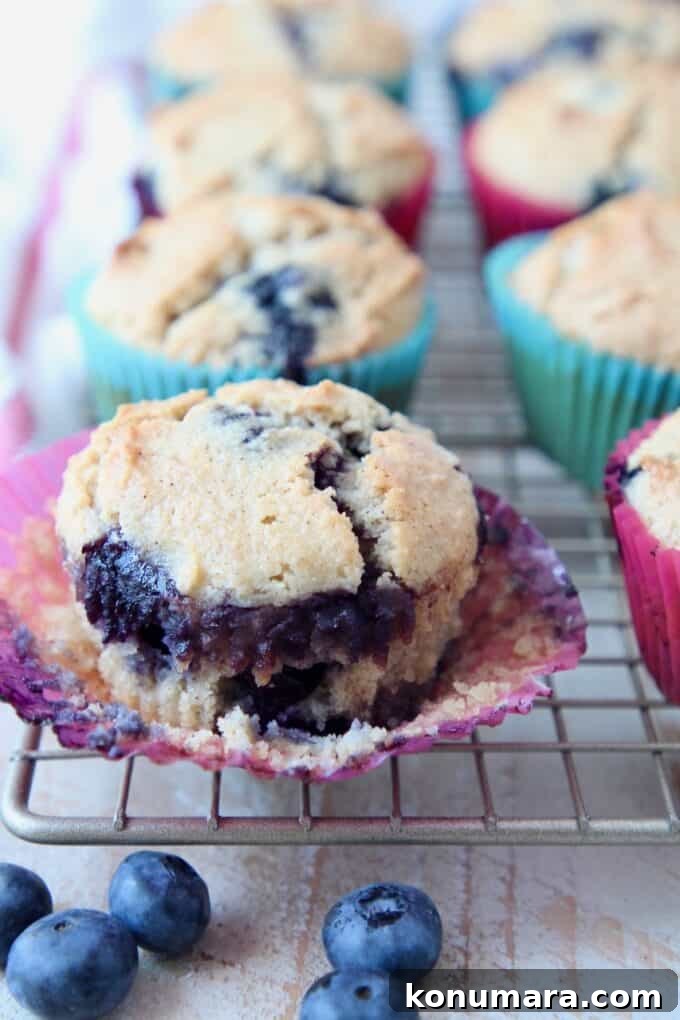
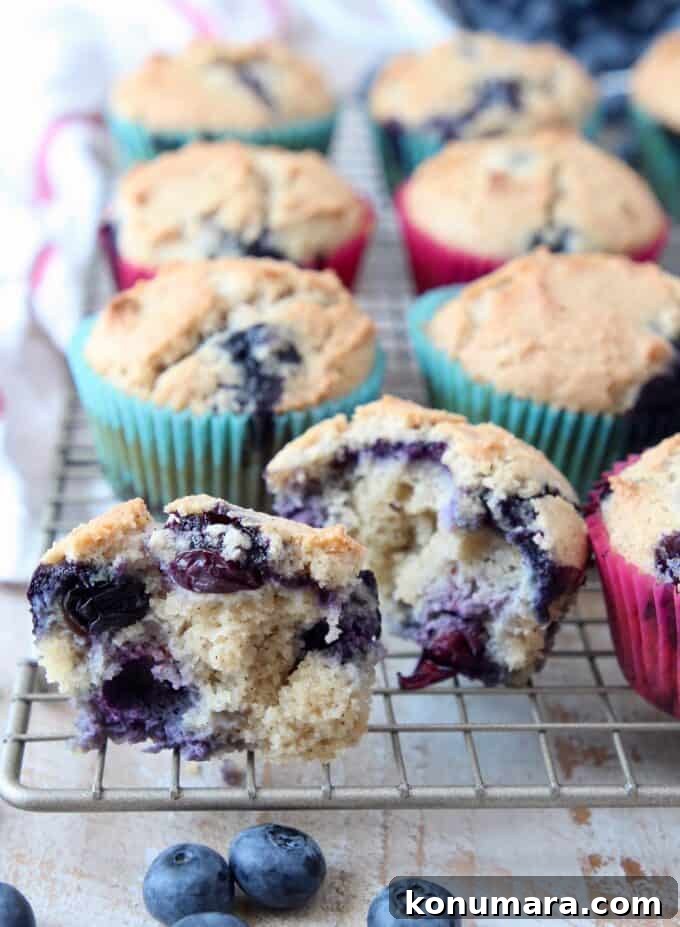
There’s something irresistible about biting into a warm, tender blueberry muffin and tasting those juicy berry bursts. These Almond Flour Blueberry Muffins are light, moist, and loaded with extra berries for maximum flavor. Because they’re made with almond flour, almond milk and coconut oil, they’re naturally gluten‑free and dairy‑free — perfect for anyone looking for a healthier or ketogenic option that doesn’t skimp on taste.

What you’ll need
- Almond flour – use finely ground almond flour (not almond meal) for the best texture.
- Granulated sugar – or substitute erythritol or monk fruit sweetener to reduce carbs and make the recipe paleo‑friendly.
- Baking powder
- Salt
- Ground cinnamon – optional, but it adds a warm background flavor.
- Virgin coconut oil – measured solid and melted briefly.
- Unsweetened almond milk
- Vanilla extract
- Large eggs
- Blueberries – fresh or frozen. If using frozen, add them directly to the batter without thawing.
Step‑by‑step instructions
- Preheat the oven to 350°F (175°C).
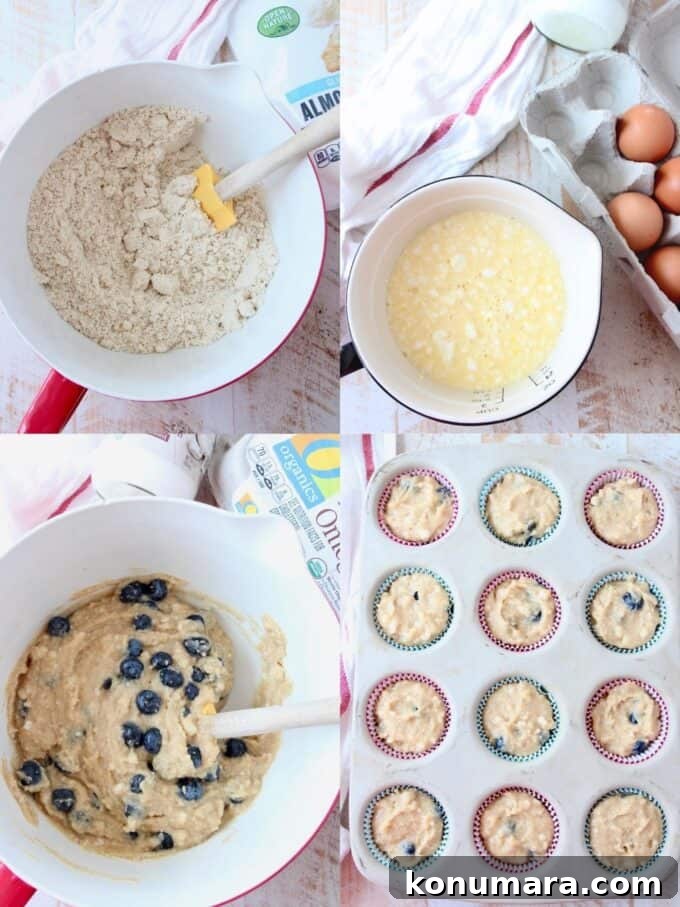
- In a large bowl, whisk together the almond flour, sugar (or sugar substitute), baking powder, salt and cinnamon.
- Measure 1/3 cup coconut oil from its solid form and place in a small microwave‑safe bowl. Microwave for about 30 seconds, or until melted. Whisk the melted coconut oil with the almond milk until combined.
- Whisk the eggs and vanilla into the coconut oil and almond milk mixture.
- Add the wet ingredients to the dry ingredients and stir until just combined. Gently fold in the blueberries.
- Spoon the batter into 12 muffin cups lined with paper or silicone liners.
- Bake for 25–30 minutes, or until the tops are lightly browned and a toothpick inserted into the center comes out clean.
- Allow the muffins to cool in the pan for 10 minutes, then remove to a rack to finish cooling.
Tips & tricks
- Lower the carbs: Swap granulated sugar for erythritol or monk fruit sweetener to significantly reduce net carbs. Using a zero‑calorie sweetener can drop the net carbs to about 5 per muffin.
- Storage: These muffins keep well in the refrigerator in a resealable bag for up to a week. Warm briefly in the microwave (about 20 seconds) before eating for a fresh‑baked taste.
- Freezing: Freeze muffins in an airtight container for up to 6 months. Thaw in the fridge or at room temperature, then reheat in the oven (350°F for 5–10 minutes) or microwave for about 30 seconds.
- Mini muffins: Make 24 mini muffins instead of 12 regular ones. Bake at 350°F for about 15 minutes, checking for doneness with a toothpick.
- Berry variations: Substitute raspberries, blackberries or diced strawberries if you’d like a different fruit flavor. If using larger berries, cut them to blueberry size to distribute evenly.
Notes about ingredients and brands
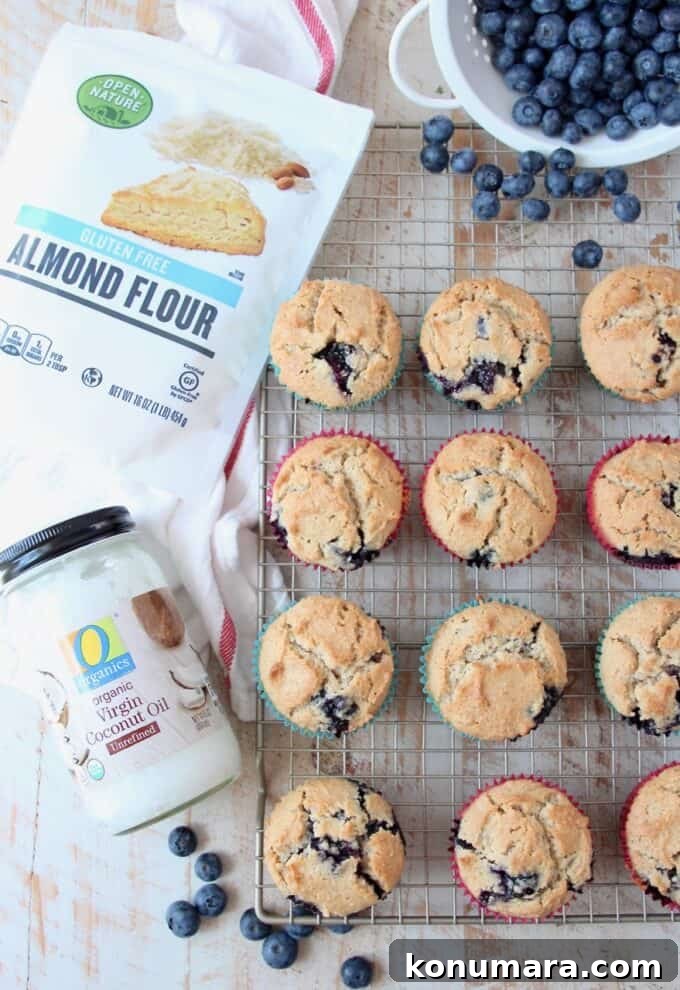
In this recipe I used almond flour, unsweetened almond milk and virgin coconut oil, along with commonly available organic and private‑label products. Many supermarkets carry similar almond flour and organic pantry items if you want to recreate these muffins at home. Choose finely ground almond flour rather than almond meal for a lighter crumb.
Ingredients (makes 12 muffins)
- 2 1/2 cups almond flour
- 1/2 cup granulated sugar (or sugar substitute)
- 1 1/2 teaspoons baking powder
- 1/4 teaspoon salt
- 1 teaspoon ground cinnamon
- 1/3 cup virgin coconut oil (measured solid, melted)
- 1/2 cup unsweetened almond milk
- 3 large eggs
- 2 teaspoons vanilla extract
- 1 cup blueberries (fresh or frozen)
Nutrition (per muffin)
- Calories: 243 kcal
- Carbohydrates: 16 g
- Fiber: 3 g
- Protein: 6 g
- Fat: 19 g
- Sugar: 10 g
- Saturated fat: 6 g
- Sodium: 74 mg
Substituting erythritol or monk fruit sweetener can lower sugar and net carbs substantially. See the tips section above for estimates when using alternative sweeteners.
More low‑carb recipe ideas
If you enjoyed these muffins, try exploring other low‑carb and keto‑friendly recipes like zucchini enchiladas, cauliflower rice bowls, or spinach and bacon frittatas — all great ways to keep meals flavorful while reducing carbohydrates.