
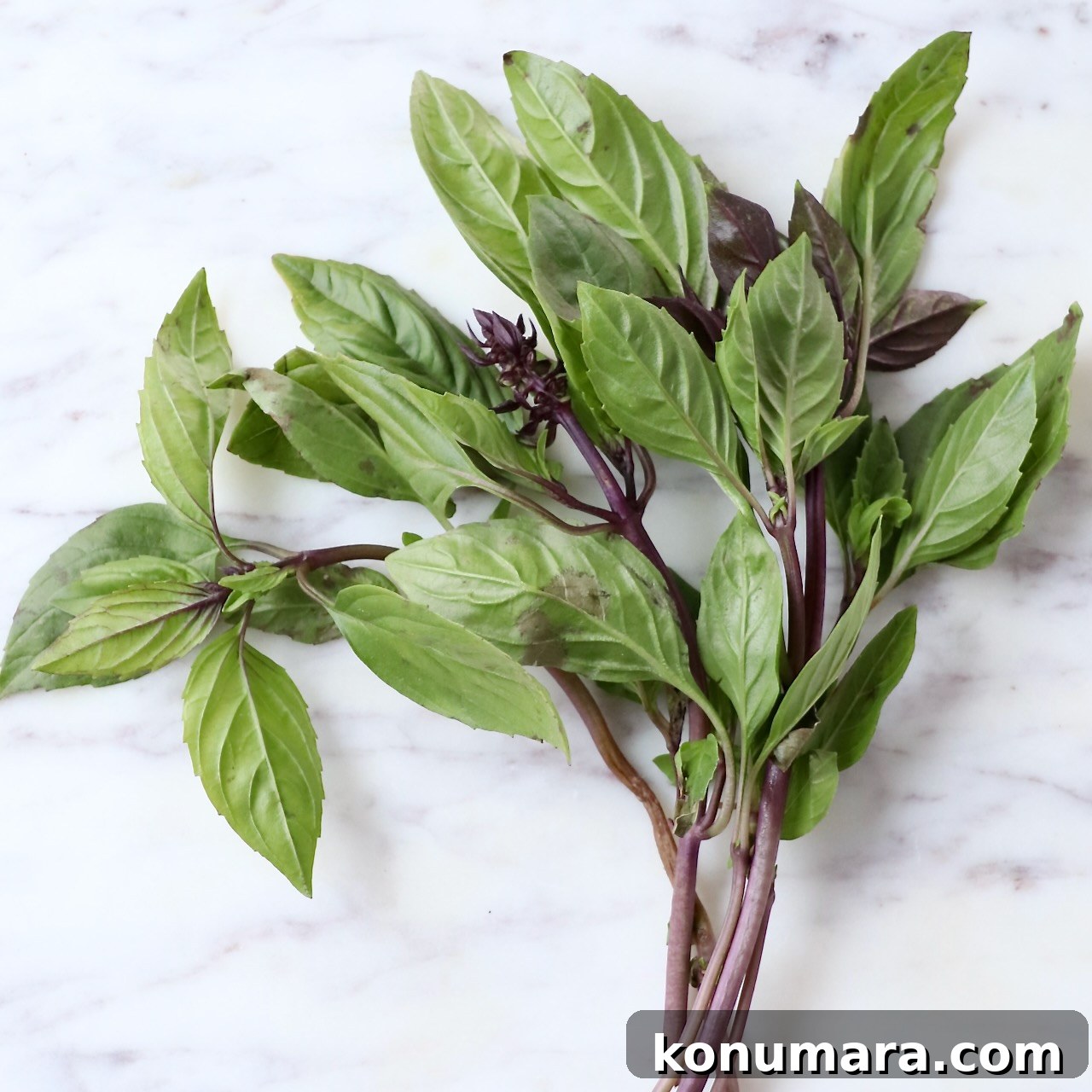
If you want to introduce bold, aromatic notes to your Thai cooking, Thai basil is an essential herb to keep on hand. It offers a slightly sweet, mildly spicy flavor with distinct anise and licorice undertones. The glossy, dark green leaves are a touch tougher than common sweet basil, which helps them stand up to cooking in hot pans and simmering sauces.
In Southeast Asian kitchens, Thai basil brightens stir-fries, curries, noodle dishes and soups, and it pairs beautifully with chicken, pork, beef and seafood. It also makes a fragrant addition to salads, spring rolls and fresh garnishes.
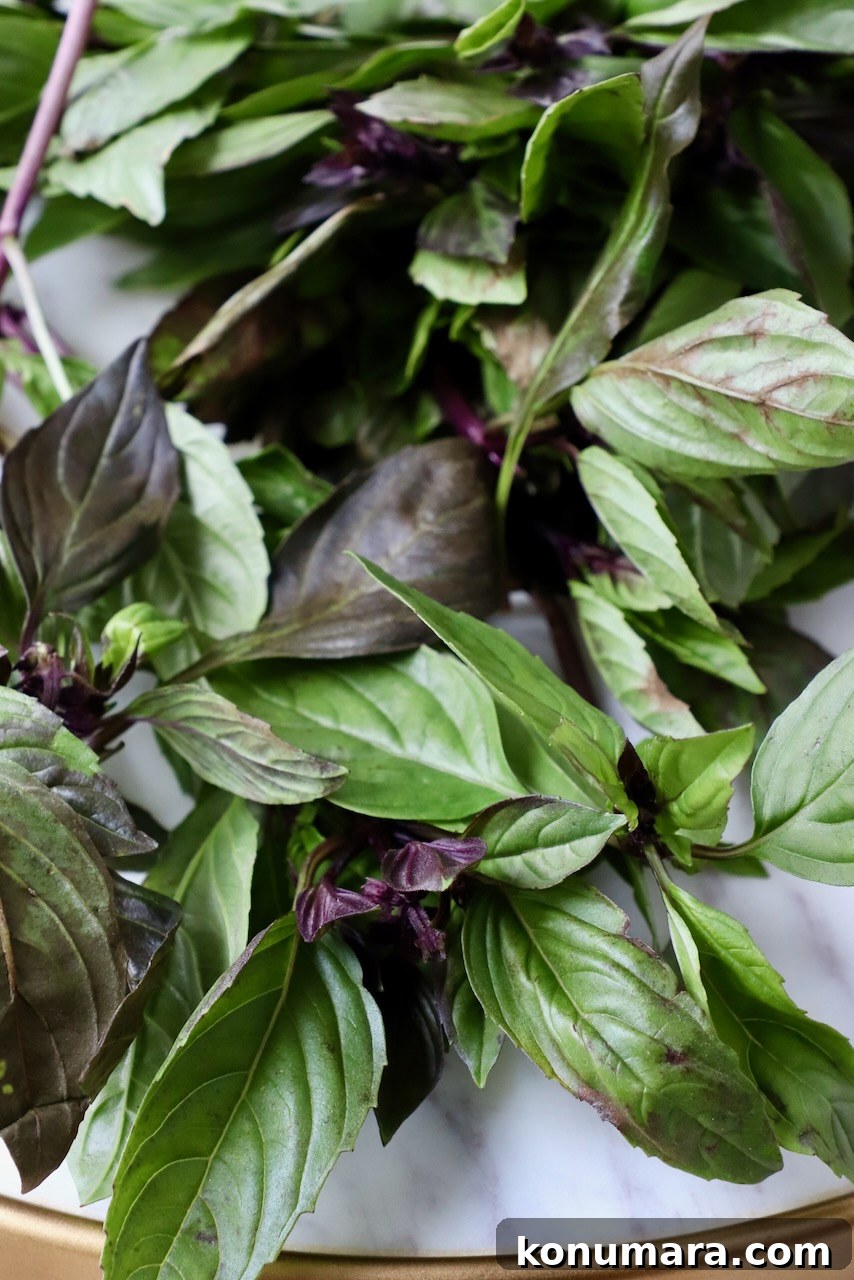
Table of contents
- Why Thai basil should be a staple in your kitchen
- Ways to use it
- Where to buy it
- Differences between Thai basil, basil and holy basil
- More ingredients to learn about
Today I want to share why Thai basil deserves a regular place in your pantry. If you’ve only used Italian sweet basil, you’ll be surprised how much character Thai basil adds to Asian-inspired dishes. So what does it taste like?
Thai basil has a distinctive and delightful taste: slightly sweet and peppery, with prominent notes of anise and licorice.
Its fragrant aroma is vivid and instantly evocative of Southeast Asian street food stalls. When added to a hot dish, Thai basil’s scent and flavor quickly infuse the sauce, lifting the overall profile and creating a more layered, authentic result. For anyone cooking Thai or Vietnamese food at home, Thai basil is a key ingredient.
Why Thai basil should be a staple in your kitchen
- It contributes bold, aromatic flavor that transforms simple dishes.
- It’s versatile and complements a wide range of proteins and vegetables.
- It helps reproduce authentic Southeast Asian flavors in home cooking.
Ways to use it
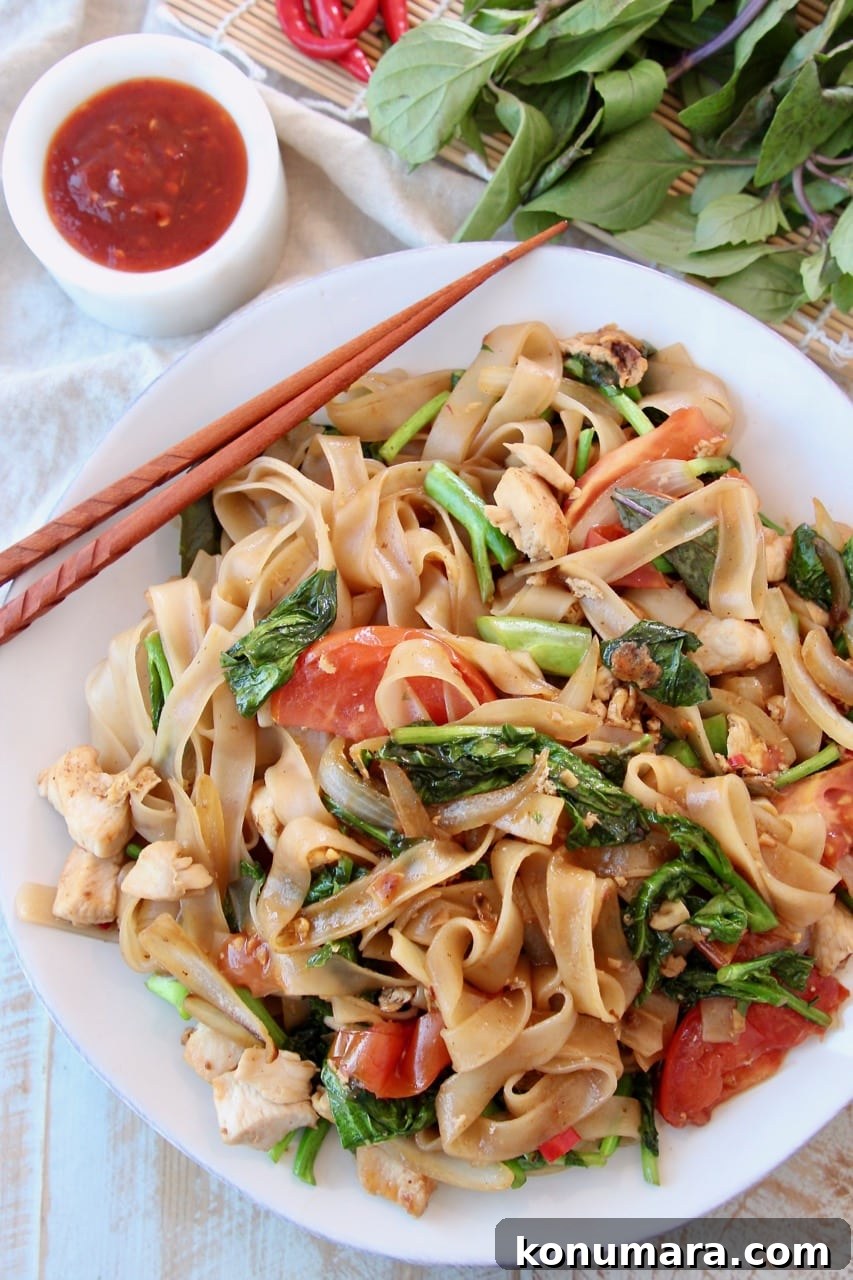
Thai basil shines in many preparations. Its sturdy leaves hold up to high heat, making it ideal for quick stir-fries and tossed noodle dishes. It also performs well added to simmering curries, finishing soups, or stirred into salads for a last-minute aromatic boost. Use it with meats like chicken, pork, beef and shrimp, or add it to vegetarian and vegan dishes for extra depth.
Practical ideas for using Thai basil at home:
- Add whole leaves or torn leaves to stir-fries and noodle dishes right before serving.
- Fold fresh leaves into spring rolls and salads for fragrance and texture.
- Blend Thai basil into a pesto or chimichurri-style sauce to marinate meats or dress vegetables.
Try it in popular dishes such as Thai basil chicken, drunken noodles, basil chicken dumplings, Thai-style beef, coconut shrimp curry, or fresh spring rolls. It also pairs well with Pad Thai, yellow curry, and coconut-based soups—just add it near the end so its bright flavor remains noticeable.
When using Thai basil, add leaves toward the end of cooking to preserve their aroma. While the leaves, stems and flowers are edible, remove any tough, woody stems and reserve the tender parts for eating.
Where to buy it
Thai basil is commonly available at Asian grocery stores and many larger supermarkets that stock international produce. Look for it in the refrigerated herb section alongside cilantro, mint and parsley.
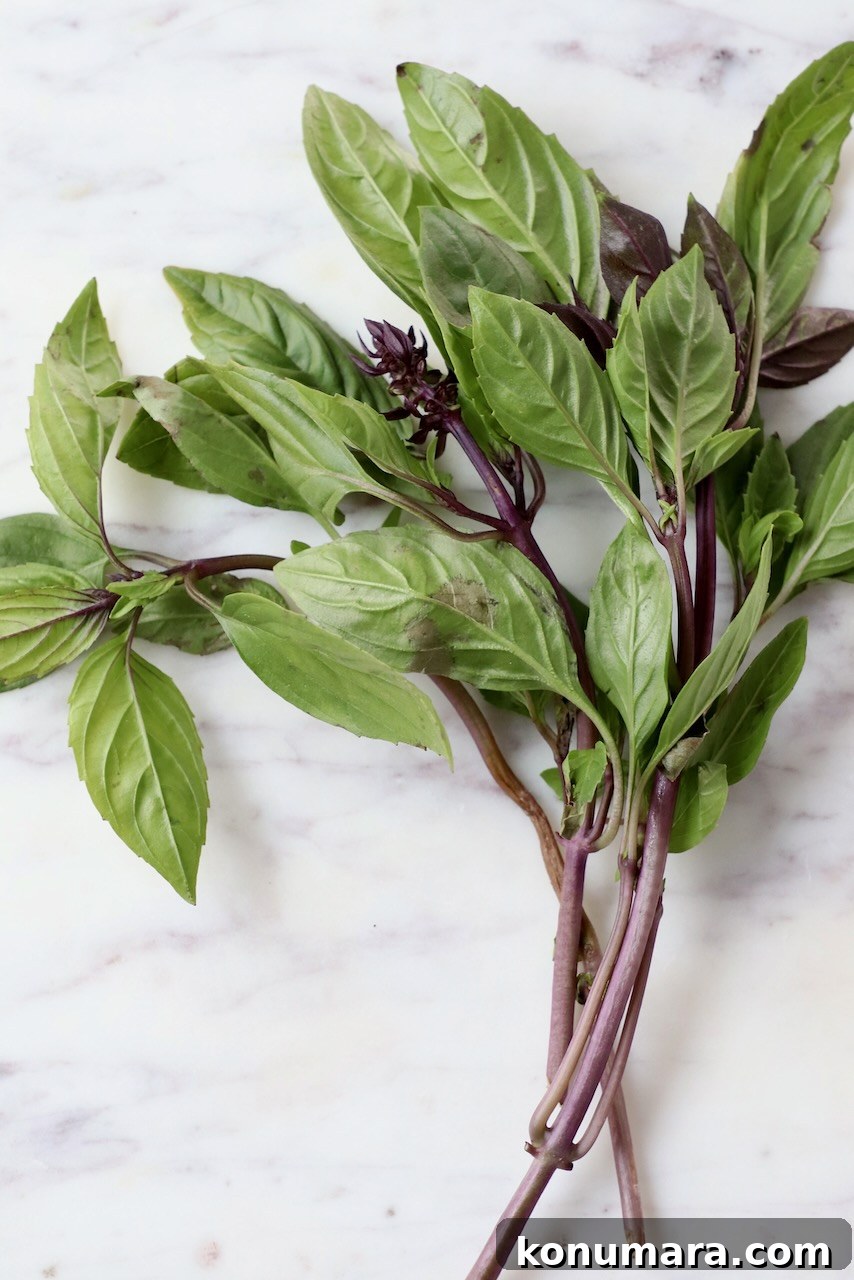
Asian markets often offer the freshest and widest selection of Southeast Asian herbs, including different varieties of Thai basil. Choose bunches with shiny, dark green leaves and no yellowing or brown spots. The leaves should feel slightly firm rather than floppy.
To store fresh Thai basil, wrap it loosely in a damp paper towel and place it in the refrigerator; it will usually keep for up to a week. If fresh basil is hard to find, consider buying a small plant and growing it on a sunny windowsill so you always have leaves on hand.
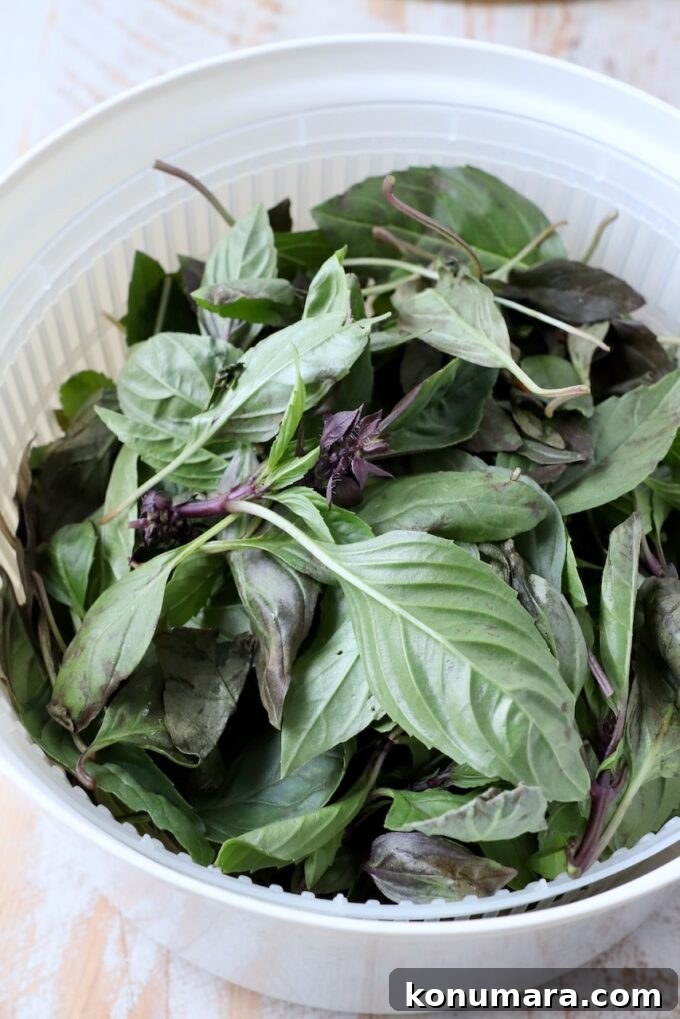
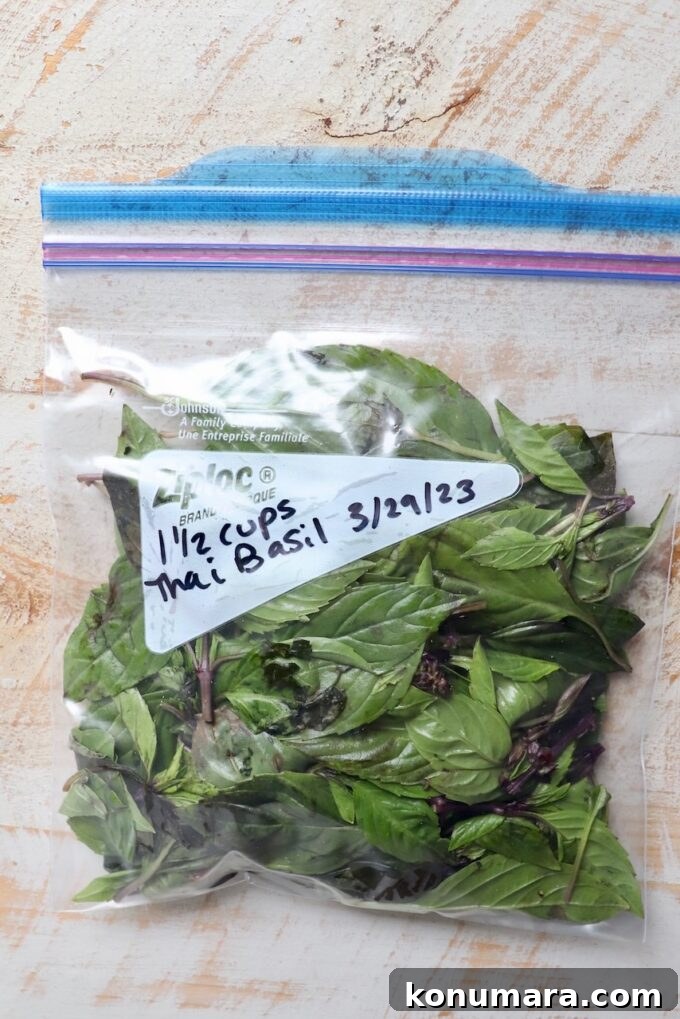
How to freeze Thai basil
When Thai basil is available in abundance, freezing preserves its flavor for months and makes it easy to use later. Properly frozen basil retains much of its aroma for up to six months. Follow these simple steps:
- Wash and separate: Remove leaves from the stems and rinse under cold water to remove dirt.
- Dry thoroughly: Pat leaves dry with paper towels or use a salad spinner. Minimize moisture to avoid freezer burn.
- Portion and pack: Divide leaves into cooking-sized portions and place in labeled freezer-safe bags or containers. Freeze flat to save space.
- Use from frozen: Add frozen basil directly to hot dishes; it will thaw quickly and blend into sauces, soups and stir-fries.
Differences between Thai basil, basil and holy basil
Thai basil, sweet (Italian) basil and holy basil are all in the mint family but differ in flavor, look and culinary use. Understanding these differences helps you choose the right herb for a recipe.
- Flavor: Thai basil is more assertive and aromatic, with anise/licorice notes and a slight pepperiness. Sweet basil (Italian) is milder, sweeter and more clove-like. Holy basil tends to be more pungent and peppery, with medicinal or clove-like nuances.
- Appearance: Thai basil typically has narrower, shinier, darker green leaves and often purple-tinged stems. Sweet basil has broader, softer green leaves and green stems. Holy basil usually has a rougher leaf texture and a different overall shape.
- Culinary uses: Thai basil is central to Thai and Vietnamese dishes—used in stir-fries, curries and fresh rolls. Sweet basil is a cornerstone of Italian cuisine, perfect for pesto, tomato dishes and Mediterranean sauces. Holy basil is frequently used in Indian and Southeast Asian preparations such as curries and herbal teas.
Because their flavors are distinct, they are not perfect substitutes for one another. If you need to replace Thai basil with sweet basil, consider adding a small amount of fresh mint to approximate the brighter, slightly anise-like character of Thai basil.
More ingredients to learn about
If you enjoy exploring pantry ingredients, consider reading ingredient guides on other flavorful staples such as harissa, turmeric, teff, shirataki noodles, and coconut aminos to expand your culinary repertoire.
- Harissa
- Turmeric
- Teff
- Shirataki noodles
- Coconut aminos