
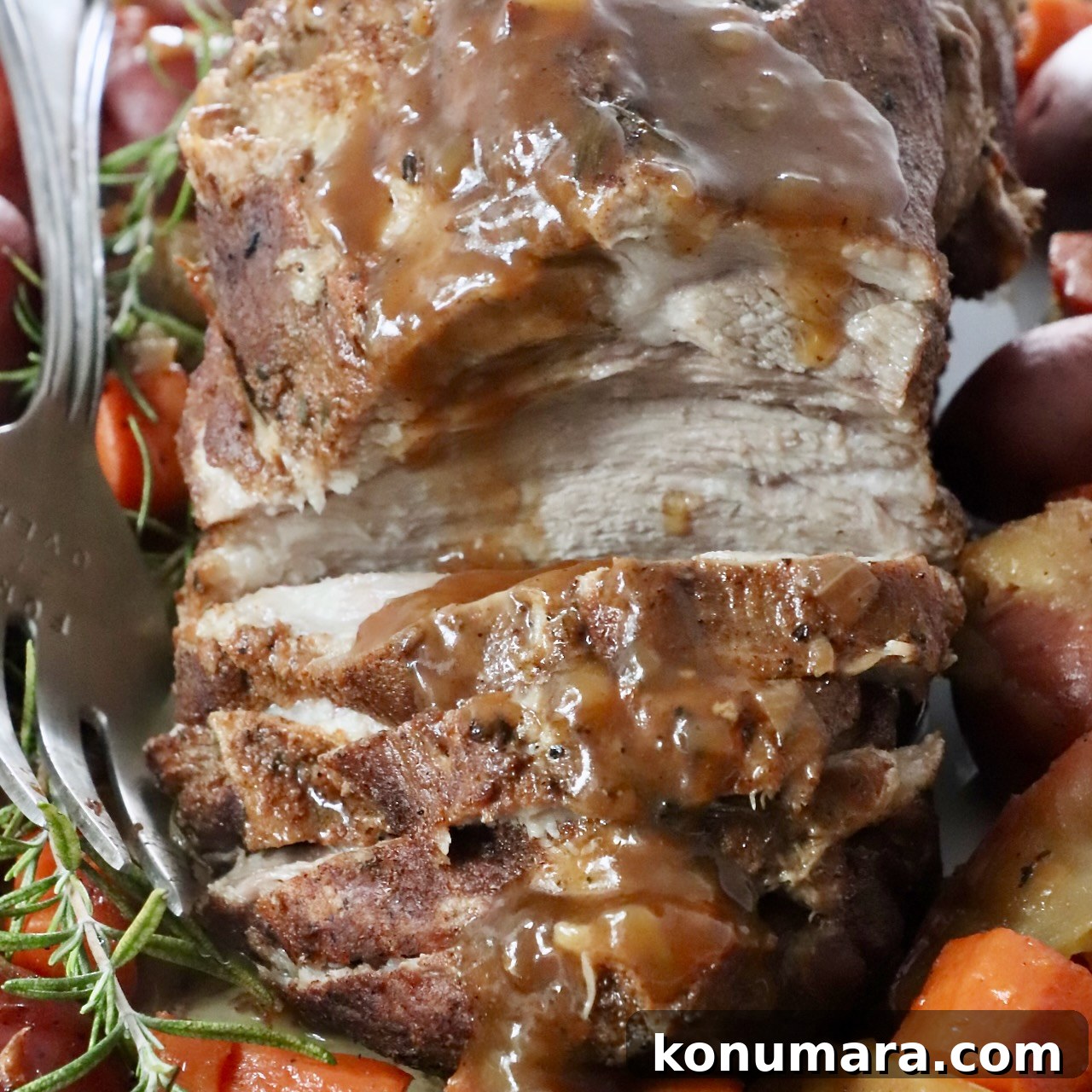
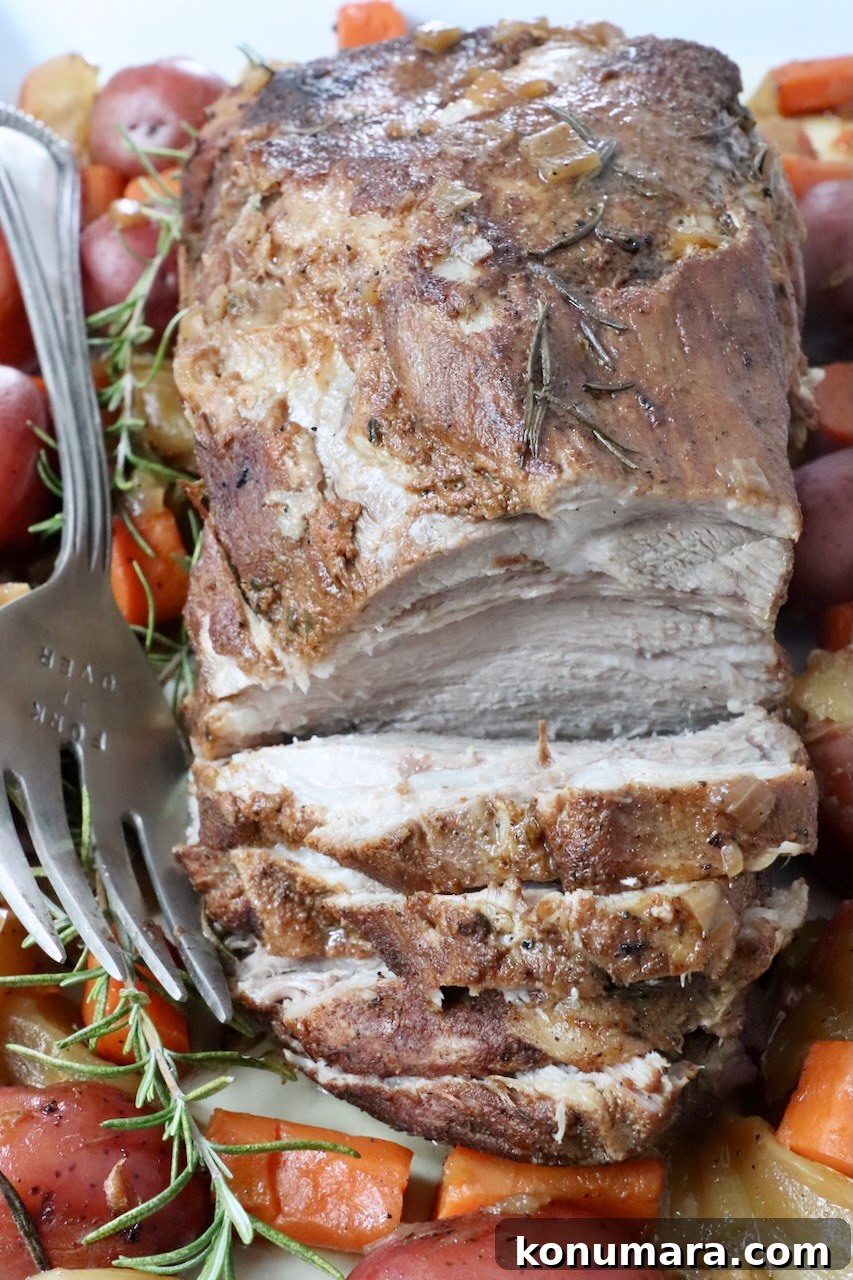
Make a juicy, tender, and flavorful Pork Roast with this easy oven-roasted pork shoulder recipe. The roast is coated in a homemade pork seasoning, then slow-cooked with beef stock and apple juice for a balanced sweet-and-savory profile. Vegetables roast alongside the meat, so when the pork finishes, a complete family meal is ready to serve.
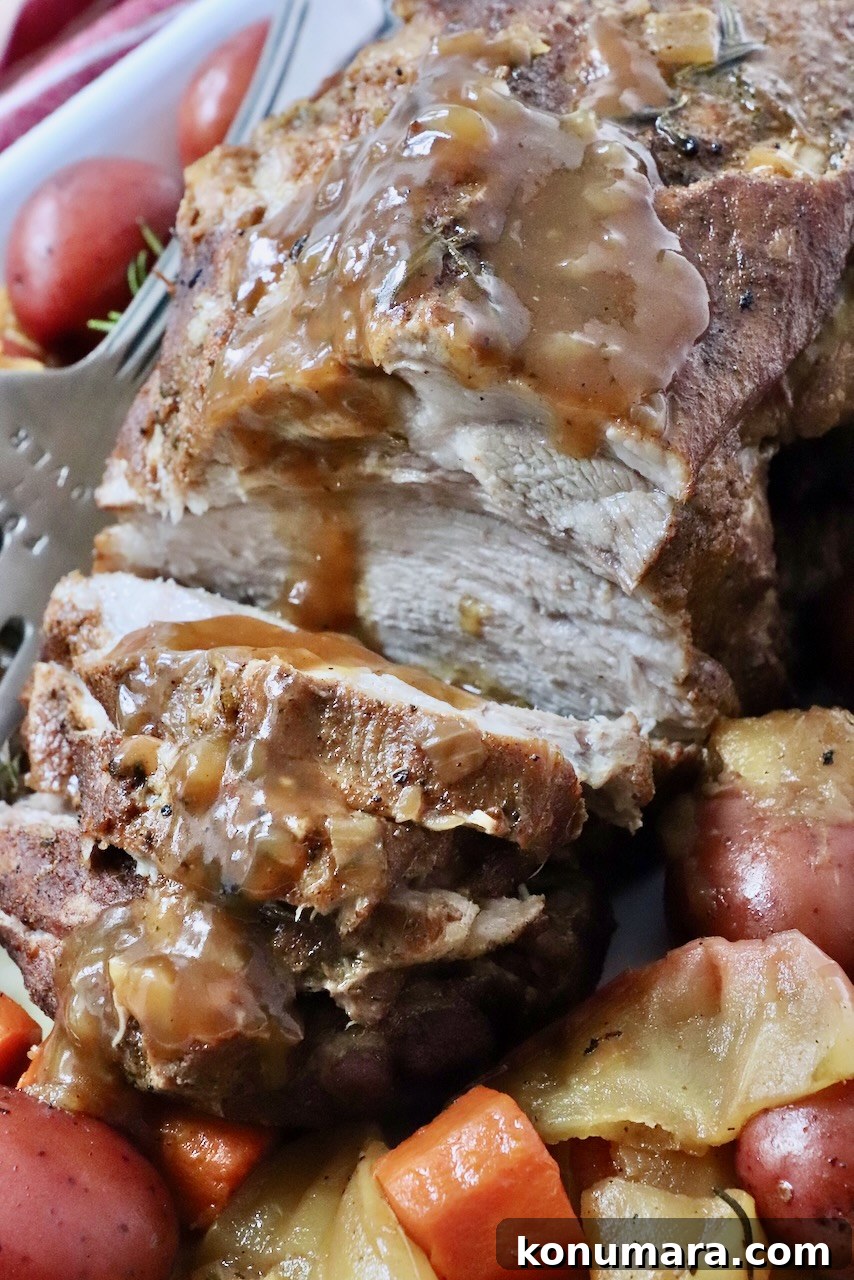
Why this pork roast recipe is the best
After refining classic pot roast techniques I adapted them to pork shoulder, adjusting seasonings and liquids to complement pork’s natural flavor. The result is an oven-roasted pork shoulder that delivers deep savory notes, a hint of sweetness from apple juice, and a rich pan sauce made from the roast drippings.
If you want a comforting Sunday dinner that feeds a crowd and makes great leftovers, this pork roast is a reliable choice. Here are the key reasons it stands out:
- Seasoning that enhances the pork. A simple homemade pork seasoning—made from pantry spices and herbs—adds layers of flavor beyond plain salt and pepper. It’s easy to make ahead and keeps well.
- Rich gravy from the pan drippings. The combined flavors of pork drippings, beef stock, and apple juice make a slightly sweet, savory sauce you can thicken to a glaze-like consistency and serve alongside the sliced roast.
- Reliable tenderness and juiciness. Slow-roasting at a moderate temperature for the right amount of time produces a pork roast that slices beautifully while remaining moist.
Ingredients
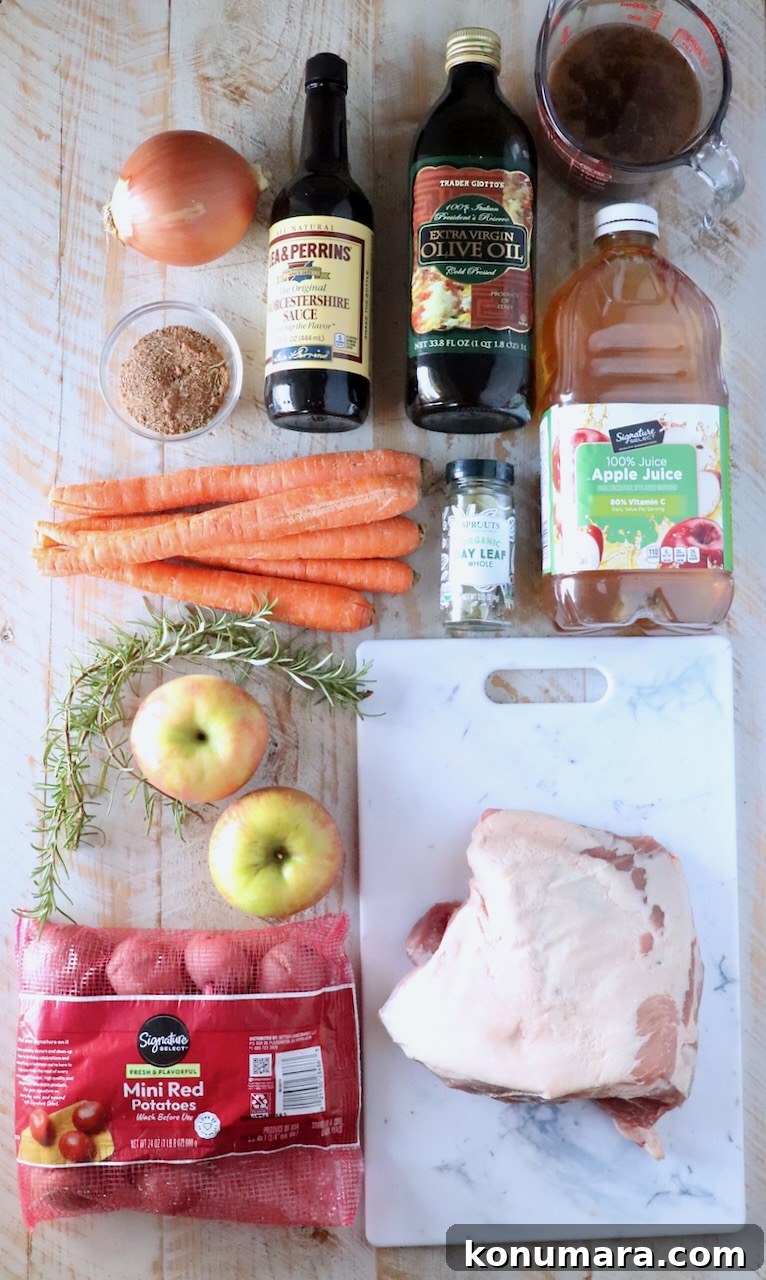
Below are the ingredients that work best for this pork roast along with substitution suggestions. For precise measurements see the recipe card further down.
- Pork shoulder – Use a pork shoulder (also called pork butt, Boston butt, or picnic shoulder), bone-in or boneless. Bone-in adds more flavor but takes slightly longer to cook; boneless is easier to slice. Trim excess fat so only a thin layer remains.
- Pork seasoning – A simple dry rub of common spices and dried herbs elevates the pork. Use your favorite pork or all-purpose seasoning.
- Olive oil – For searing and sautéing onions.
- Beef stock – Adds savory depth to the braising liquid. If you prefer, use a high-quality beef broth or stock.
- Apple juice – Adds a subtle sweetness that pairs beautifully with pork. Replace with additional beef stock if you prefer no sweetness.
- Worcestershire sauce – Adds umami and a touch of tang; soy sauce can be used as a substitute.
- Onions – Roughly 2 cups diced (about one large onion).
- Carrots – Peel and cut into 2-inch pieces so they hold their shape while braising.
- Mini red potatoes – Use small whole potatoes (mini or baby potatoes) so they cook through without falling apart.
- Fresh rosemary – Or swap with fresh thyme sprigs if you prefer.
- Bay leaves – Two leaves added to the braising liquid deepen the aromatic profile.
- Honeycrisp apples (optional) – Added during the final 30 minutes of cooking for tender, slightly sweet slices that pair well with the pork.
- Cornstarch (optional) – For thickening the pan juices into gravy.
Instructions
The method below walks you through searing, braising, and resting the roast. Step-by-step photos are included to help visualize key points. Preheat the oven to 325°F before you begin.
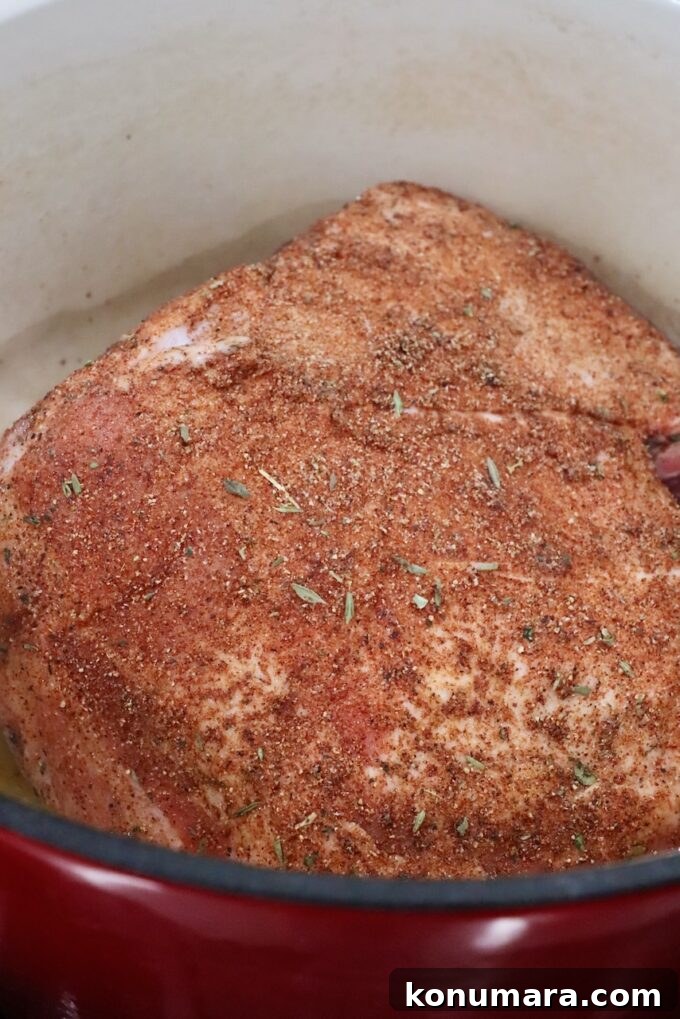
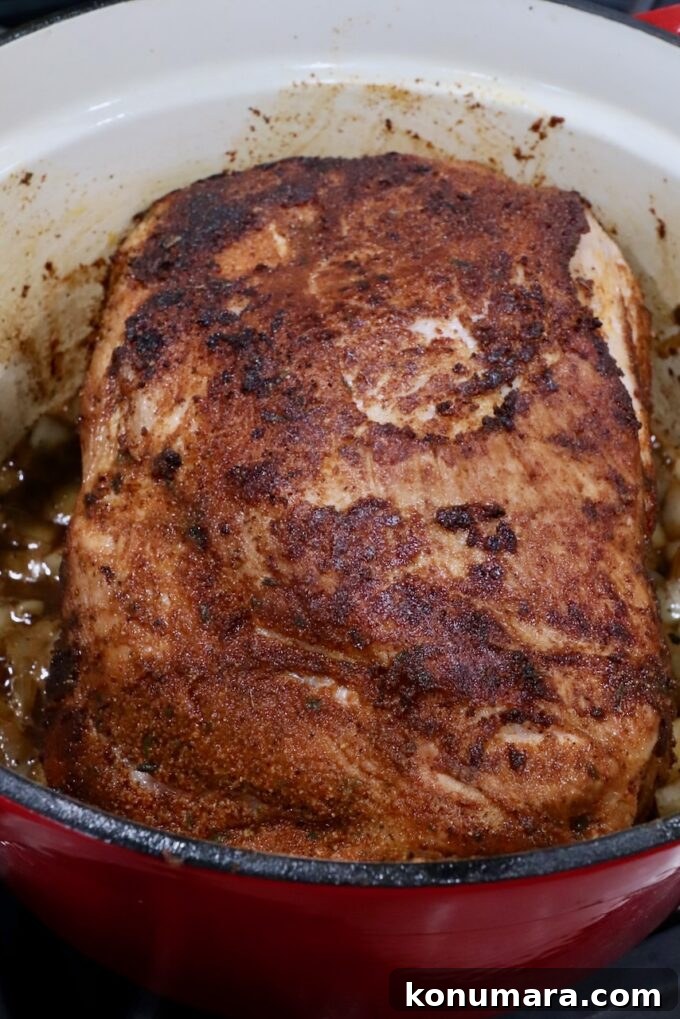
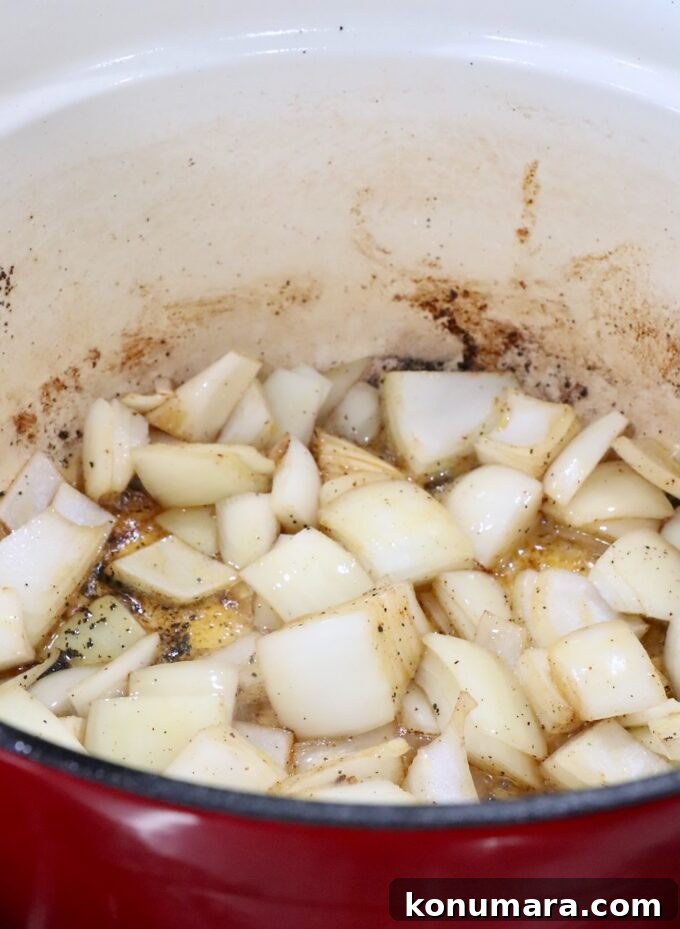
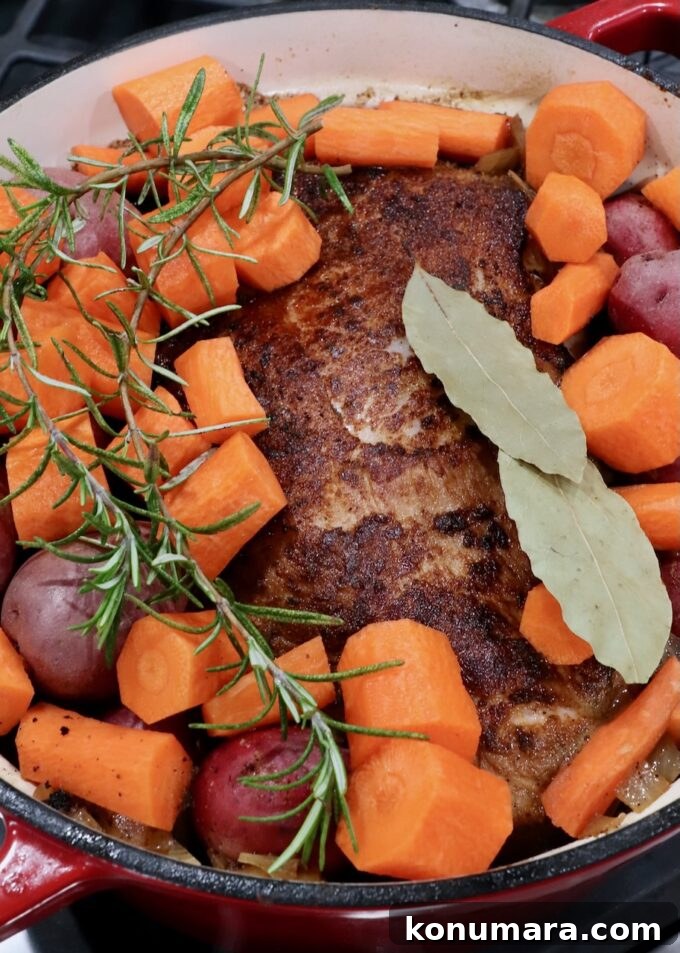
- Season the pork shoulder. Pat the pork dry and trim any excess fat, leaving a thin fat cap for flavor. Rub the pork on all sides with the pork seasoning.
- Sear the pork. Heat 2 tablespoons olive oil in a large oven-safe pot or Dutch oven over high heat. Sear the pork on all sides, about 2 minutes per side, until nicely browned. Remove and set aside.
- Sauté the onions. Add the remaining tablespoon of olive oil to the pot. Cook the diced onions for about 5 minutes, then pour in 1/4 cup beef stock and scrape the browned bits to deglaze the pot. Return the pork to the pot.
- Add liquids, vegetables, and herbs. Pour in the remaining beef stock, apple juice, and Worcestershire sauce. Nestle the mini potatoes and carrots around the pork—these do not need to be fully submerged; they will steam as the roast cooks. Bring the liquid to a boil, add rosemary sprigs and bay leaves, then cover tightly.
- Roast the pork. Place the covered pot in the preheated 325°F oven. For a 4–6 pound pork shoulder, roast uncovered for a total of about 2 hours: 90 minutes covered, then remove the lid, add apple wedges, and roast an additional 30 minutes or until the internal temperature reaches 180°F. Remove from the oven, discard bay leaves and rosemary, tent the roast loosely with foil, and let rest 20 minutes before slicing.
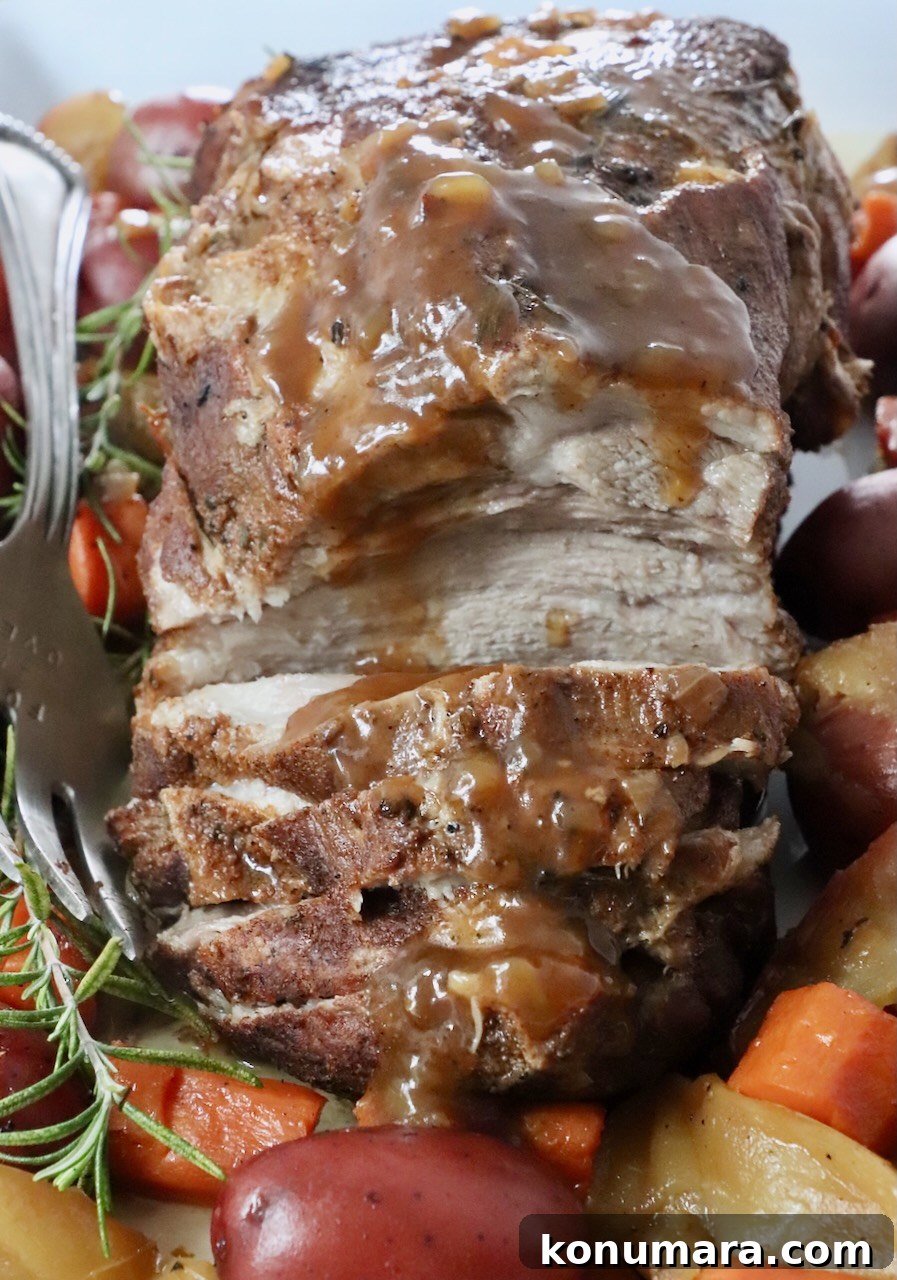
How to make gravy with the drippings
This pan gravy is optional but highly recommended. It’s simple to prepare while the pork rests and highlights the roast’s flavor.
- Transfer the cooked vegetables to a warm serving platter and cover with foil.
- Strain the braising liquid through a fine-mesh strainer into a bowl. Measure out 1 cup of the strained liquid and bring it to a boil in a small saucepan.
- Whisk together 1 tablespoon cornstarch and 1 tablespoon water to make a slurry.
- When the liquid is boiling, whisk in the cornstarch slurry and simmer 1–2 minutes until the sauce thickens to a glaze-like consistency. Remove from heat and serve alongside the sliced pork.
The gravy blends apple juice, beef stock, and pork drippings for a balanced sweet-and-salty finish that complements the meat and roasted vegetables.
Temperature and timing for roasting pork
This recipe is tested with pork shoulders between 4 and 6 pounds. Cooking time depends on weight and whether the roast is bone-in or boneless:
- Boneless shoulder near 4 pounds: add apples after about 75 minutes, then continue for roughly 30 more minutes before checking temperature.
- Bone-in shoulder nearer 6 pounds: roast covered for 90 minutes, add apples, and cook another 30 minutes before checking temperature.
Cook to temperature, not time. For a sliced pork roast that stays tender and moist, aim for an internal temperature between 180–190°F. If you want pull-apart pork for shredding, cook to higher temperatures (around 205°F), but that will yield meat better suited to shredding than slicing.
If the roast hasn’t reached the target temperature, continue cooking and check every 10 minutes until done.
Storage and reheating
Store leftovers in an airtight container in the refrigerator for up to 5 days. Reheat using one of these methods:
- For individual slices: warm in a skillet over medium-high heat for 2–3 minutes per side.
- For larger portions: wrap in foil and heat in a 350°F oven for 15–20 minutes or until warmed through.
- Or shred leftovers and reheat with your favorite barbecue sauce for sandwiches.
More comfort food recipes
Try other classic comfort-dinner ideas to pair with this roast: Salisbury steak, chicken pot pie with puff pastry, crock pot meatloaf, or Italian meatballs. These hearty dishes suit family dinners and make great leftovers.
Pork Roast
Juicy, tender oven-roasted pork shoulder seasoned with a homemade dry rub, braised in beef stock and apple juice with vegetables. Serve sliced with the pan gravy.
Servings: 8 servings
Prep Time: 25 minutes | Cook Time: 2 hours | Resting Time: 20 minutes | Total Time: 2 hours 45 minutes
Author: Whitney Bond
Ingredients
- 4–6 pound pork shoulder, boneless or bone-in
- 3 tablespoons pork seasoning (dry rub)
- 3 tablespoons olive oil, divided
- 1 1/2 cups beef stock
- 1 1/2 cups apple juice
- 1 tablespoon Worcestershire sauce (or soy sauce)
- 2 cups onions, large dice
- 1 pound carrots, peeled and cut into 2-inch pieces
- 1 1/2 pounds mini red potatoes
- 2 sprigs fresh rosemary (or thyme)
- 2 bay leaves
- 2 Honeycrisp apples, cored and sliced into wedges (optional)
- 1 tablespoon cornstarch (optional, for gravy)
Instructions
- Preheat oven to 325°F.
- Pat the pork dry and trim excess fat. Rub the pork shoulder on all sides with the pork seasoning.
- Heat 2 tablespoons olive oil in a 7-quart (or larger) oven-safe pot or Dutch oven over high heat. Sear the pork 2 minutes per side until browned; remove and set aside.
- Add the remaining 1 tablespoon olive oil to the pot and cook the onions for 5 minutes. Pour in 1/4 cup beef stock to deglaze, scraping up browned bits. Return the pork to the pot.
- Pour in the remaining beef stock, apple juice, and Worcestershire sauce. Arrange potatoes and carrots around the pork—vegetables do not need to be submerged. Bring the liquid to a boil, add rosemary and bay leaves, then cover and transfer to the oven.
- Bake covered for 90 minutes. Remove the lid, add apple wedges, and bake another 30 minutes or until the pork reaches 180°F. The temperature will rise 5–10°F while resting.
- Remove pork from the oven, discard bay leaves and rosemary, tent with foil, and rest 20 minutes before slicing and serving.
Make a gravy for the pork (optional)
- Move vegetables to a platter and cover to keep warm.
- Strain the pot liquid into a bowl and measure out 1 cup. Bring it to a boil in a small saucepan.
- Mix 1 tablespoon cornstarch with 1 tablespoon water to make a slurry. Whisk the slurry into the boiling liquid and simmer 1–2 minutes until thickened. Remove from heat and serve with the pork.
Notes
- Bone-in shoulder adds flavor but requires a bit more cooking time; boneless roasts are easier to slice.
- Plan for about a half-pound of meat per person. A 4-pound roast will serve roughly 8; a 6-pound roast will feed about 12.
- Leftovers keep in an airtight container in the fridge up to 5 days. Reheat in a skillet or wrapped in foil in a 350°F oven.
- You can braise the roast on the stovetop over medium-low heat for about 2 hours instead of using the oven.
- If you prefer no apple flavor, replace the apple juice with additional beef stock.
Nutrition Facts (per serving, approximate)
Calories: 420 kcal • Carbohydrates: 39 g • Protein: 31 g • Fat: 16 g • Sodium: 282 mg