
Learn how to cut a mango with this clear, step-by-step guide. Mango is a sweet, juicy stone fruit that’s wonderful straight from the skin or chopped for salsas, salads, smoothies and more. This guide walks you through choosing a ripe mango, cutting it safely, removing the seed, and preparing cubes or slices for recipes. Follow these practical tips to get the most from every mango.
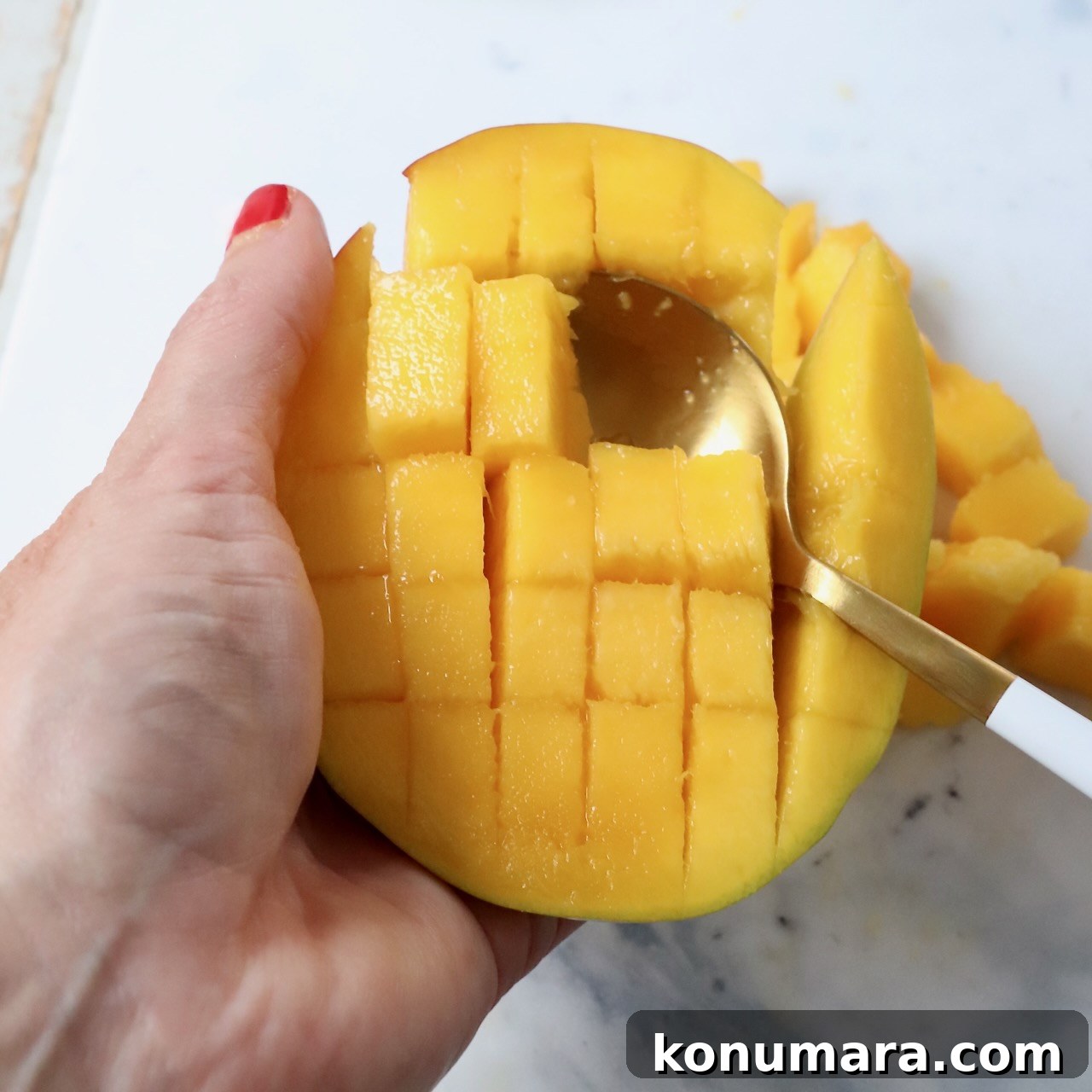
Table of contents
- How to select a mango
- How to cut a mango
- Frequently asked questions
- Ways to use mangos in recipes
- More kitchen tutorials
When mangoes are in season I love dicing a mango to top yogurt, acai bowls, salads and tacos, or to fold into salsas and sippers. Knowing how to pick a ripe mango and how to cut it cleanly makes it quick and enjoyable to prepare this tropical fruit. Below you’ll find selection tips, step-by-step cutting instructions, storage advice, and simple ways to use mango in the kitchen.
How to select a mango
Pick up the mango and give it a gentle squeeze. A ripe mango will yield slightly when pressed but should not feel mushy. If a mango is rock hard it needs more time to ripen; if it gives too easily or has soft spots it may be overripe and watery when cut.
Color alone is not a reliable indicator of ripeness because mango varieties show different hues when ready. While many ripe mangoes show yellow, orange, or red tones, some remain largely green even when ripe. Avoid choosing a fully green mango if you want immediate ripeness.
Smell the stem end: a sweet, fruity aroma near the stem usually indicates a ripe mango. Also check the skin for bruises or large blemishes—minor marks are fine, but soft dark patches show overripeness.
How to cut a mango
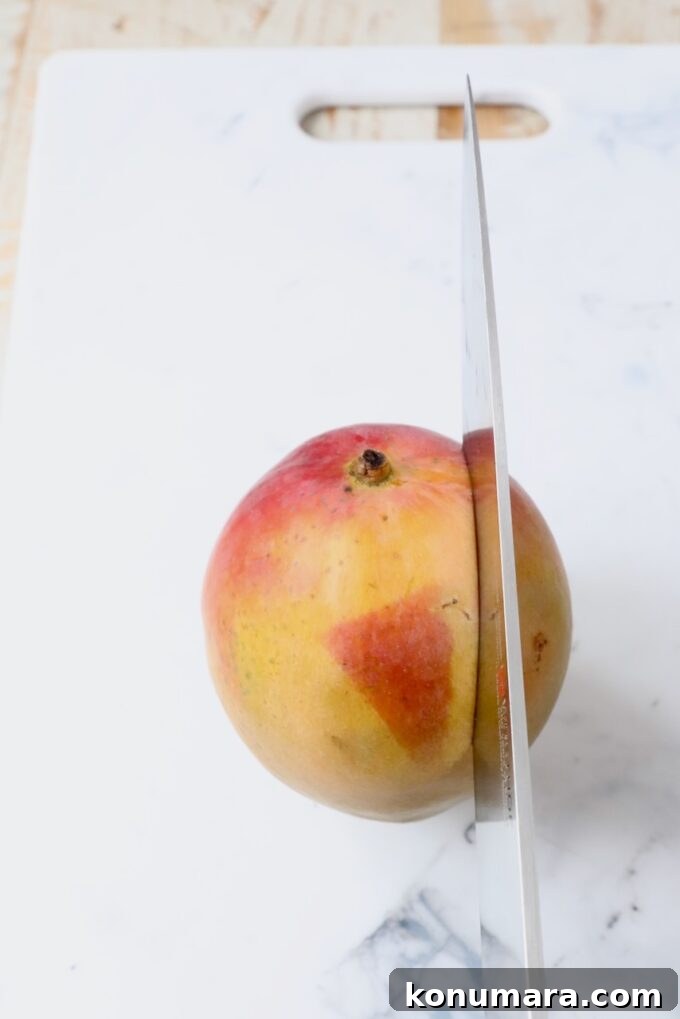
- Position the mango upright on a cutting board with the stem end facing up. The flat, oblong seed runs down the center of the fruit, so plan to slice on either side of that seed.
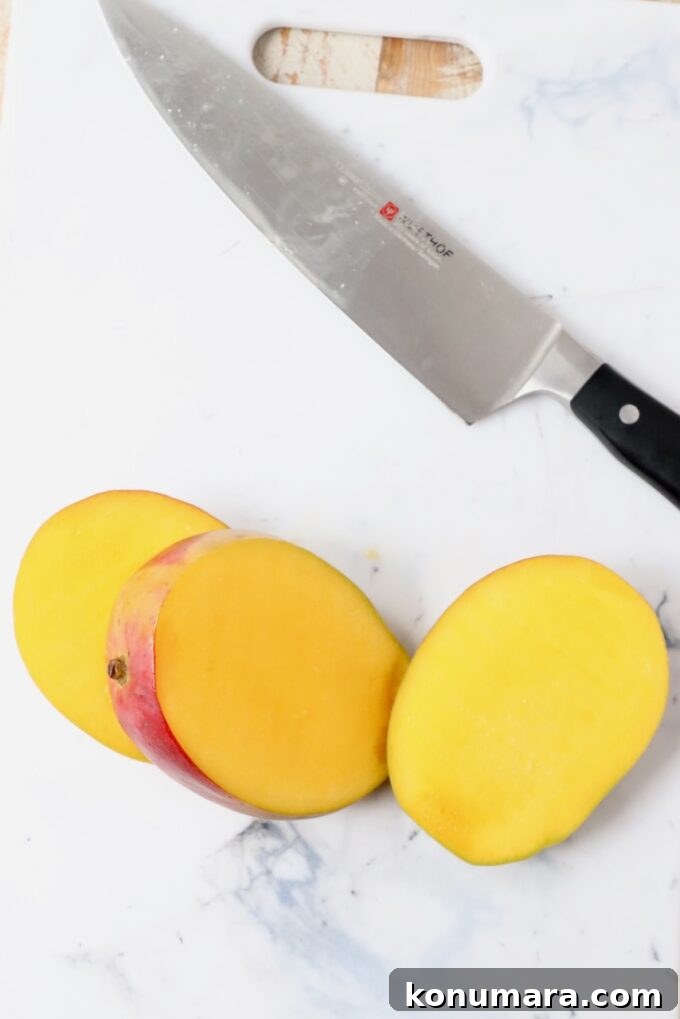
- Using a sharp chef’s knife, slice down about 1 inch from the center on the first side to remove one cheek. Repeat on the opposite side to remove the second cheek. These two pieces contain the bulk of the flesh.
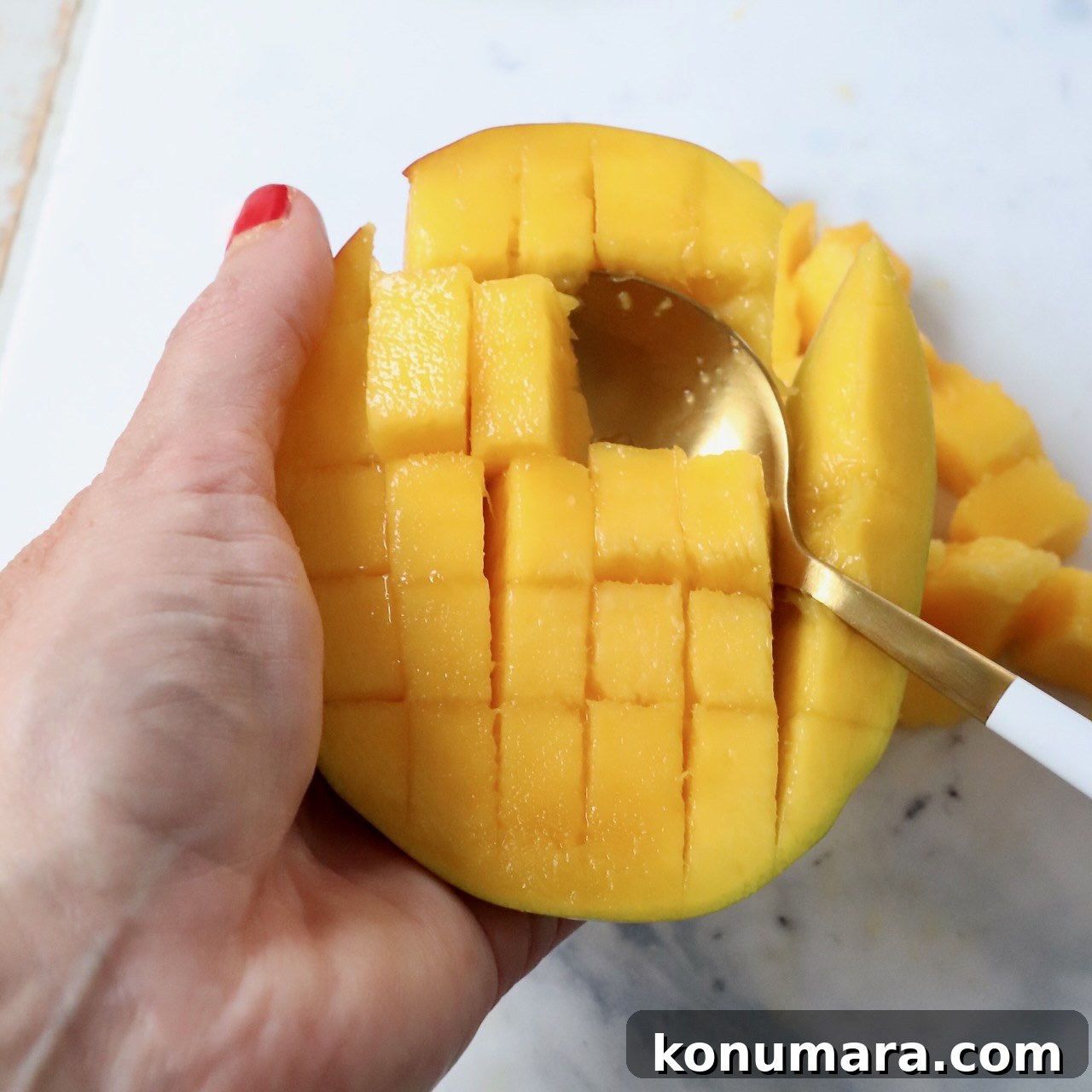
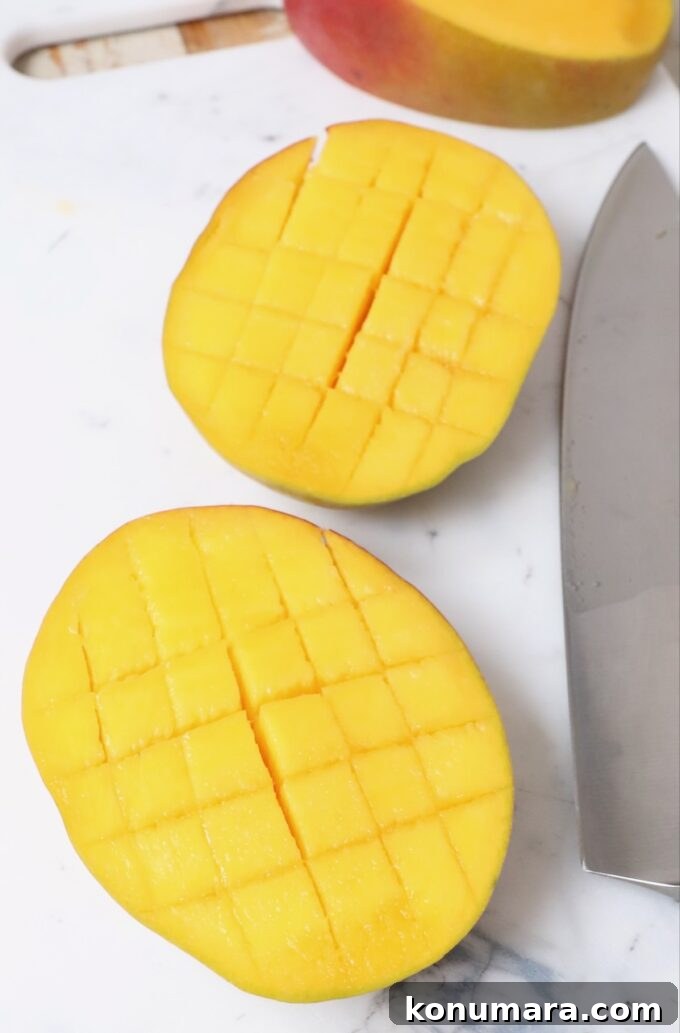
- With one cheek in hand or placed flesh-up on the board, make lengthwise cuts through the flesh followed by crosswise cuts to form a grid. Cut most of the way through the mango flesh but stop at the skin—do not cut through the skin.
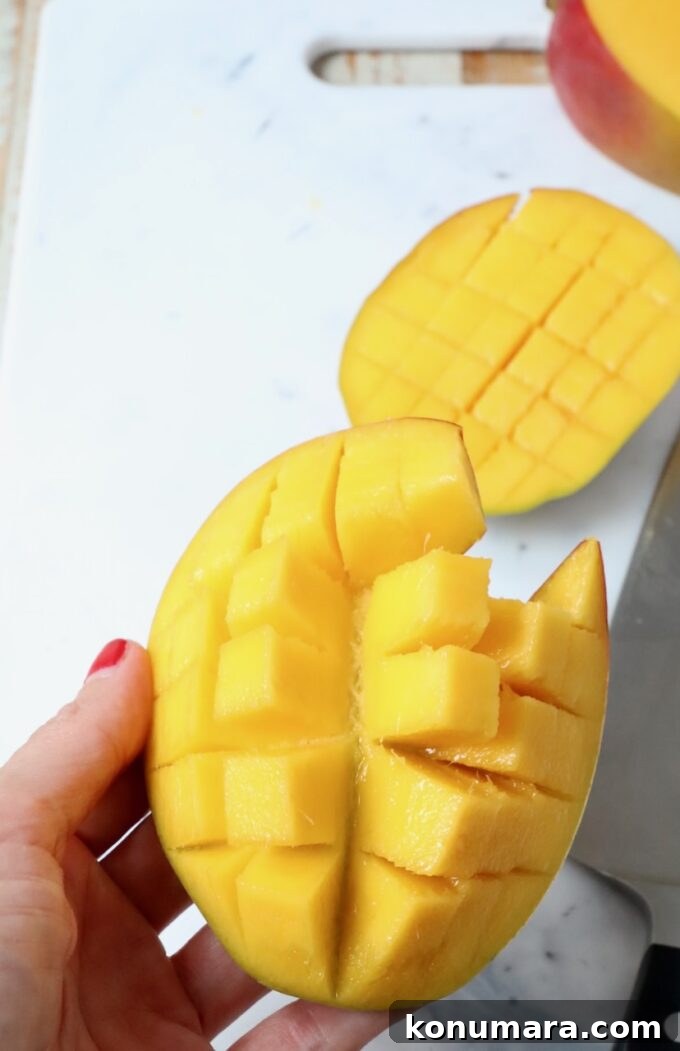
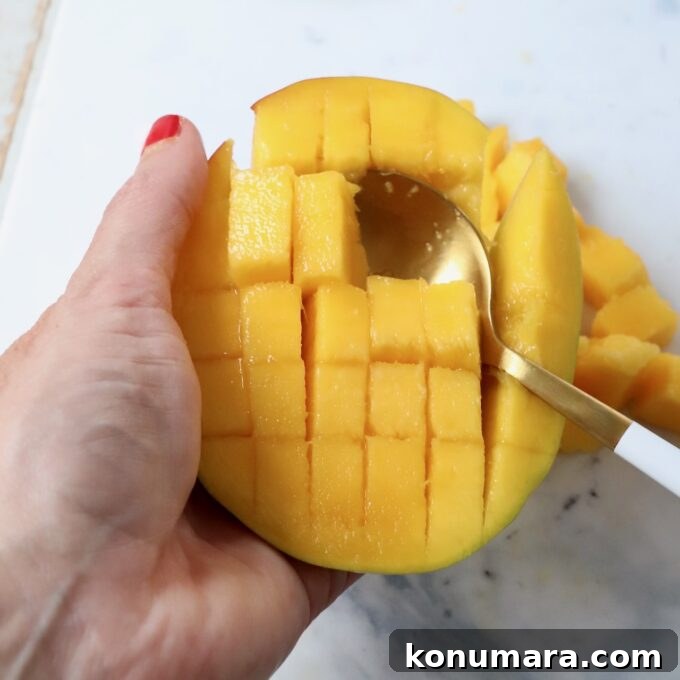
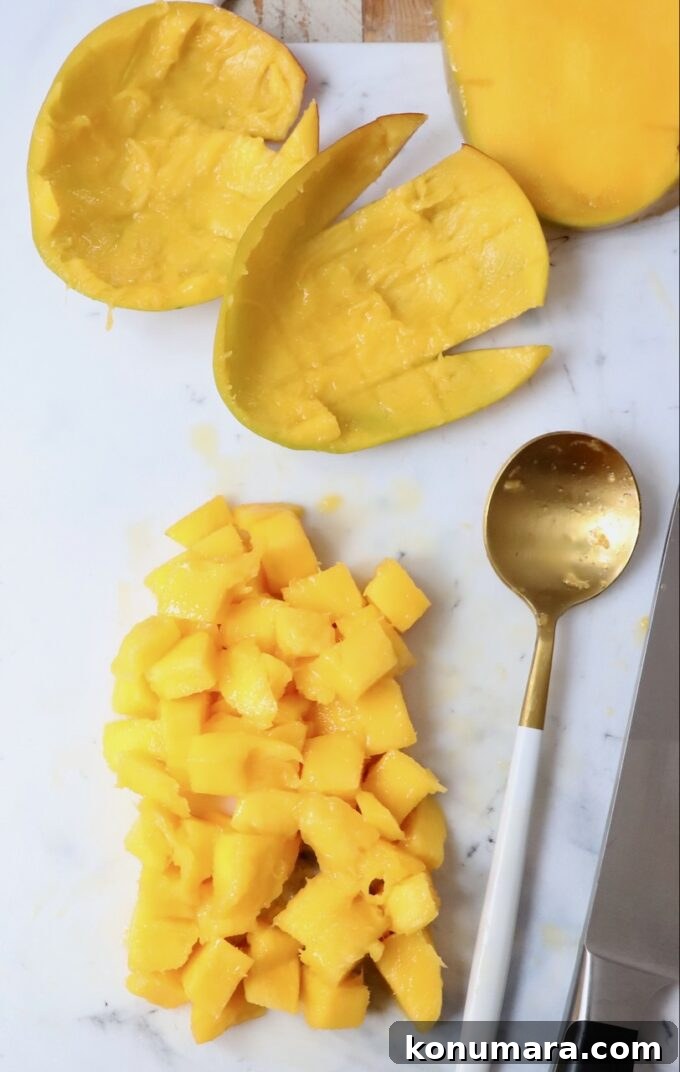
- Flip the cheek inside out or press from the back so the cubes fan out. Run a spoon between the flesh and the skin to release the cubes and scoop them into a bowl. Alternatively, use a small paring knife to slide under the cubes and lift them free.
- The center section that contains the seed will still hold some clingy flesh. You can pare off any usable bits with a knife or simply discard the seed section. Be careful when cutting near the seed to avoid slipping.
Tips: use a non-slip cutting board, stabilize the mango with a towel if needed, and always cut away from your body. A serrated knife is not ideal—use a sharp straight-edged knife for cleaner cuts and less squishing.
Frequently asked questions
- How do you cut a mango into strips? Instead of making a grid, slice the cheek into parallel vertical slices. Use a spoon or a small paring knife to separate the strips from the skin.
- How do you cut a mango with a glass? For very ripe mangoes, slide the rim of a sturdy glass between the skin and the flesh after removing the cheeks. The glass can help separate the flesh from the skin, but this method works best with very soft, ripe mangoes.
- Can you eat mango skin? Mango skin is technically edible, but many people find its flavor and texture unpleasant. It can also cause mild allergic reactions in sensitive people. For most uses, peel or discard the skin after removing the flesh.
- Should mangoes be refrigerated? Once mangoes reach the desired ripeness, store them in the refrigerator to slow further ripening and extend freshness for up to about five days. Peeled or cut mango should be kept in an airtight container and eaten within three to five days.
- Can you freeze mangoes? Yes. Peel and dice mango before freezing. Spread pieces on a tray to pre-freeze, then transfer to a freezer-safe bag, remove excess air, and store for up to six months. Frozen mango is excellent for smoothies and frozen drinks.
Ways to use mangos in recipes
Once the mango flesh is removed and diced, it can be used in many sweet and savory dishes. Mango adds bright sweetness, acidity, and a tropical aroma. Here are common uses and recipe ideas you can try:
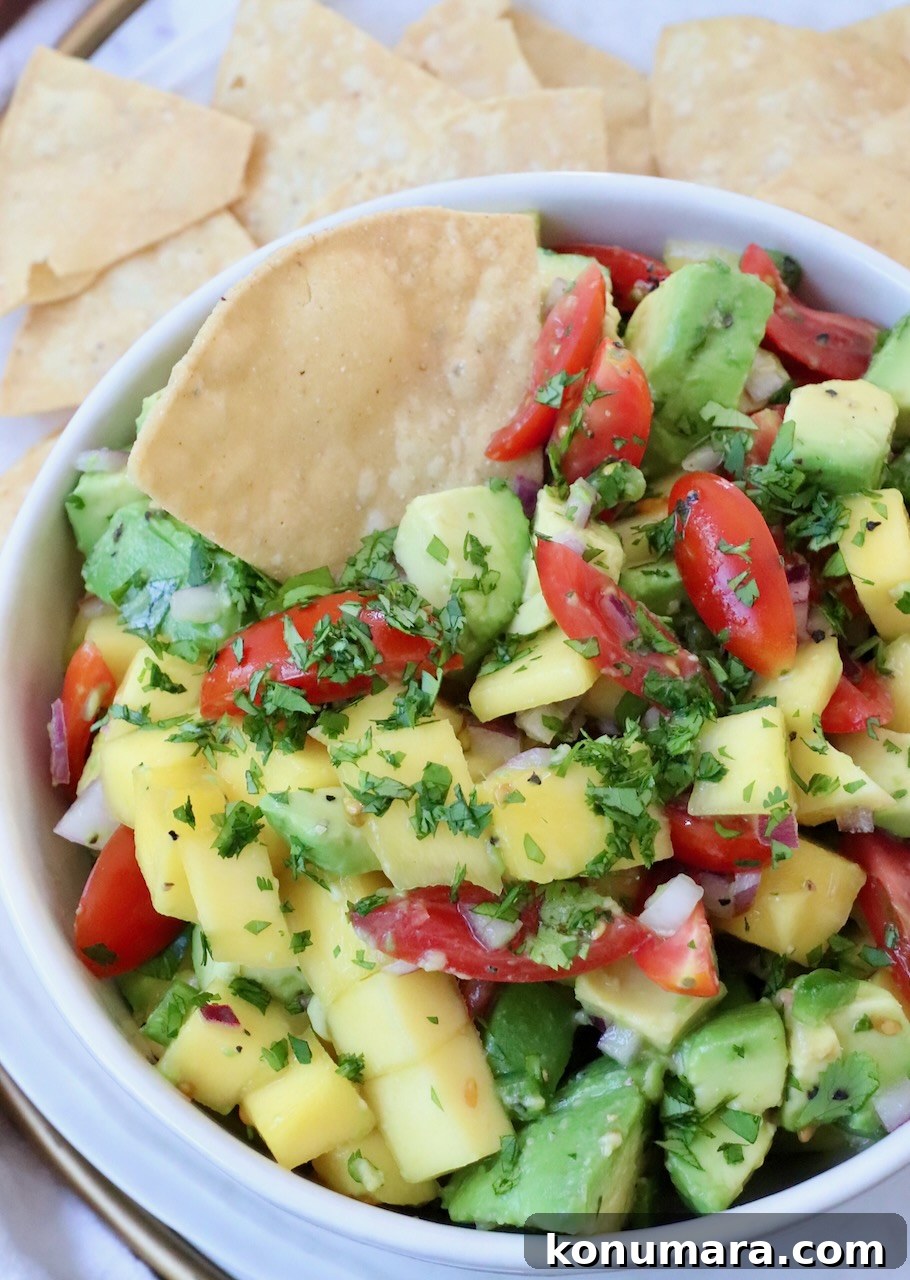
- Mango avocado salsa — a fresh topping for fish, chicken or tacos.
- Mango salsa to serve with chips or grilled meats.
- Diced mango folded into salads or grain bowls for color and sweetness.
- Mango blended into smoothies, frozen margaritas or slushes.
- Mango paired with seafood in ceviche-style salads or shrimp dishes.
- Stir-fried dishes or tropical wraps that combine mango with cilantro, lime and chili.
Try substituting mango for pineapple in recipes where you want a sweeter, smoother fruit component. Fresh mango also pairs well with creamy elements like yogurt, coconut, or avocado.
More kitchen tutorials
If you enjoy quick kitchen how-tos, try learning other basic skills that save time and improve results. Sample topics you might explore next include:

Homemade Pickles

How To Hard Boil Eggs

How To Caramelize Onions

How To Cut a Pomegranate

How To Shred Brussels Sprouts

Roasted Red Peppers
How To Cut A Mango
Summary: A short, practical guide to selecting, cutting and storing mango for immediate use or freezing.
Servings
1 mango
Prep Time
5 minutes
Ingredients
- 1 ripe mango
Instructions
- Select a ripe mango: it should give slightly to gentle pressure but not be mushy.
- Place the mango upright on a cutting board with the stem at the top.
- Slice off the two cheeks about 1 inch from the center to avoid the flat seed.
- Score each cheek into a grid without cutting through the skin, then invert or scoop out cubes with a spoon.
- Trim or discard the center seed section, taking care to remove any remaining flesh if desired.
- Store cut mango in an airtight container in the refrigerator for 3–5 days, or freeze for up to 6 months.
Notes
- To make strips instead of cubes, slice the cheek vertically and remove slices from the skin with a spoon or paring knife.
- Mango skin is edible but often bitter and texturally unappealing for many people.
- Refrigerate ripe mangoes to slow ripening. Peeled or diced mango should be kept in an airtight container and used within a few days.
- For freezing, peel and dice mango, spread pieces on a baking sheet to freeze individually, then transfer to a freezer bag for long-term storage.
Nutrition Facts (approximate per mango)
Calories: 124 kcal | Carbohydrates: 31 g | Protein: 2 g | Fat: 1 g | Fiber: 3 g | Sugar: 28 g | Vitamin C: 75 mg | Vitamin A: 2240 IU | Potassium: 348 mg