
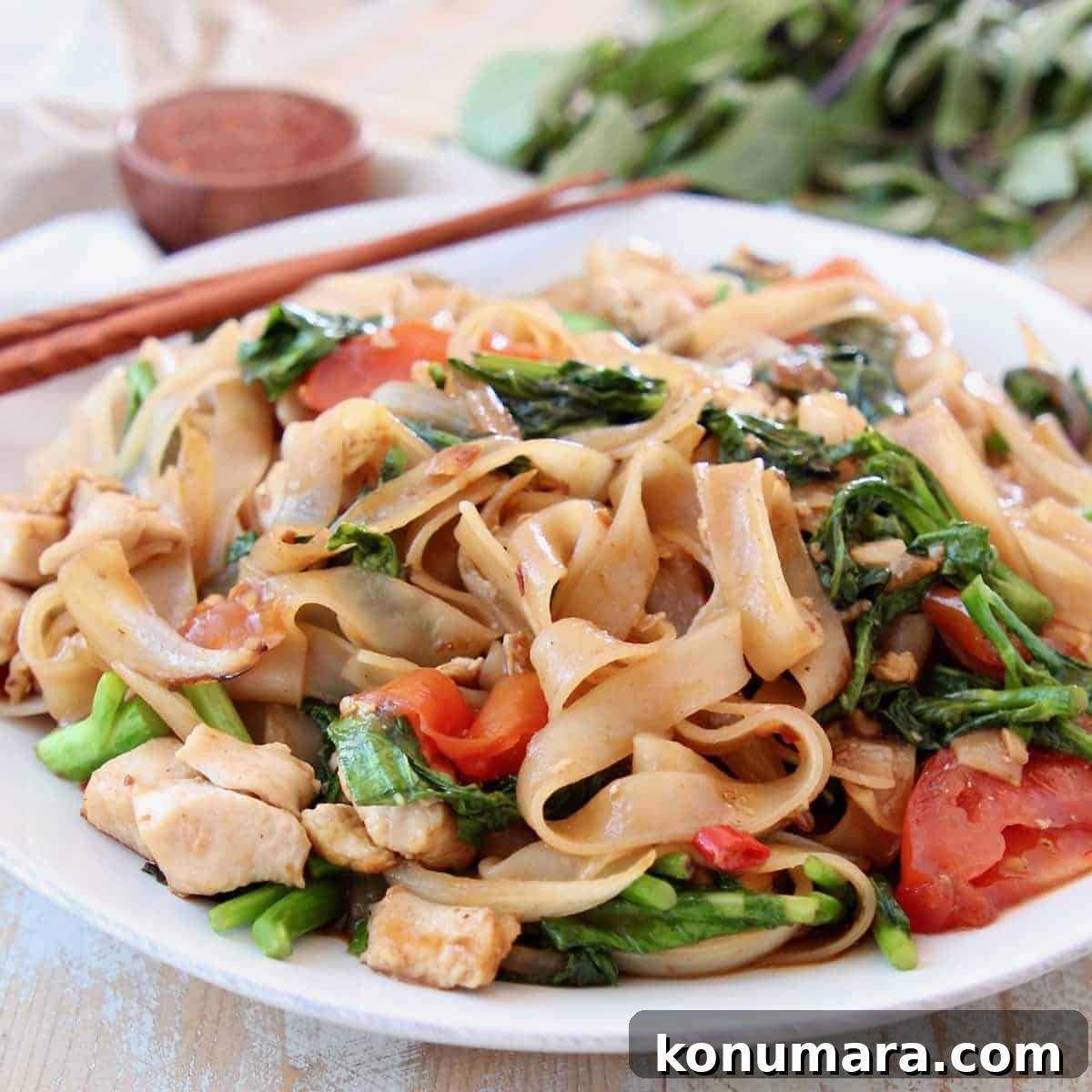
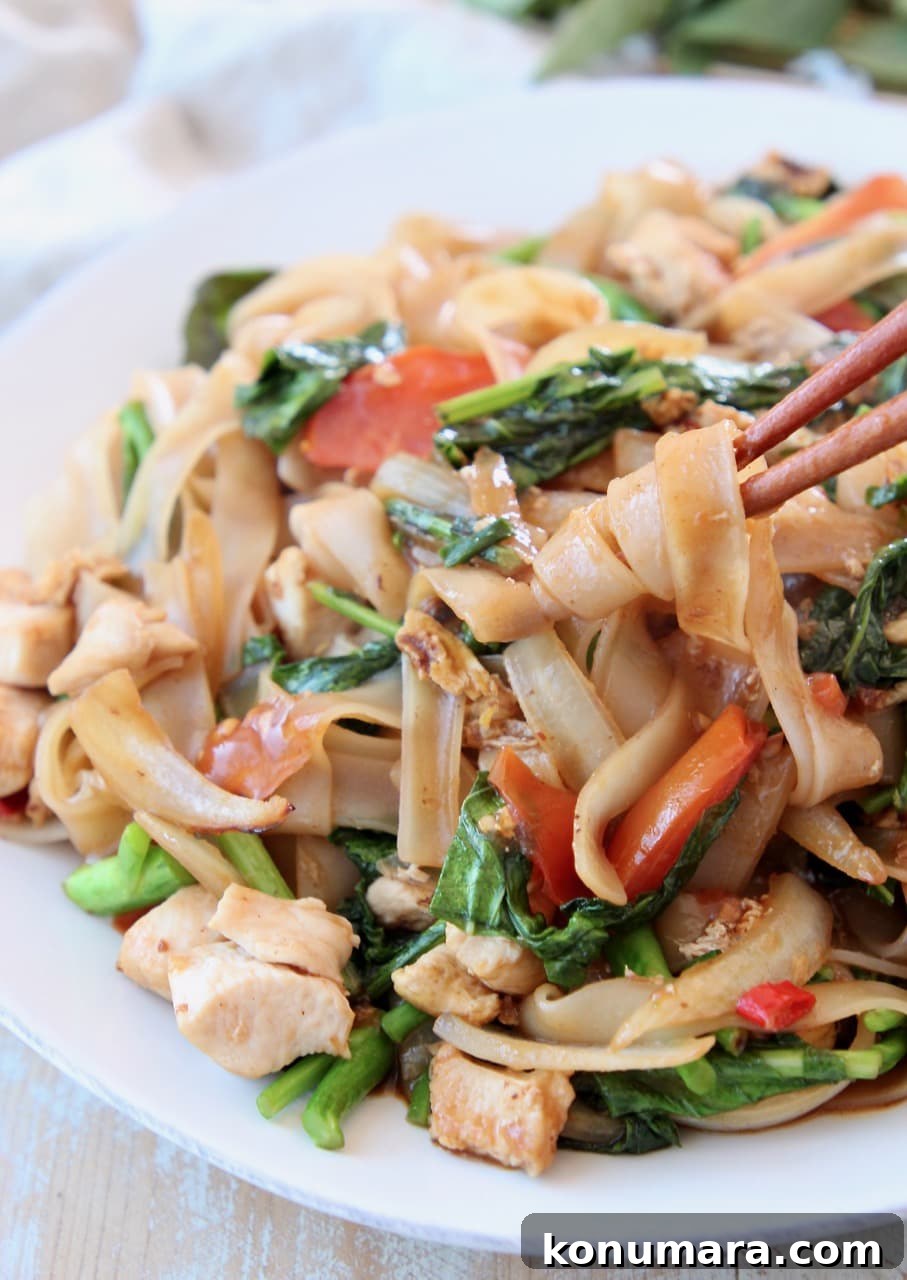
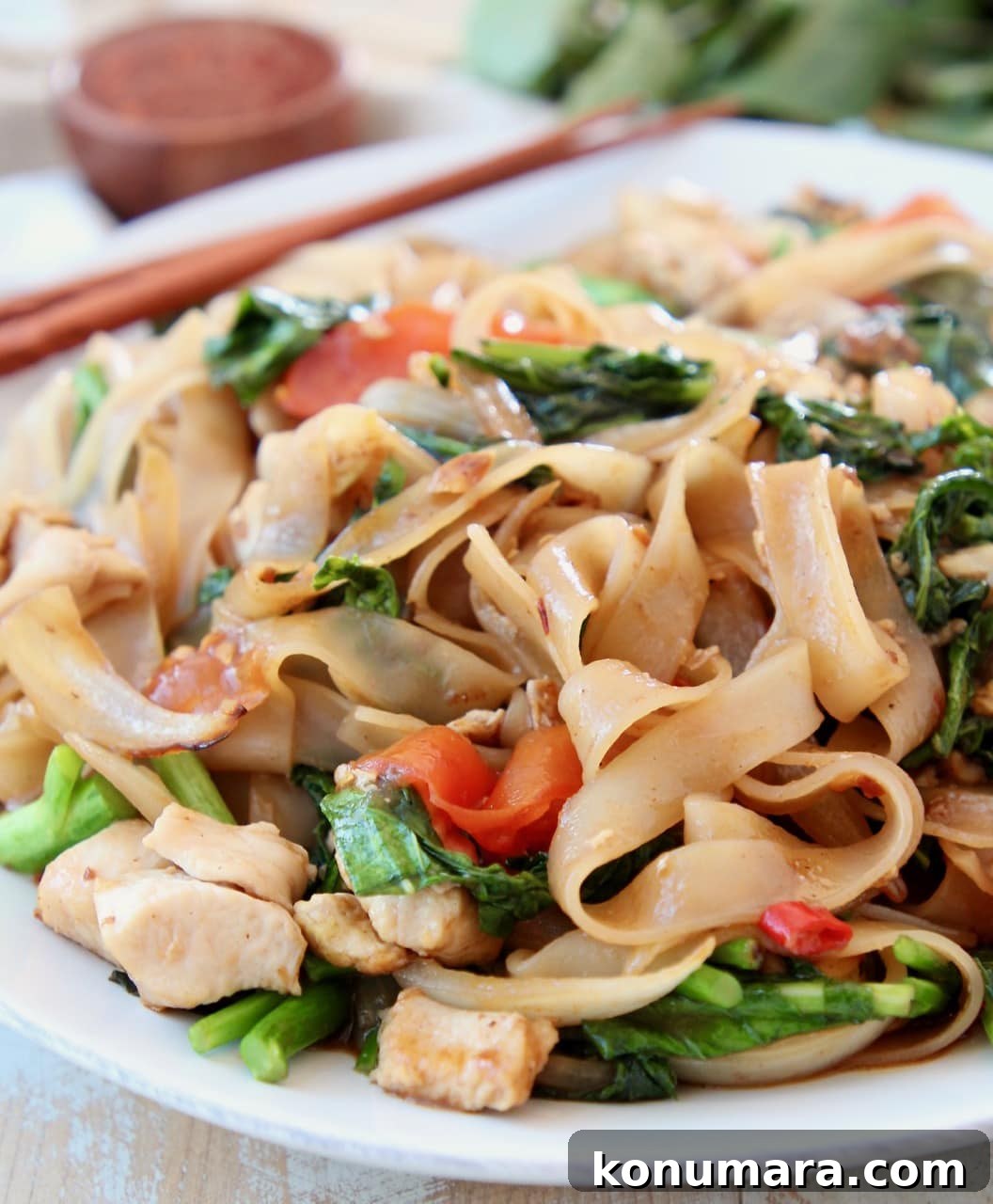
Learn how to make the BEST Drunken Noodles with chicken. This homemade version of the spicy Thai restaurant favorite Pad Kee Mao is quick and simple—ready in about 20 minutes.
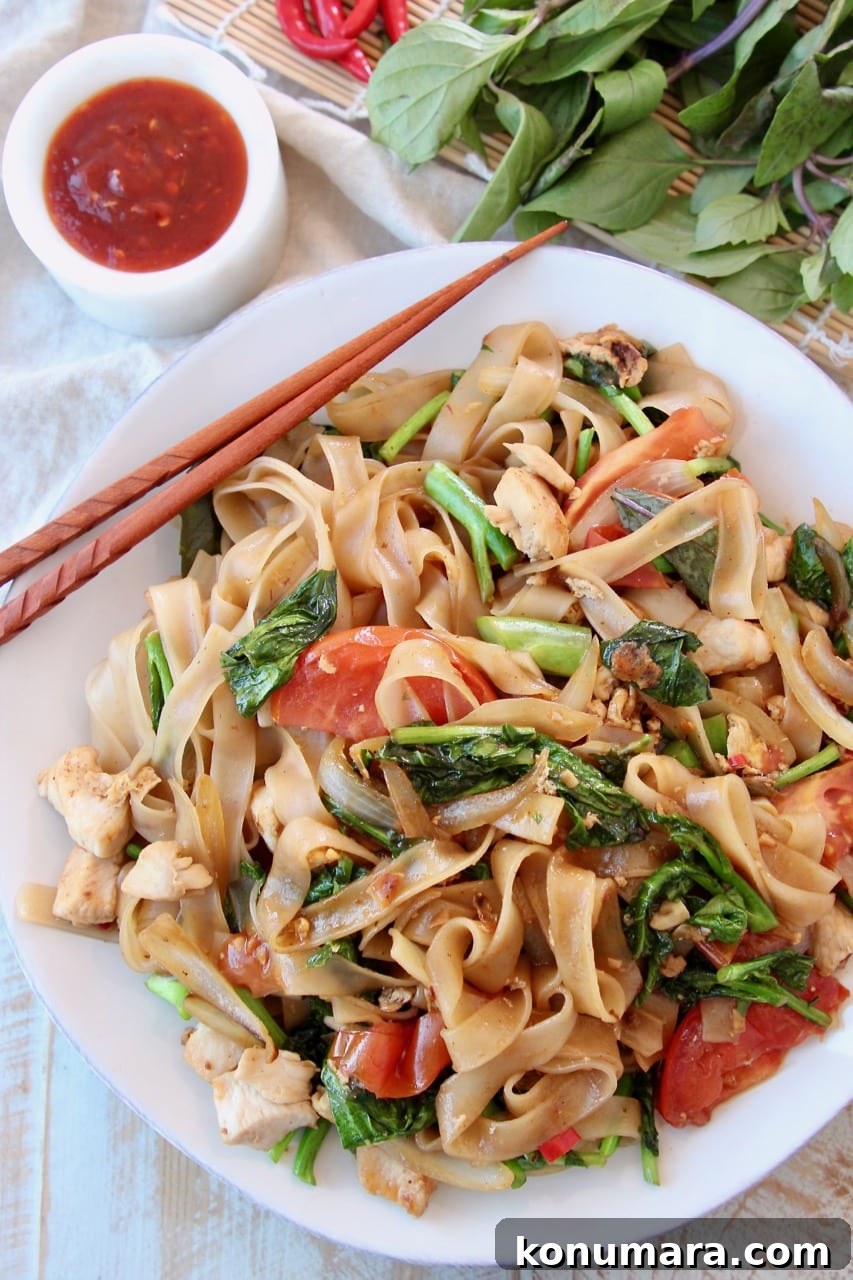
Table of contents
- Ingredients
- Instructions
- Frequently asked questions
- Other protein options
- Substitutions for Asian ingredients
- How to store and reheat
- Diet variations
After my favorite Thai spot in San Diego closed, I set out to recreate their Drunken Noodles, Yellow Curry and Pan-Fried Roti. With many trials and tweaks, this recipe finally captured that same bold flavor. It’s focused on a sauce that’s savory, slightly sweet, and can be adjusted from mild to very spicy depending on preference.
This recipe is optimized for speed and flavor: prep and cook in about 20 minutes and serve hot. The sauce—oyster sauce, fish sauce, chili paste, soy and sesame oil—gives the dish its signature umami punch. If you prefer less heat, reduce the chilies and paste; for more heat, add extra Thai chilies or chili paste.
Ingredients
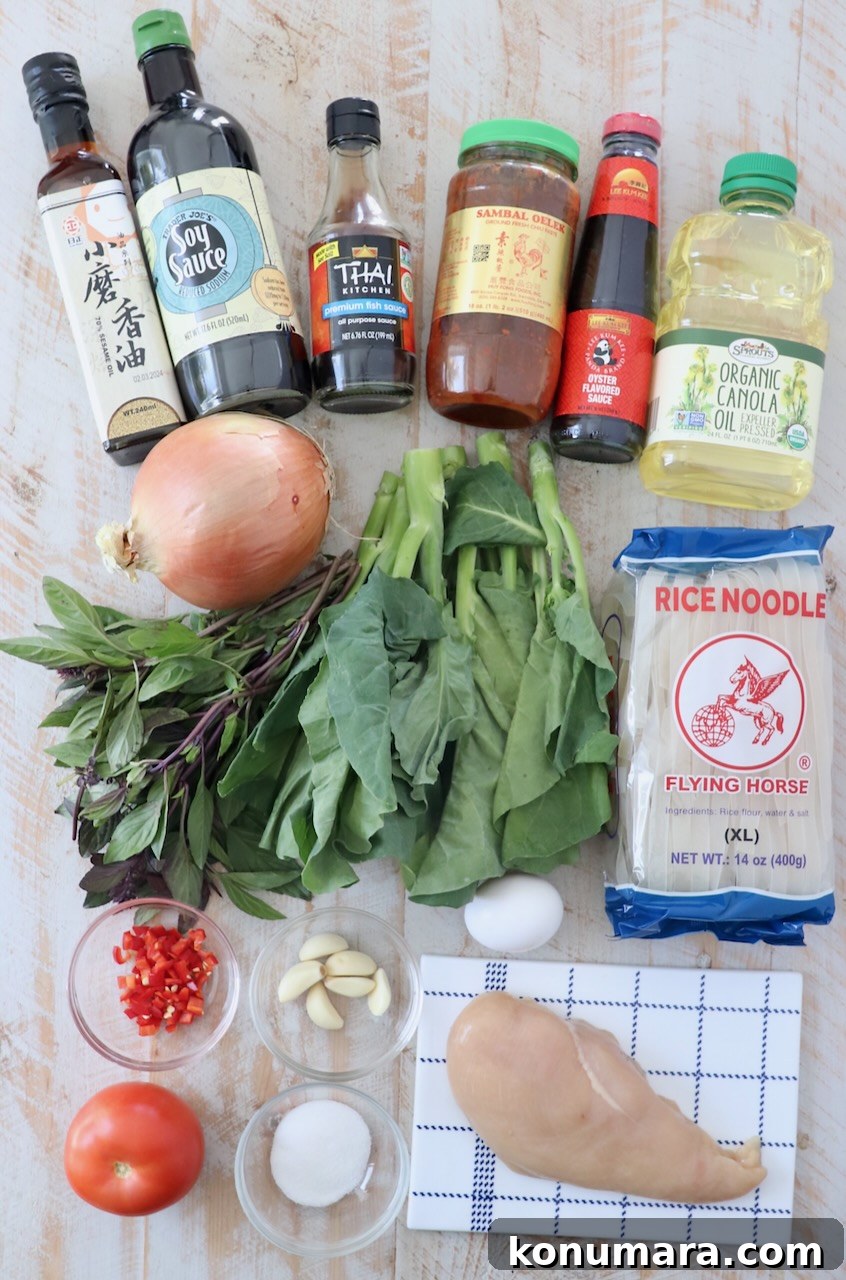
Some items may be easier to find at an Asian grocery; substitutions are listed in the appropriate section below.
- Oyster sauce – thick, sweet-salty and rich in umami; a key component of the sauce.
- Fish sauce – adds depth and savory saltiness.
- Ground red chili paste – controls the base heat; adjust amount to taste.
- Soy sauce – low-sodium or regular works; balances the sauce.
- Sesame oil – toasted sesame oil for a toasty aroma in the sauce.
- Granulated sugar – a touch balances salty and spicy flavors.
- Thai basil – fragrant and slightly anise-like; finish the dish with fresh leaves.
- Wide rice noodles – the broad noodles used in Pad Kee Mao; Pad Thai-style rice noodles can substitute.
- Neutral oil (canola, avocado, peanut) – for high-heat stir-frying.
- Garlic – fresh minced for best flavor.
- Thai chilies – very hot; substitute serrano if needed and adjust quantity.
- Onion – sliced or diced, per preference.
- Egg – one, whisked and scrambled into the wok.
- Boneless, skinless chicken – breasts or thighs, diced (see protein options).
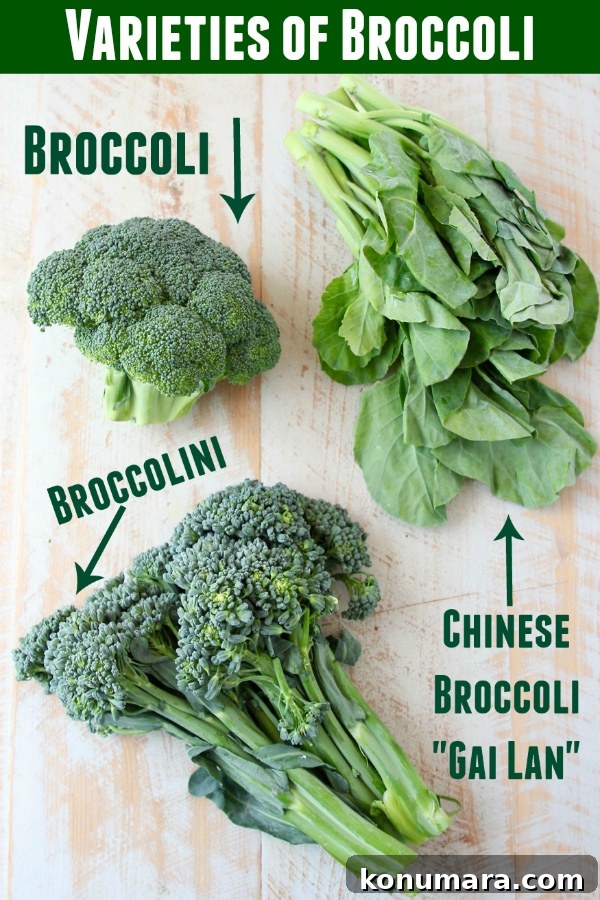
- Chinese broccoli (gai lan) – chopped; broccoli or broccolini can be used instead.
- Tomato – sliced into wedges for bright acidity and color.
Instructions
Step-by-step photos are shown above for guidance. The steps below keep the technique clear and quick.
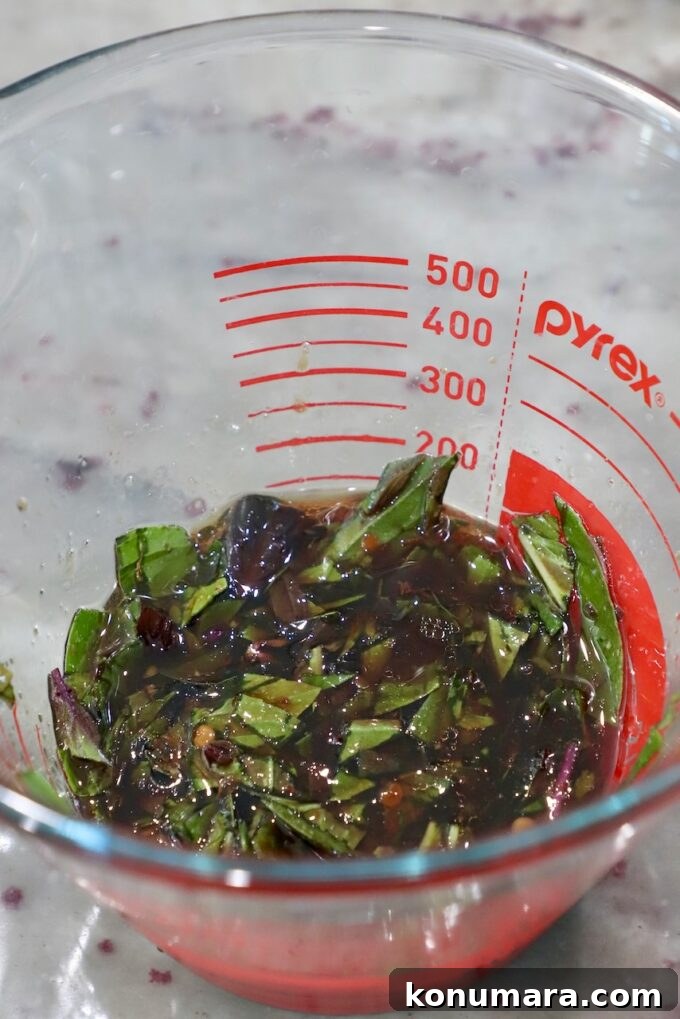
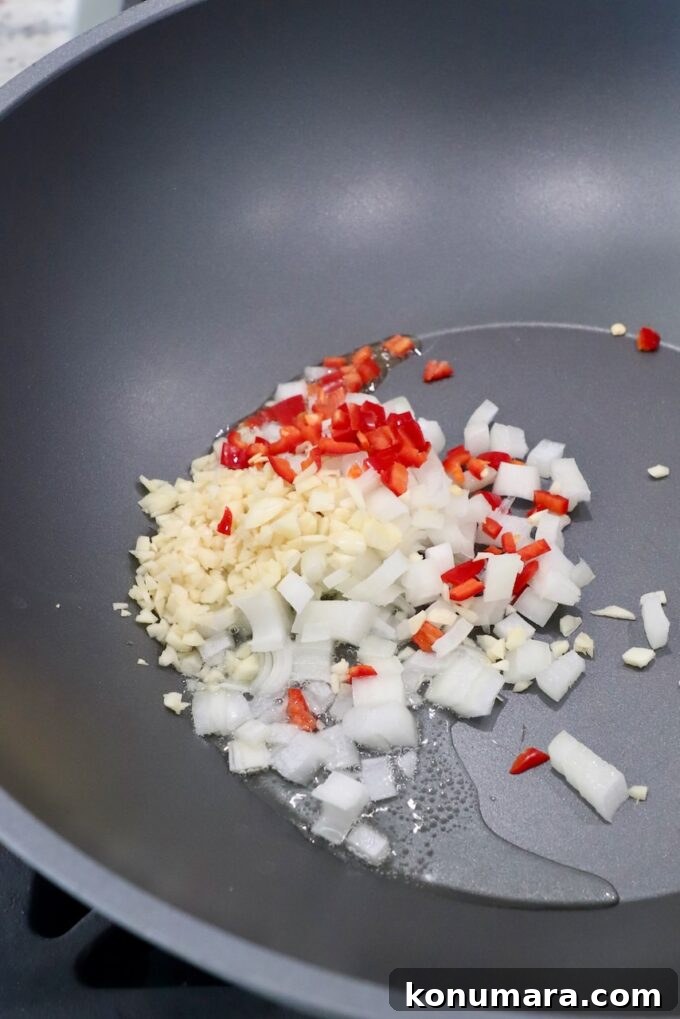
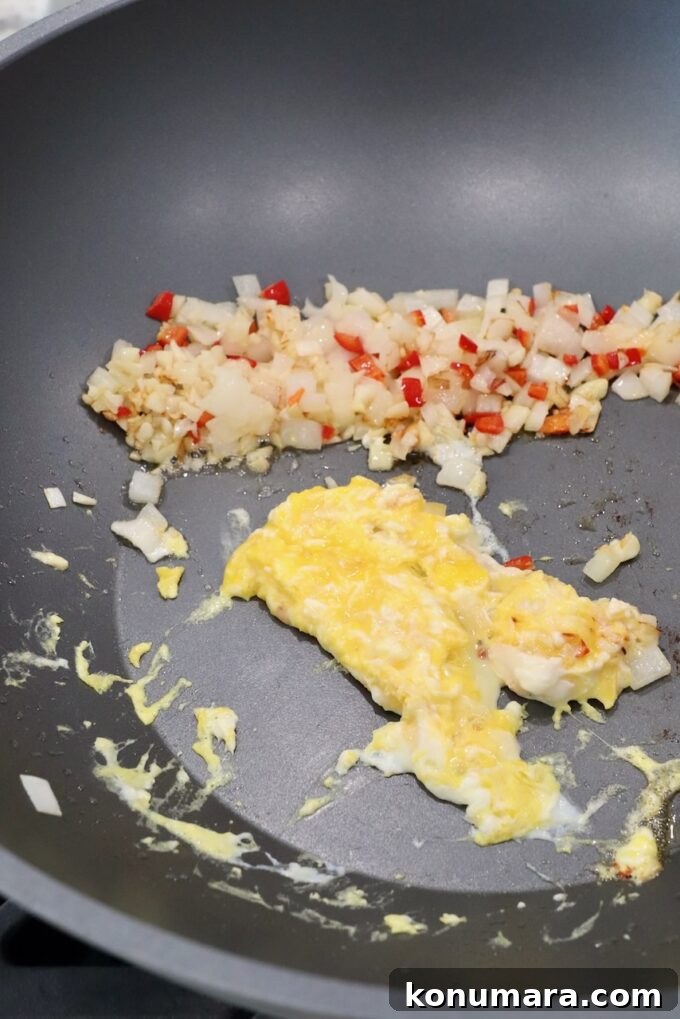
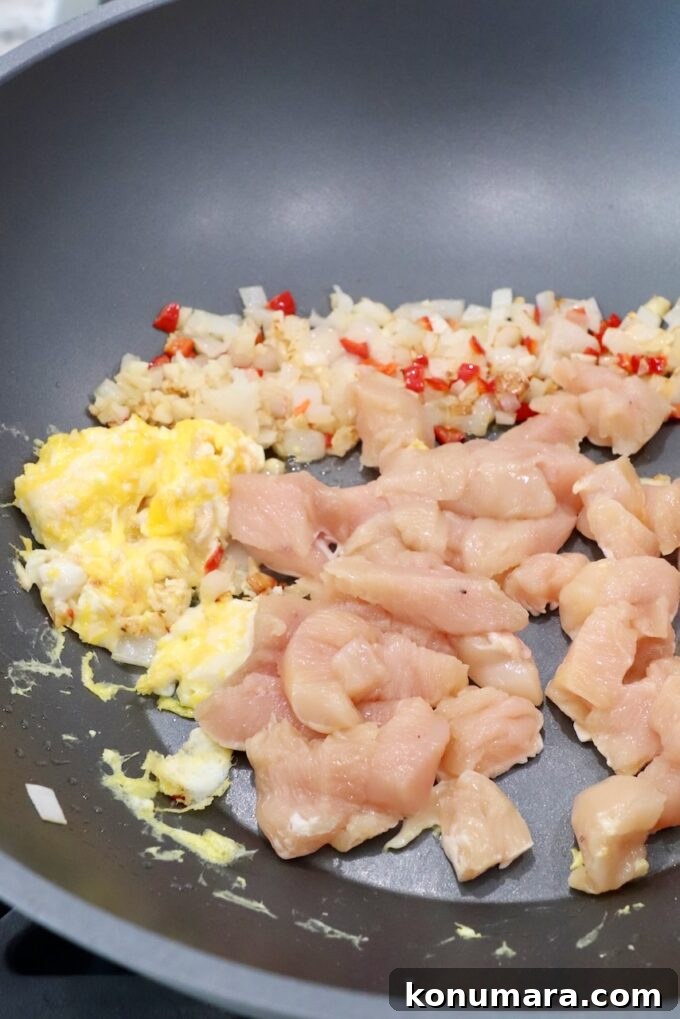
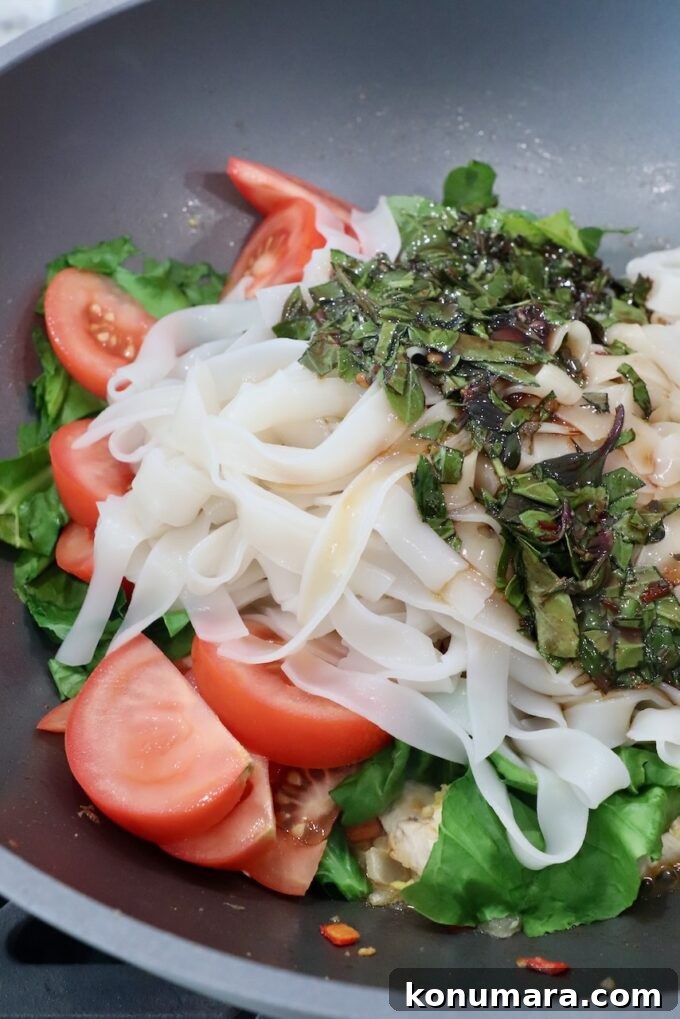
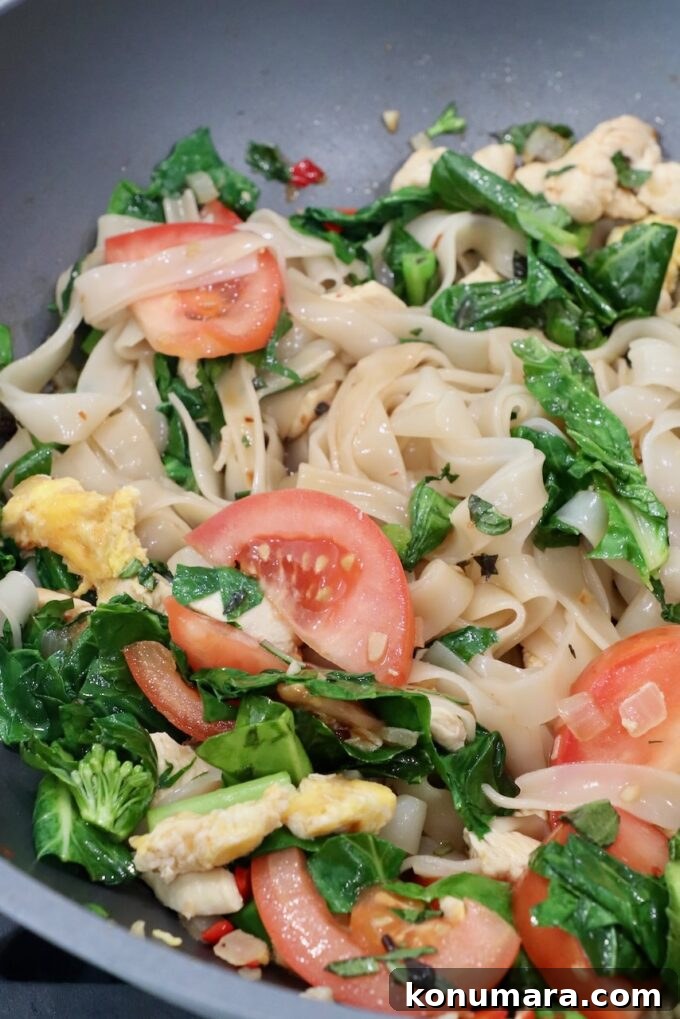
- Make the sauce. In a small bowl, whisk together oyster sauce, fish sauce, red chili paste, soy sauce, sesame oil, sugar and about 1/4 cup chopped Thai basil. Set aside.
- Cook the noodles. Bring a large pot of water to a boil, add the wide rice noodles and cook for about 5 minutes or until just tender. Drain and set aside. If they clump, rinse with cold water and separate gently.
- Stir-fry aromatics and vegetables. Heat oil in a large skillet or wok over medium-high heat. Add minced garlic, minced Thai chilies and sliced onion. Sauté 1–2 minutes until fragrant.
- Scramble the egg. Push aromatics to the side and pour in the whisked egg; scramble briefly until set.
- Cook the chicken. Add diced chicken and stir-fry 3–4 minutes until cooked through.
- Combine noodles and sauce. Add the cooked rice noodles, chopped Chinese broccoli and tomato wedges. Pour the prepared sauce over everything and toss to coat. Stir-fry 1–2 minutes until heated through and well combined.
- Finish and serve. Remove from heat and stir in the remaining Thai basil leaves. Serve immediately while hot.
Frequently asked questions
- Are drunken noodles spicy? Traditionally this dish leans spicy. Prepared as written it rates around a medium heat (about 5/10). Reduce or increase Thai chilies and chili paste to suit your tolerance.
- Can I add other vegetables? Absolutely. Red bell pepper, baby corn, zucchini, carrots or snap peas all work well—swap freely to use what you have.
- How does this differ from Pad Thai or Pad See Ew? The three dishes share rice noodles but differ mainly in sauce. Pad Kee Mao (drunken noodles) uses a savory, spicier sauce with basil. Pad See Ew uses a sweeter, non-spicy soy-based sauce and Pad Thai is sweeter and nuttier with tamarind and often crushed peanuts.
Other protein options
Swap chicken for shrimp, beef, pork or tofu without changing the core method.
- Shrimp: Add peeled and deveined shrimp where the chicken would go; cook until opaque, 2–3 minutes.
- Beef: Thinly sliced flank or skirt steak can be tenderized and added in the same step as the chicken; cook briefly to avoid overcooking.
- Pork: Small diced pork tenderloin or ground pork can replace chicken; cook until fully done.
- Tofu: Press extra-firm tofu, dice, and add after the egg—pan-fry for a slightly crisp texture or add as-is for a softer bite.
Substitutions for Asian ingredients
Most bottles and noodles can be found in the Asian aisle at major grocers. If you don’t have access to an Asian market, try these swaps:
- Thai chilies: Use 1 serrano per 2 Thai chilies as a substitute.
- Thai basil: Use sweet basil if Thai basil is unavailable; holy basil is a spicier alternative.
- Wide rice noodles: Use the widest rice noodle available (Pad Thai noodles are an acceptable alternative).
- Chinese broccoli: Substitute broccolini or regular broccoli florets and stems if needed.
How to store and reheat
Store leftovers in an airtight container in the refrigerator for up to 5 days.
To reheat: Warm in a microwave-safe dish for about 2 minutes or reheat quickly in a skillet over medium heat until warmed through. Add a splash of water or a little oil if noodles have dried out.
Diet variations
- Gluten free: Use gluten-free versions of oyster sauce, fish sauce and soy sauce (tamari) to make this dish gluten free.
- Vegetarian: Replace fish and oyster sauce with vegetarian alternatives (mushroom-based oyster sauce and extra soy/tamari), and use tofu or mushrooms instead of chicken.
More Thai recipes
Spicy Vegetable Pad Thai

Thai Coconut Potsticker Soup

Thai Chicken Satay with Peanut Sauce
Slow Cooker Thai Peanut Chicken Noodles
Crock Pot Massaman Curry Chicken
Thai Basil Chicken
Drunken Noodles
A quick homemade Pad Kee Mao with chicken—savory, slightly spicy, and full of fresh Thai basil. Ready in about 20 minutes.
Servings: 4 people
Prep Time: 20 minutes • Total Time: 20 minutes
Author: Whitney Bond
Ingredients
- 2 tablespoons oyster sauce
- 1 tablespoon fish sauce
- 1 teaspoon ground fresh red chili paste
- 2 tablespoons soy sauce
- 1 tablespoon sesame oil
- 2 teaspoons sugar
- ½ cup Thai basil, divided
- 8 ounces wide rice noodles
- 1 tablespoon canola oil
- 6 cloves garlic, minced
- 2 red Thai chilies, minced
- ½ cup onion, sliced
- 1 egg, whisked
- ½ pound chicken, small dice
- ½ pound Chinese broccoli, chopped
- 1 tomato, cut into wedges
Instructions
- Bring a large pot of water to a boil.
- In a small bowl, combine oyster sauce, fish sauce, red chili paste, soy sauce, sesame oil, sugar and ¼ cup chopped Thai basil. Set aside.
- Add the rice noodles to boiling water and cook about 5 minutes. Drain and set aside.
- Heat canola oil in a large skillet over medium-high heat. Add garlic, Thai chilies and onion; sauté 2 minutes.
- Add the egg and scramble for about 1 minute.
- Add the chicken and cook 3–4 minutes until cooked through.
- Add the cooked rice noodles, Chinese broccoli, tomato and the prepared sauce. Toss to combine and sauté 2 minutes.
- Remove from heat and stir in the remaining Thai basil leaves. Serve immediately.
Notes
- Substitutions: broccoli or broccolini for Chinese broccoli; sweet basil for Thai basil; 1 minced serrano for 2 Thai chilies; Pad Thai noodles for wide rice noodles.
- To make this gluten free, use gluten-free oyster sauce, fish sauce and tamari (gluten-free soy sauce).
Nutrition Facts
Serving: 1 of 4 • Calories: 467 kcal • Carbohydrates: 59 g • Protein: 17 g • Fat: 17 g • Saturated Fat: 3 g • Cholesterol: 83 mg • Sodium: 1282 mg • Fiber: 3 g • Sugar: 5 g