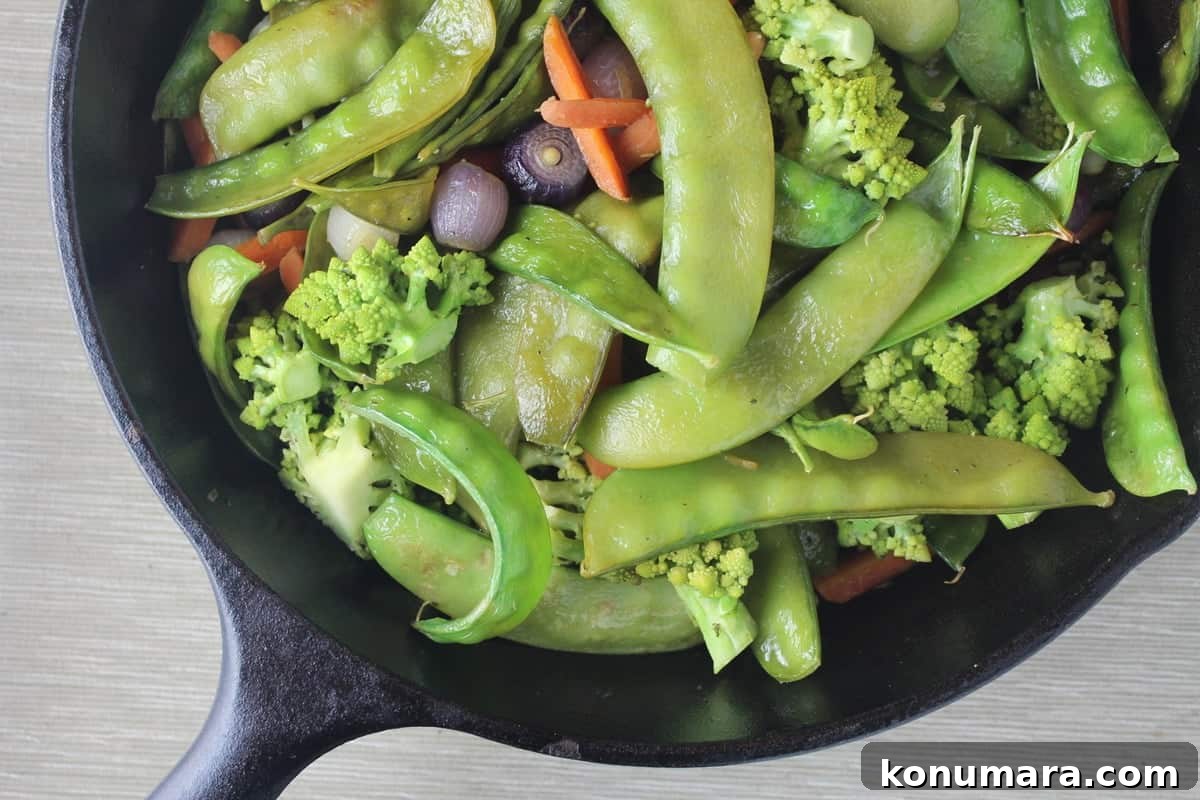
Snow peas, broccoflower, pearl onions and carrots come together in a simple, flavorful side dish: Cast Iron Skillet Winter Vegetables.
I recently met a fellow San Diego food blogger, The Seaside Baker, who kindly shared a bag of vegetables and fresh herbs from her garden. Among the bounty was an intriguing head of “spiky broccoli” — broccoflower (also called Romanesco or Romanesco broccoli), a beautiful broccoli‑cauliflower hybrid. I was excited to use it in a quick skillet side that highlights crisp, seasonal produce.
I combined the broccoflower with snow peas, pearl onions and sliced carrots, cooking them gently in a cast iron skillet with chicken broth until the flavors concentrated and the vegetables were tender but still bright. The result is a light, nutrient‑dense side that pairs nicely with roasted or grilled meats — I served it alongside a coffee‑crusted tri tip for a balanced winter meal.
Cast Iron Skillet Winter Vegetables
This dish is intentionally simple: a short sauté to develop a little color, followed by a gentle simmer in broth so the vegetables absorb savory flavor. Using a cast iron skillet helps maintain even heat and encourages a touch of caramelization on the onions and carrots while keeping the snow peas and broccoflower vibrant.
Ingredients
- 1 tbsp olive oil
- 2 cups snow peas
- 1 cup sliced carrots
- 1 cup pearl onions
- 1 cup broccoflower (or traditional broccoli)
- 3 cloves garlic, minced
- 1 cup chicken broth (or vegetable broth for a vegetarian version)
- Salt and freshly ground black pepper, to taste
- Optional: a squeeze of lemon or a sprinkle of chopped fresh herbs (parsley, thyme or chives) to finish
Instructions
- Heat the olive oil in a cast iron skillet over medium heat until shimmering.
- Add the snow peas, sliced carrots, pearl onions and broccoflower. Sauté, stirring occasionally, for 3–5 minutes so the vegetables begin to soften and develop a little color.
- Add the minced garlic and sauté for an additional 2–3 minutes, taking care not to burn it.
- Pour in the chicken broth and reduce the heat to low. Cover partially and simmer for 15–20 minutes, or until most of the broth has been absorbed and the vegetables are tender but still have some bite.
- Taste and season with salt and pepper. If desired, finish with a squeeze of lemon and chopped fresh herbs before serving.
Servings & Time
Serves: 4 people. Prep time: 5 minutes. Cook time: 25 minutes. Total time: 30 minutes.
Why this works
The short sauté locks in texture and flavor while the broth adds savory depth without needing butter or heavy fats. Broccoflower brings a delicate nutty flavor and an attractive shape; if you can’t find it, regular broccoli or cauliflower works just as well. Snow peas add a sweet, crisp contrast and pearl onions provide mild, sweet onion flavor when gently cooked.
Variations & Substitutions
- Vegetarian: Use vegetable broth instead of chicken broth for a meat‑free version.
- Spicy: Add a pinch of red pepper flakes or a dash of hot sauce while simmering.
- Umami boost: Stir in a teaspoon of soy sauce or a splash of tamari with the broth for a deeper savory note.
- Different vegetables: Substitute green beans, asparagus tips or sliced zucchini if they are in season.
Serving Suggestions
These winter vegetables make a versatile side. Serve them alongside roasted meats like tri tip, chicken or pork, or pair them with grain bowls, pan‑seared fish or a hearty vegetarian main. Finish with a sprinkle of toasted nuts or seeds for added texture.
Storage & Make‑Ahead
Store leftovers in an airtight container in the refrigerator for up to 3 days. Reheat gently on the stove with a splash of broth or water to loosen the vegetables and refresh their texture. This recipe is great for preparing ahead: cook through the simmer step, cool, and rewarm just before serving.
Nutrition Facts (per serving)
Calories: 88 kcal; Carbohydrates: 11 g; Protein: 3 g; Fat: 3 g; Sodium: 251 mg; Potassium: 412 mg; Fiber: 3 g; Sugar: 5 g; Vitamin A: 5880 IU; Vitamin C: 107.7 mg; Calcium: 39 mg; Iron: 3 mg. Values are estimates and will vary depending on ingredients and portion sizes.
Notes & Tips
- Trim and slice vegetables uniformly so they cook evenly.
- Keep the heat moderate during the initial sauté to avoid overbrowning the garlic.
- If you prefer a drier side dish, simmer uncovered until the broth has mostly evaporated; for a saucier result, reserve more broth.
Simple, healthy and full of winter flavor — this cast iron skillet vegetable side is an easy way to showcase seasonal produce on weeknights or at the holiday table.