
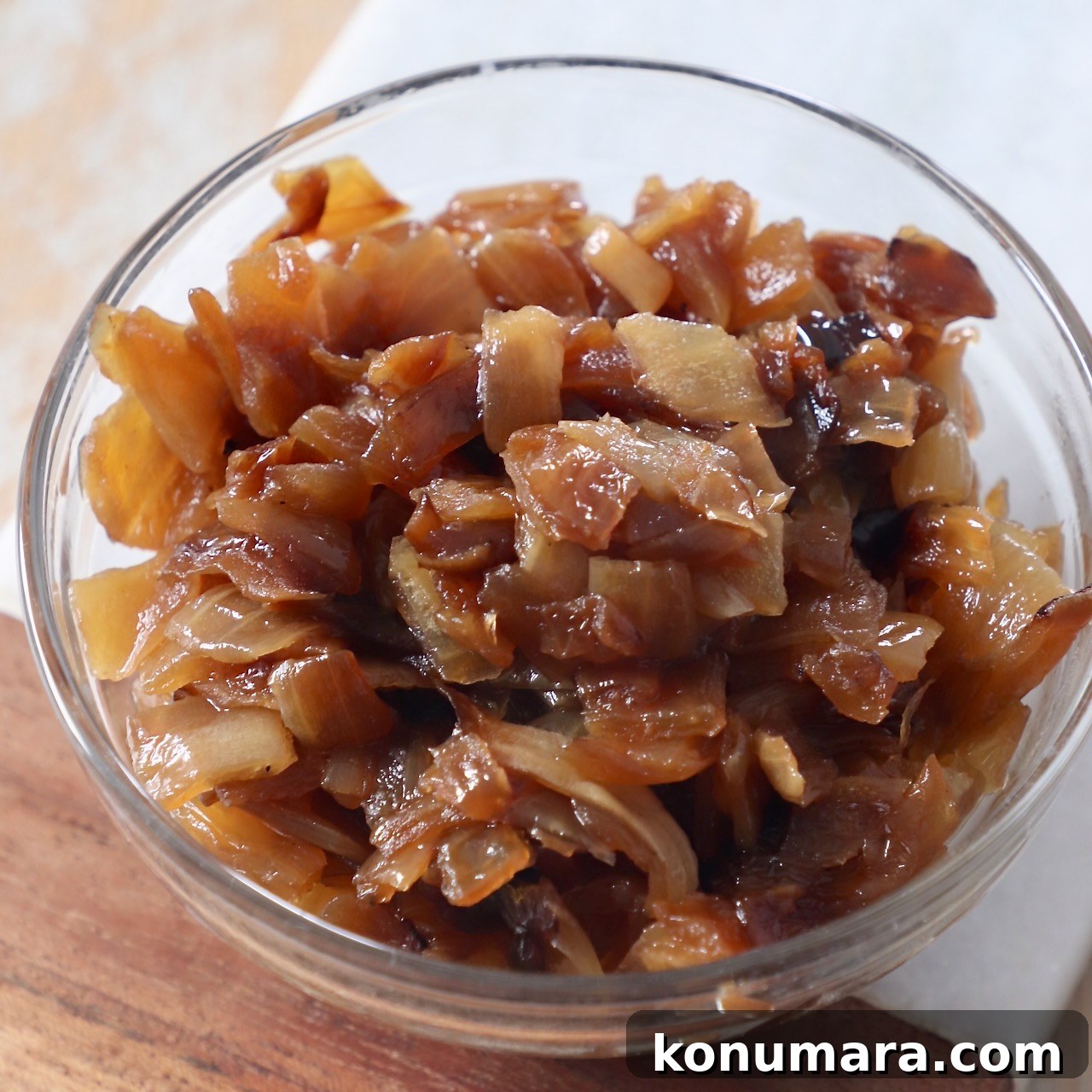
Learn how to caramelize onions on the stovetop with this easy, step-by-step guide. Properly caramelized onions take time, but the technique is simple and the results are incredibly flavorful. Use them to elevate soups, sandwiches, burgers, dips and more.
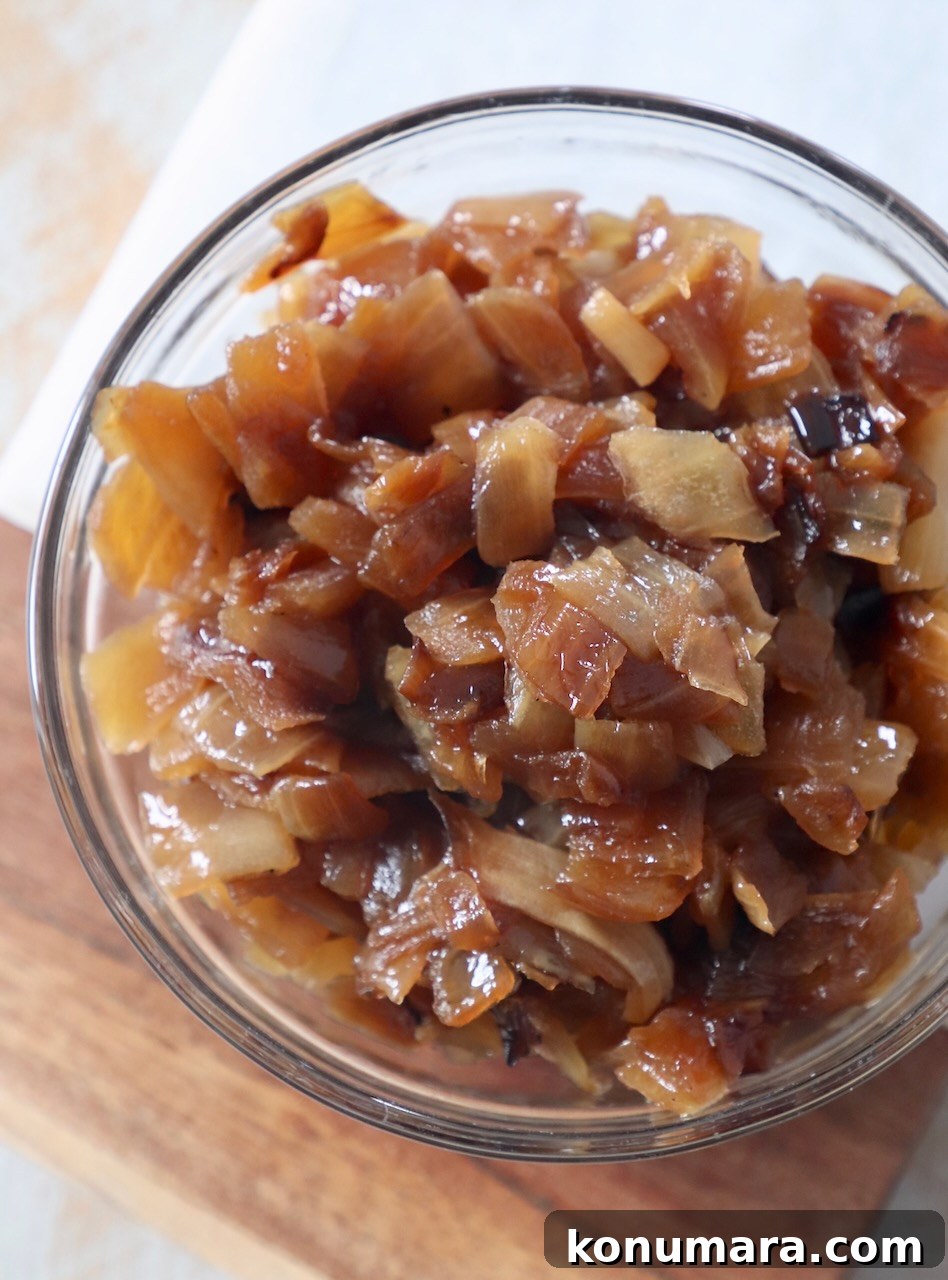
Table of contents
- Ingredients
- How to cut onions for caramelizing
- How to caramelize onions
- Frequently asked questions
- How to serve them
- More kitchen tutorials
When onions are cooked slowly until golden brown, their natural sugars break down and create a deep, savory-sweet flavor that transforms simple dishes. Once you learn this method, you may find yourself making caramelized onions regularly to keep on hand for quick weeknight meals and special recipes alike.
This guide shows both sliced and diced caramelized onions. Sliced onions are classic for topping steaks and sandwiches, while diced caramelized onions work particularly well mixed into burgers, dips, and sauces. Choose the cut that matches how you plan to use them.
Ingredients
- Butter or oil – a fat is needed to sauté the onions. Butter adds rich flavor; olive oil or a blend of oil and butter also work well.
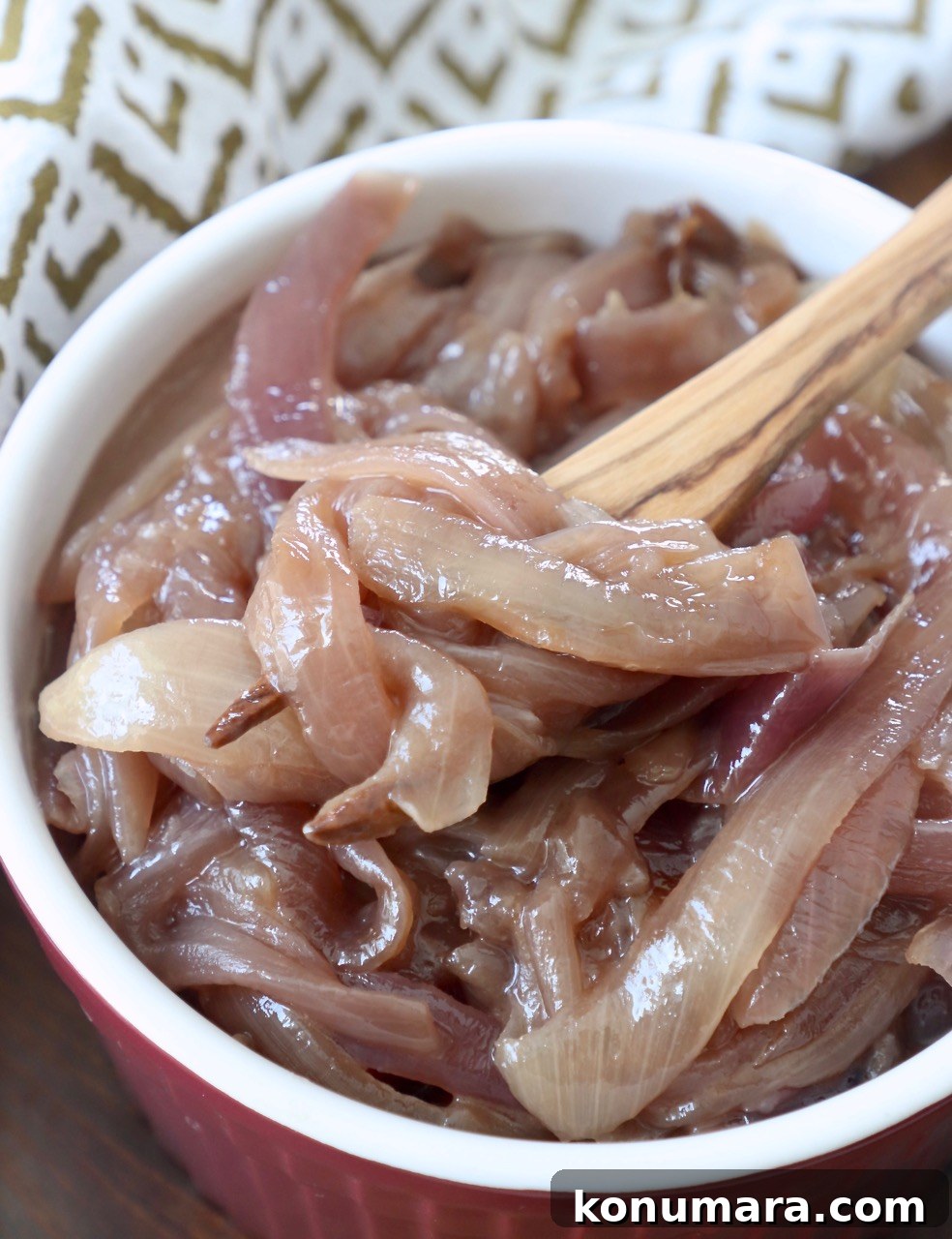
- Onions – any variety will caramelize: yellow, sweet, white, red or Vidalia. Mixing types gives a fuller flavor.
- Salt – fine sea salt is recommended to evenly season the onions and help draw out moisture.
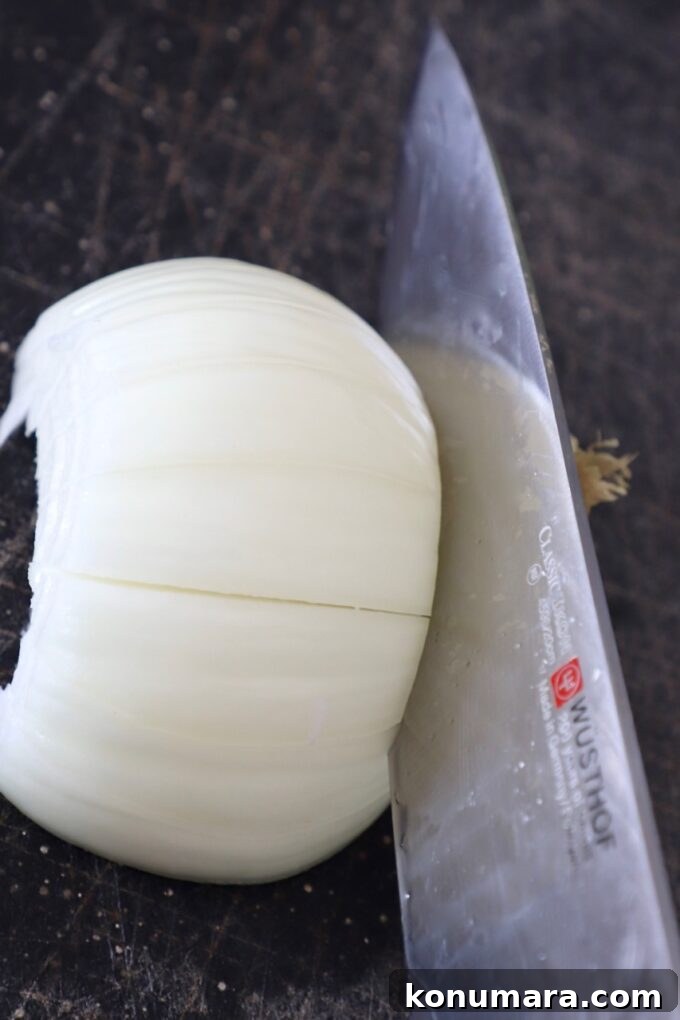
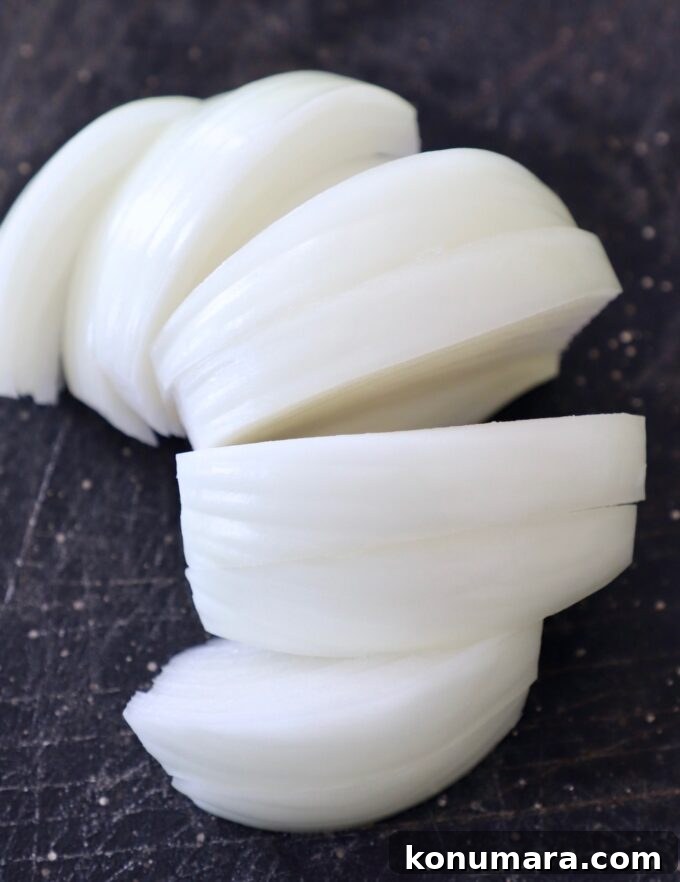
How to cut onions for caramelizing
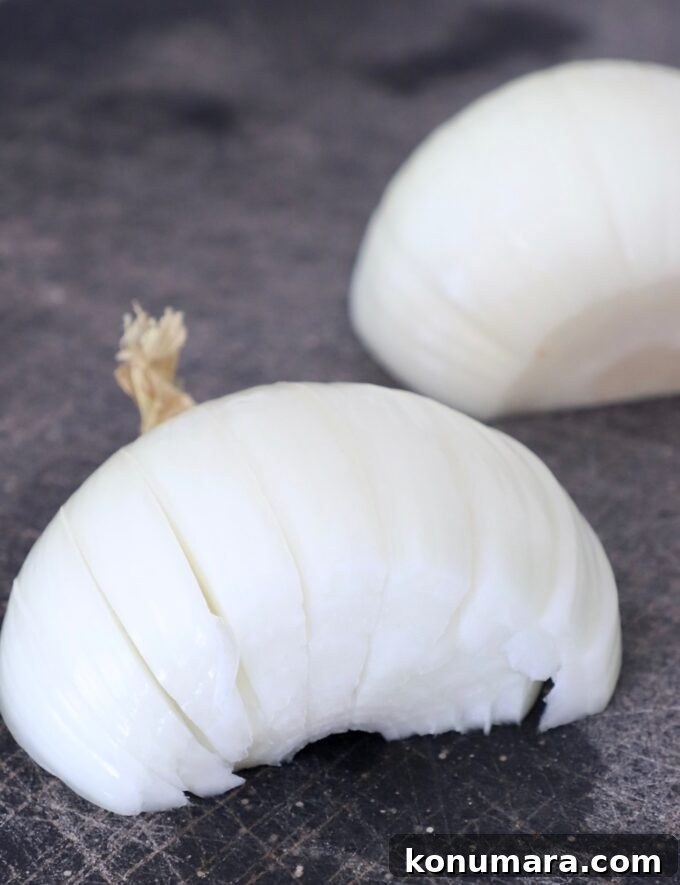
Either sliced or diced onions will caramelize nicely. For classic caramelized onions, slice them; for toppings that need smaller pieces, dice them. The key is to keep the pieces uniform so they cook evenly.
- Cut the onion in half through the root, peel away the outer skin, and trim the stem end.
- For slices: use a sharp knife to cut even 1/4-inch slices across the grain.
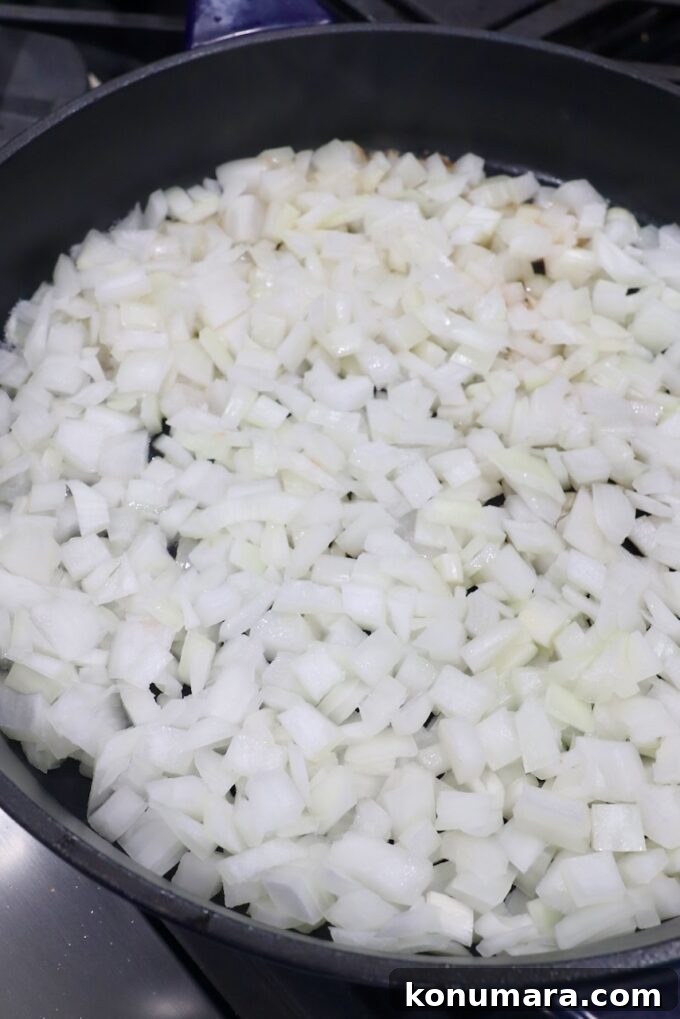
- For diced: slice into 1/4-inch thick strips, then cut crosswise into 1/4-inch squares.
Even thickness ensures consistent cooking and prevents some pieces from burning while others remain undercooked.
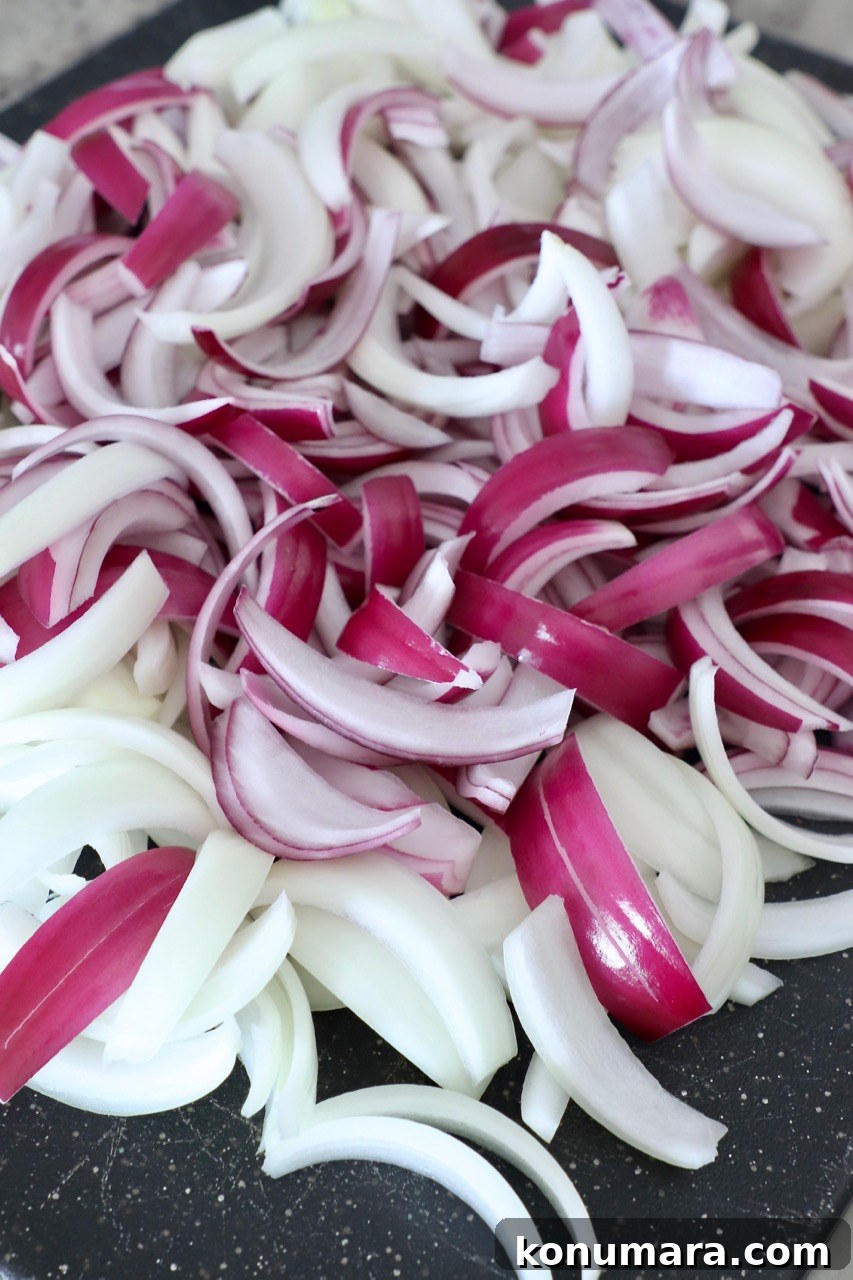
How to caramelize onions
Follow these straightforward steps to caramelize onions on the stovetop. This method yields deeply browned, sweet, savory onions that add layers of flavor to many dishes.
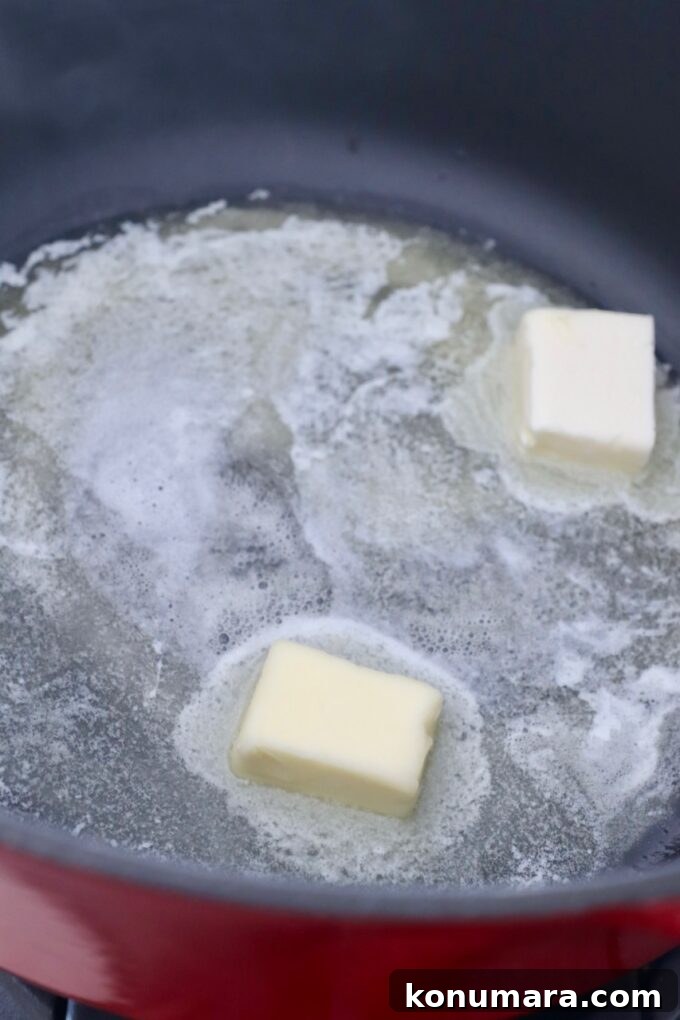
Step 1: Heat a heavy, wide skillet or Dutch oven over medium-high heat. Add the butter or oil and let it melt.
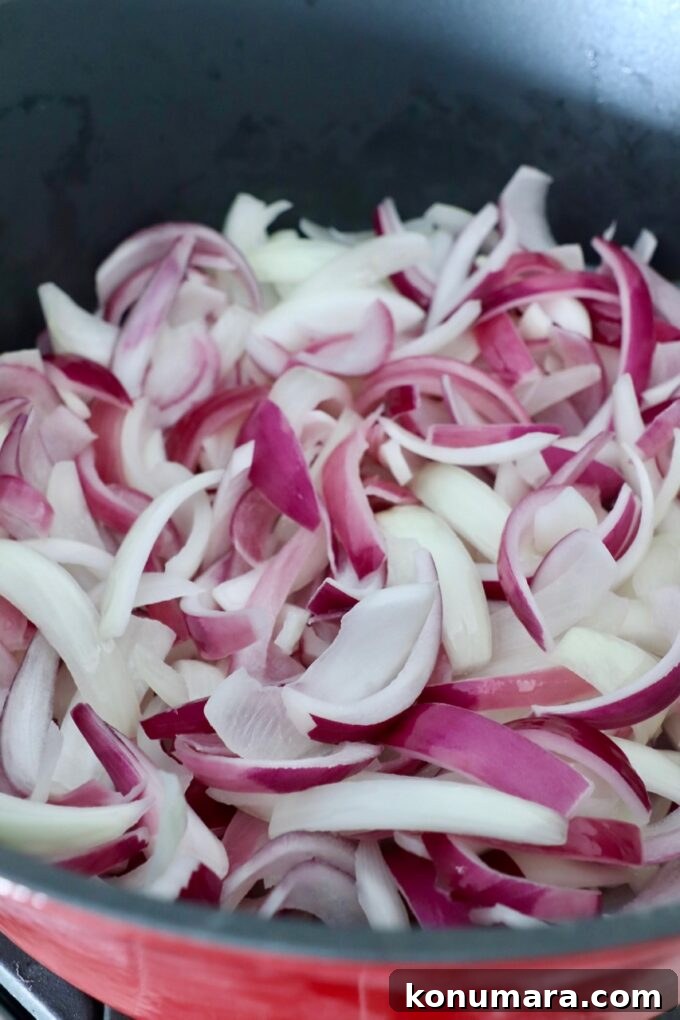
Step 2: Add the sliced or diced onions and spread them out in an even layer so they make good contact with the pan.
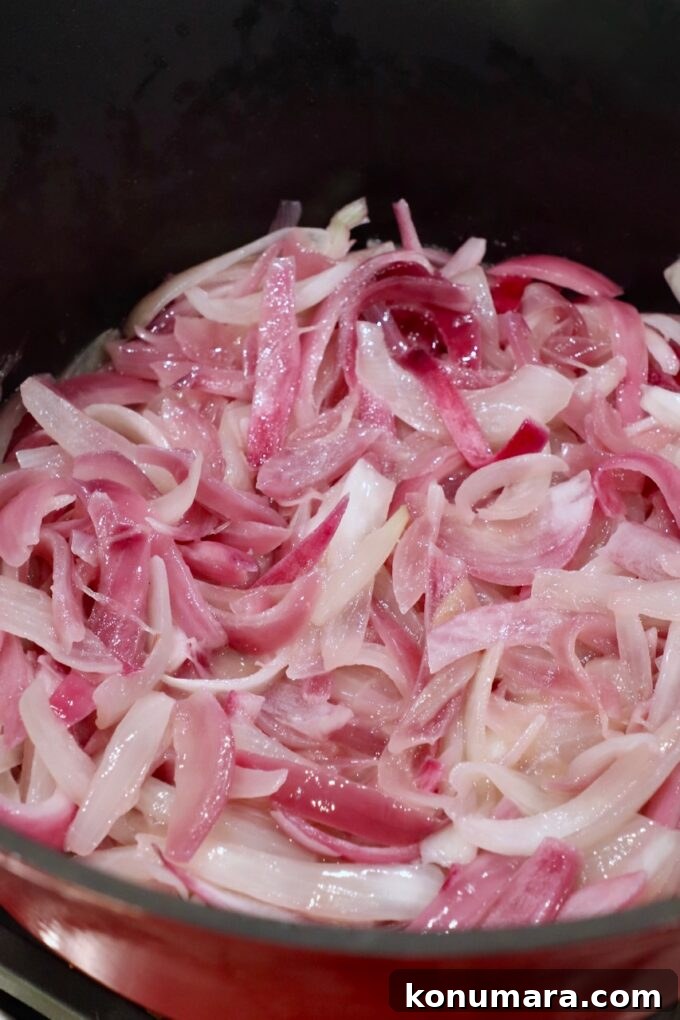
Step 3: Cook undisturbed for about 5 minutes, then sprinkle with salt and reduce the heat to medium. The salt helps draw moisture from the onions so they brown rather than steam.
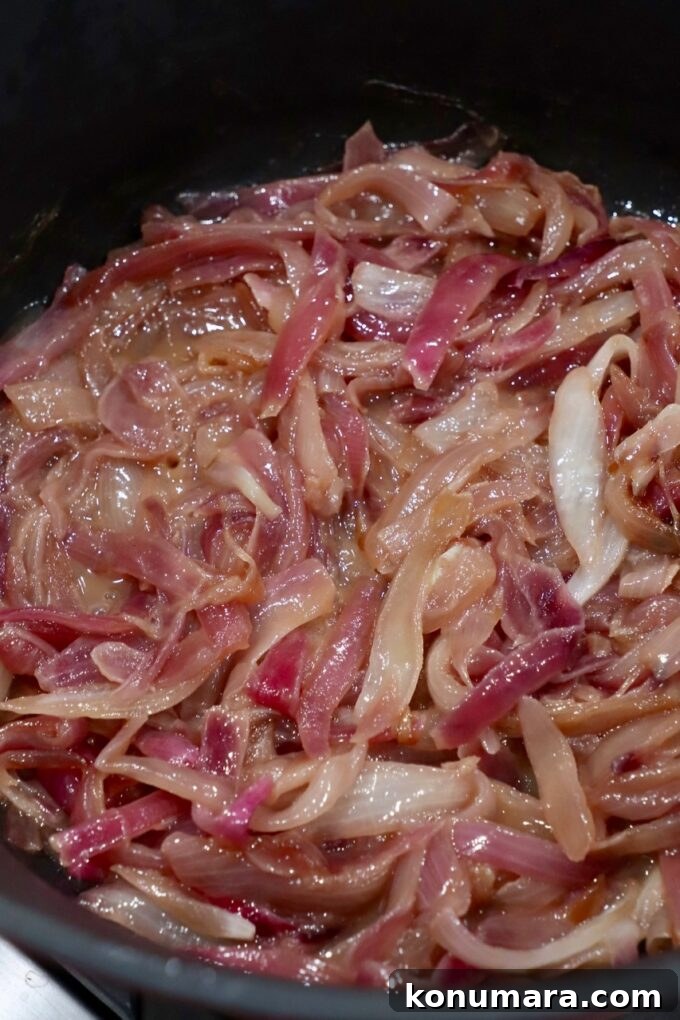
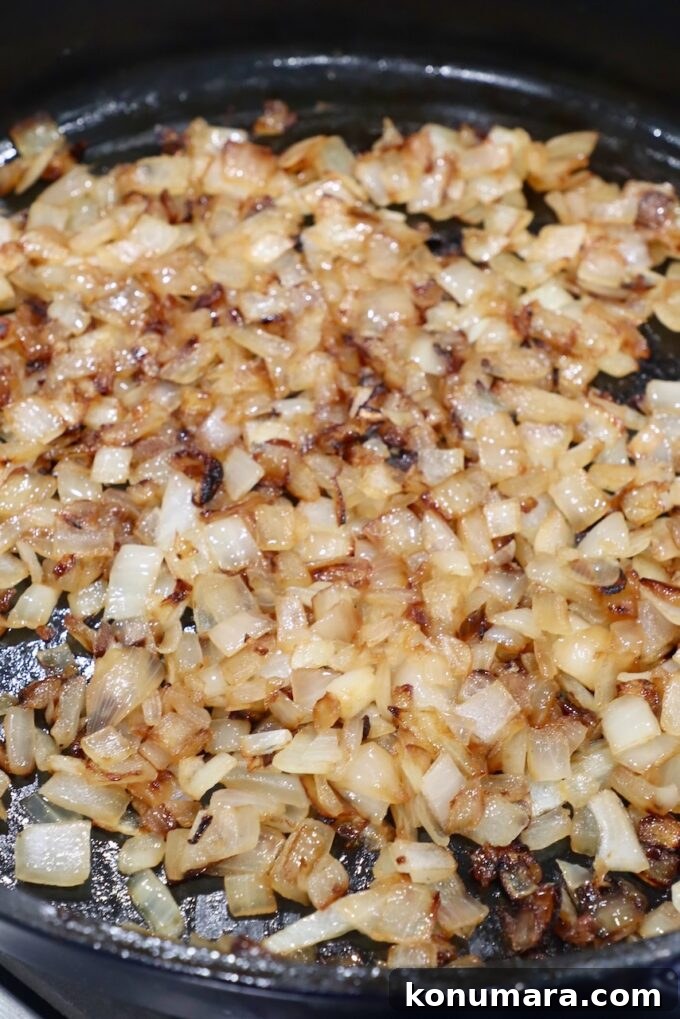
Step 4: Continue to cook for 45–60 minutes, stirring only every 8–12 minutes. Reduce heat to medium-low if the onions begin to brown too quickly or stick.
For one pound of diced onions, plan on about 45 minutes of cooking time; for multiple pounds of sliced onions, expect up to 60 minutes. If the pan develops brown bits that begin to stick, add 1–2 tablespoons of water to deglaze and scrape those flavorful bits into the onions.
Use the onions right away, refrigerate for up to one week, or freeze for up to three months (freeze in small portions or an ice-cube tray so you can thaw only what you need).
Frequently asked questions
- How long does it take? It depends on quantity and cut. Plan about 45 minutes for 1 pound of diced onions and up to 60 minutes for several pounds of sliced onions.
- Butter or oil? Either works. Butter adds richness; a combination of butter and oil gives flavor and a higher smoke point.
- Add sugar? Not necessary. Salt helps draw out moisture and promotes browning; the natural sugars in the onions will caramelize if cooked slowly.

How to serve them
Caramelized onions are versatile. Here are many delicious ways to use them:
- On burgers — adds sweet-savory depth to burgers and sliders.
- With fries — pile them over fries for a hearty topping.
- On steaks — spoon over grilled or pan-seared steak for a rich finish.
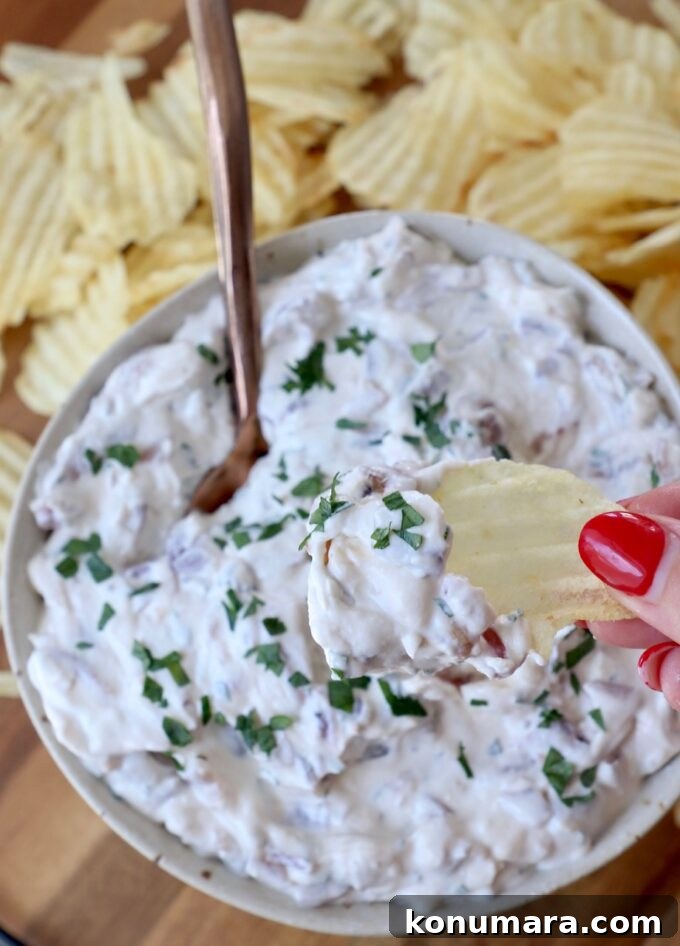
- In dips — stir into sour cream or cream cheese for a French onion-style dip.
- As an appetizer — fold into savory pastry or top crostini.
- In French onion soup — use as the base or as a topping beneath melted cheese.
- In hot sandwiches — excellent in cheesesteaks, French dip or patty melts.
- On pizza or grilled cheese — adds sweetness and complexity.
- With breakfast — mix into scrambled eggs, omelettes, or breakfast casseroles.
- With mac and cheese, pierogis, or roasted vegetables — fold in or sprinkle on top to boost flavor.
More kitchen tutorials
If you enjoy basic kitchen techniques, try other quick how-to guides:
How To Hard Boil Eggs
How To Cook Spaghetti Squash
How To Make Roasted Garlic
Sautéed Mushrooms
How To Caramelize Onions
Summary: A simple stovetop method for perfectly caramelized onions—slow-cooked until sweet and deeply browned. Ideal for topping steaks, mixing into dips or adding to sandwiches.
Servings: About 3 cups caramelized onions (from ~3 lb raw onions).
Prep time: 10 minutes
Cook time: 45–60 minutes
Total time: 1 hour 10 minutes (approx.)
Author: Whitney Bond
Ingredients
- 3 tablespoons butter, or olive oil
- 3 pounds onions, cut into 1/4-inch slices or diced into 1/4-inch squares
- 1/2 teaspoon sea salt
Instructions
- Heat a 12-inch (or larger) cast iron skillet or heavy pan over medium-high heat. Add butter or oil and allow it to melt.
- Add the onions and spread them into an even layer in the skillet.
- Cook undisturbed for about 5 minutes, then sprinkle with salt and reduce the heat to medium.
- Cook for 45–60 minutes, stirring only every 10 minutes. If the onions begin to stick or brown too fast, lower the heat to medium-low and add 1–2 tablespoons of water to deglaze the pan as needed.
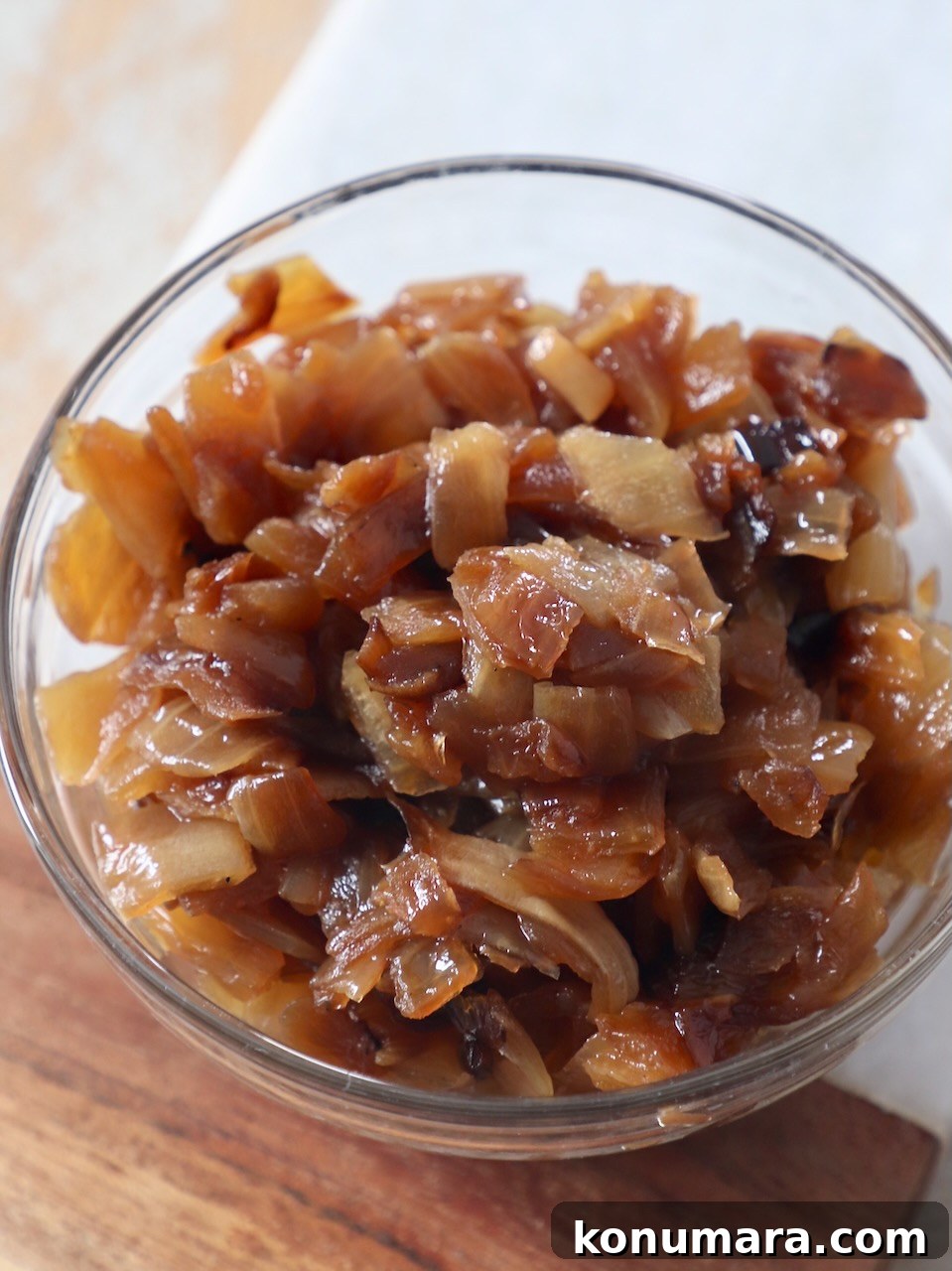
- When the onions are deep golden brown and soft, remove from heat. Use immediately or store in the refrigerator for up to one week, or freeze for up to three months.
Notes
- Roughly 1 pound of raw onions yields about 1 cup of caramelized onions.
- Mixing onion varieties (red, yellow, sweet) gives more complex flavor.
- Use a wide, heavy pan so the onions can spread out; overcrowding causes steaming rather than caramelizing.
- Only stir every 10 minutes—frequent stirring prevents proper browning.
- Keep slices at least 1/4 inch thick to avoid burning thin pieces.
Nutrition Facts (approx.)
Per batch: ~282 kcal; Carbohydrates 42 g; Protein 5 g; Fat 12 g; Sodium 496 mg; Fiber 8 g; Sugar 19 g.