
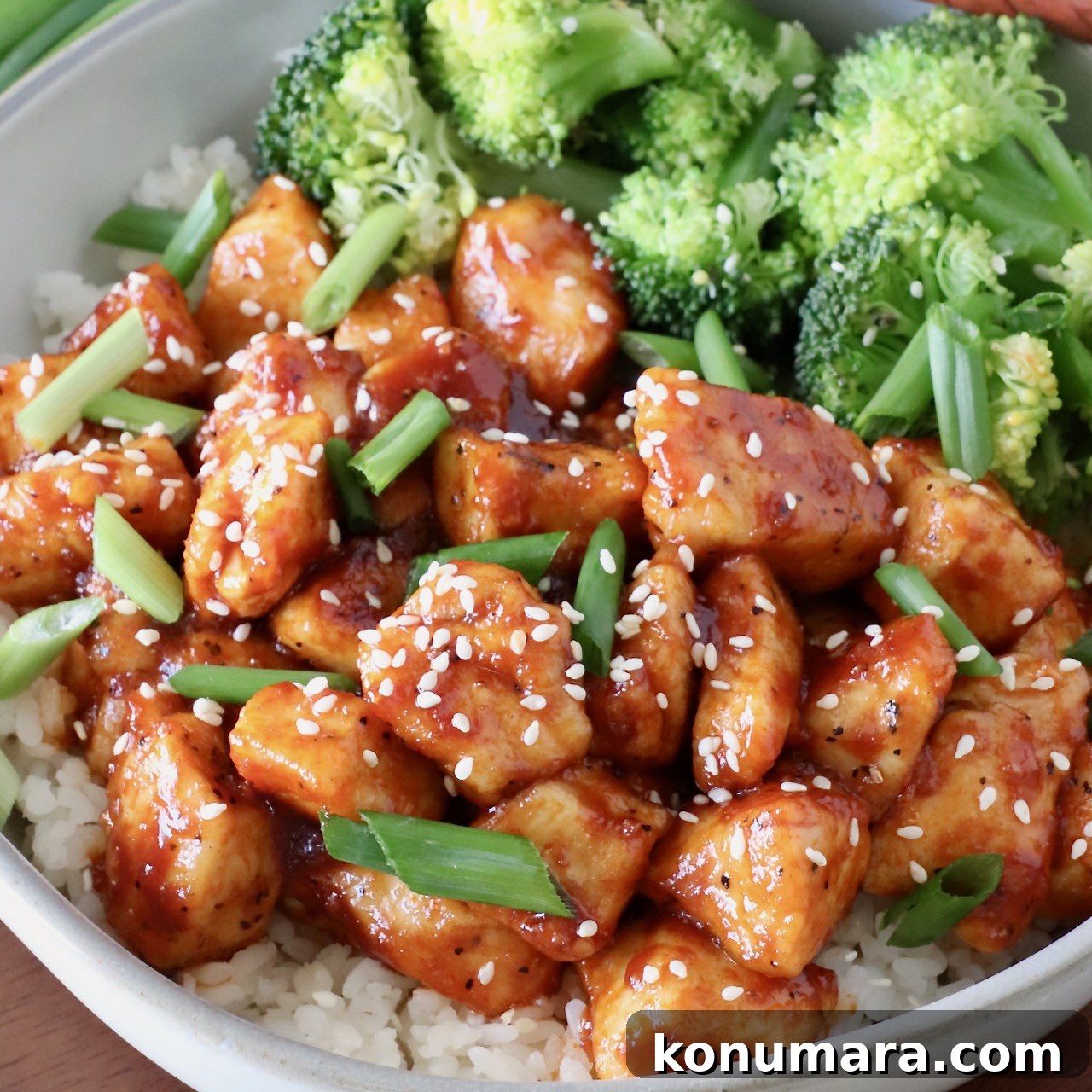
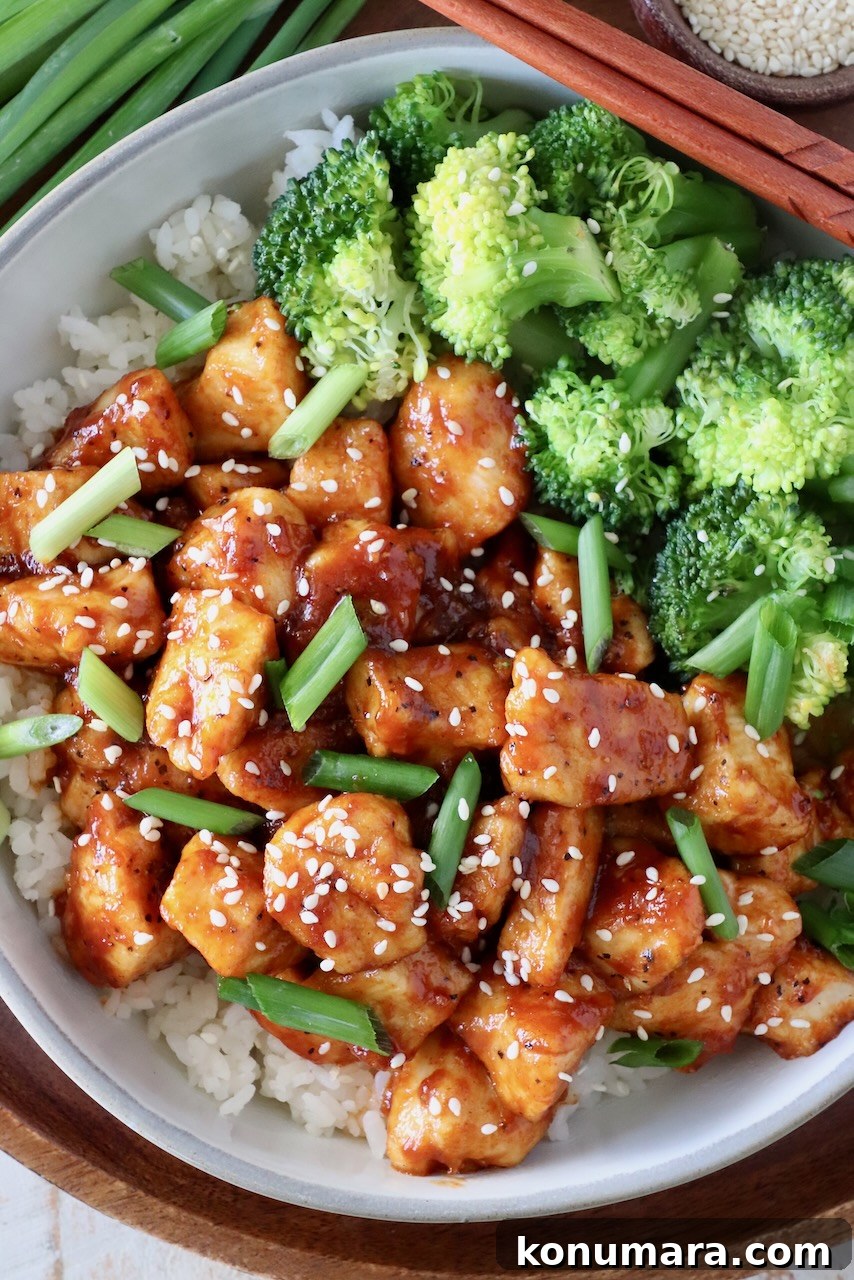
What makes this Gochujang Chicken so irresistible is the sticky, sweet-and-spicy sauce: a simple blend of gochujang paste, honey, and soy sauce. This Korean-inspired chicken is quick to make on the stovetop—in about 20 minutes—making it an ideal weeknight dinner that pairs beautifully with rice and vegetables.
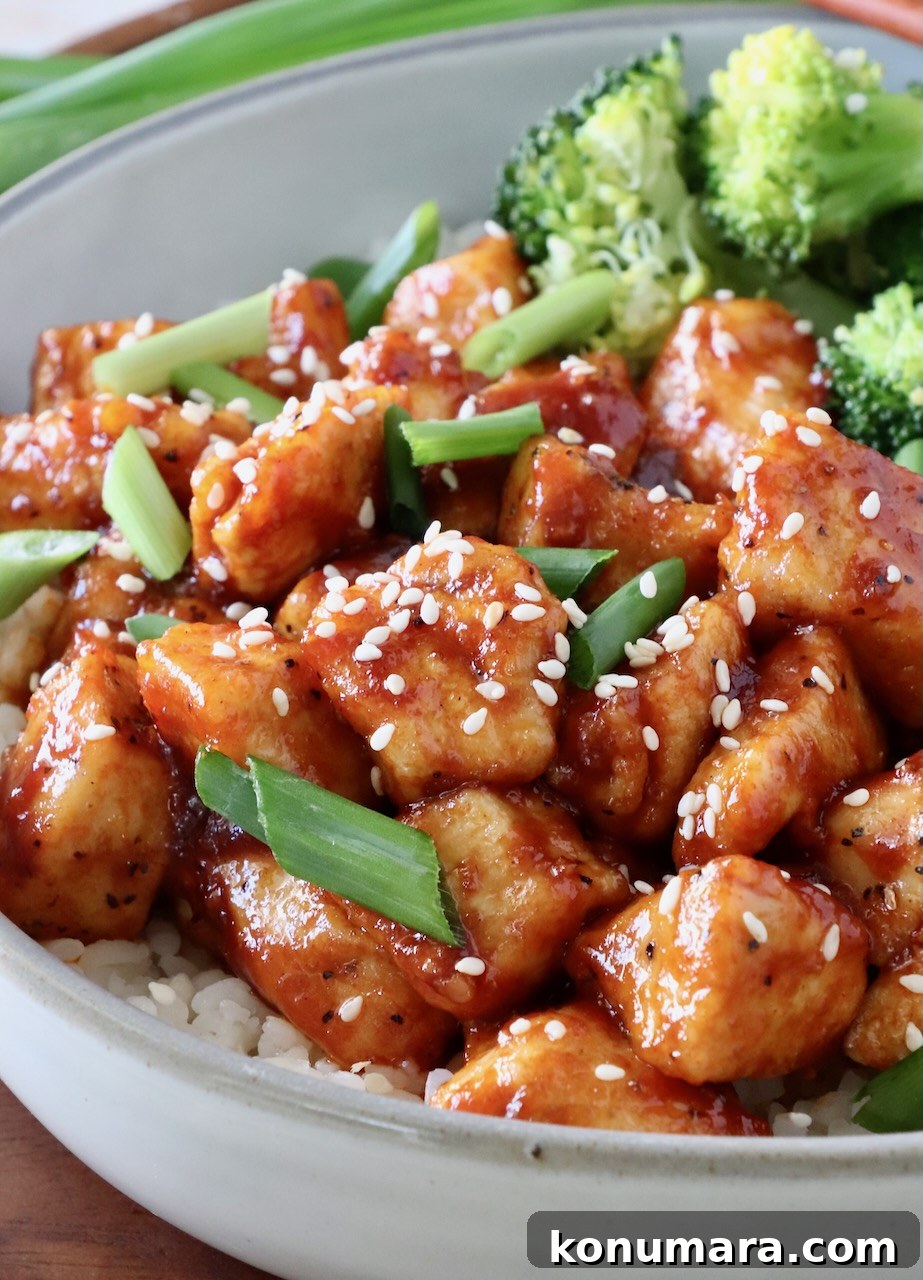
Why you’ll love this recipe
Gochujang is a Korean fermented red chili paste that balances heat, umami, and gentle sweetness. Its chili heat comes from ground red chilies while the paste’s mild sweetness comes from glutinous rice used during fermentation. In a pan sauce, gochujang becomes rich, glossy, and deeply flavorful—especially when combined with honey, soy sauce, rice vinegar, and toasted sesame oil.
This recipe keeps things straightforward with pantry-friendly ingredients and a fast cooking time. With minimal prep and a single skillet, you can transform bite-sized chicken into a saucy, caramelized main in under 20 minutes.
- The sauce: Mixing gochujang with honey, soy sauce, rice vinegar, sesame oil, and garlic produces a thick, sticky glaze that clings to the chicken and caramelizes beautifully.
- Speed and simplicity: The method is modeled on quick pan-fried Asian-style chicken dishes—no deep frying, complicated steps, or hard-to-find ingredients.
- Versatility: Use chicken breasts or thighs, make it gluten-free by swapping tamari for soy sauce, and serve it with rice, steamed vegetables, or lettuce wraps.
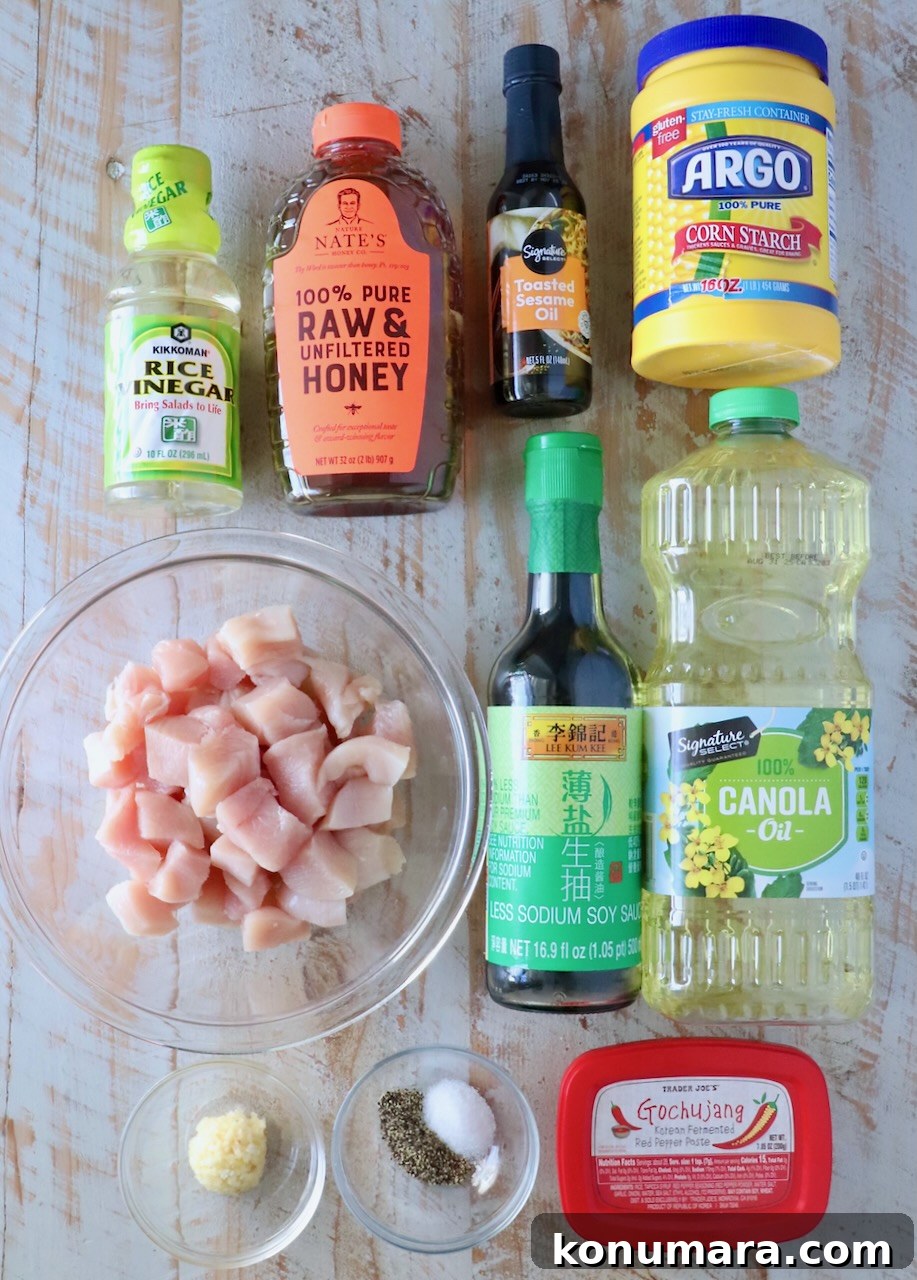
Ingredients
Below are the suggested ingredients for the gochujang sauce and the chicken, plus substitution ideas. For exact measurements, see the recipe card at the bottom of the page.
- Gochujang paste – a fermented Korean red chili paste that provides heat, depth, and umami. It’s now widely available at grocery stores and Asian markets.
- Honey – sweetens and helps the sauce become sticky so it adheres to the chicken.
- Soy sauce – adds savory saltiness. Substitute tamari or a certified gluten-free soy sauce to make the dish gluten-free.
- Rice vinegar – brings bright acidity to balance the sweet and spicy notes.
- Neutral oil (canola, vegetable, or avocado oil) – used for cooking and to slightly loosen the sauce.
- Toasted sesame oil – adds a nutty depth; use toasted, not plain, sesame oil for the best flavor.
- Garlic – fresh crushed garlic gives the best flavor. If needed, 1 teaspoon garlic powder can be used in a pinch.
- Boneless, skinless chicken breasts or thighs – cut into bite-sized pieces. Breasts are leaner; thighs deliver more richness.
- Cornstarch – tosses with the chicken to create a light crust and help the sauce cling. Tapioca starch or rice flour can be used instead.
- Salt and black pepper – to season the cornstarch and the chicken.
Instructions
This recipe is intentionally simple: make the sauce, coat the chicken in starch, pan-fry, then toss with the glaze. Photos below illustrate the main steps. Refer to the recipe card at the end for exact times and quantities.
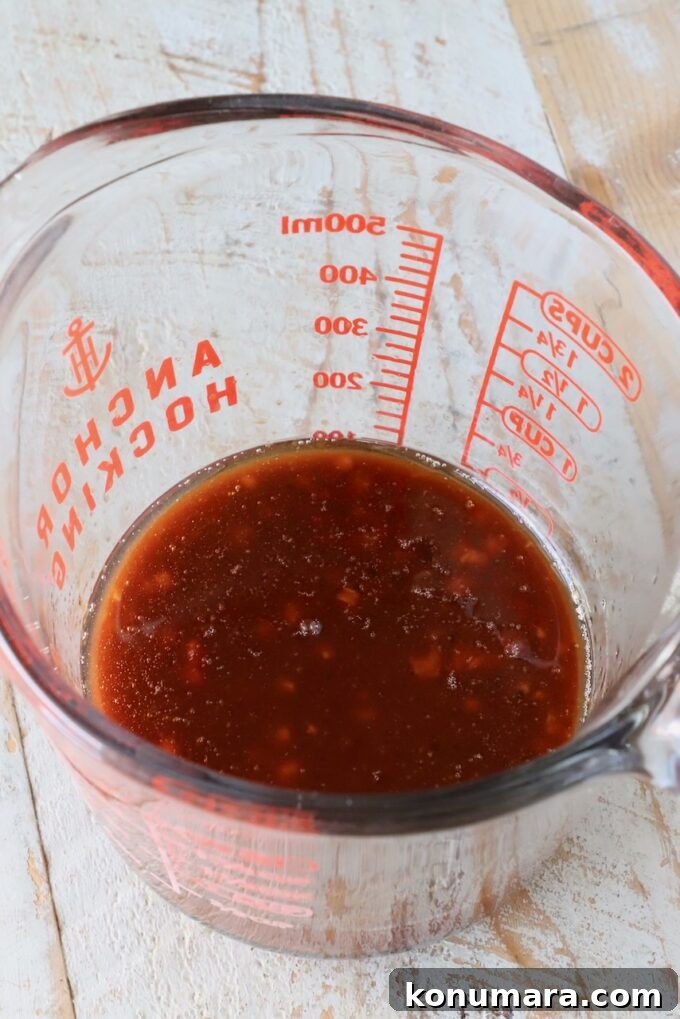
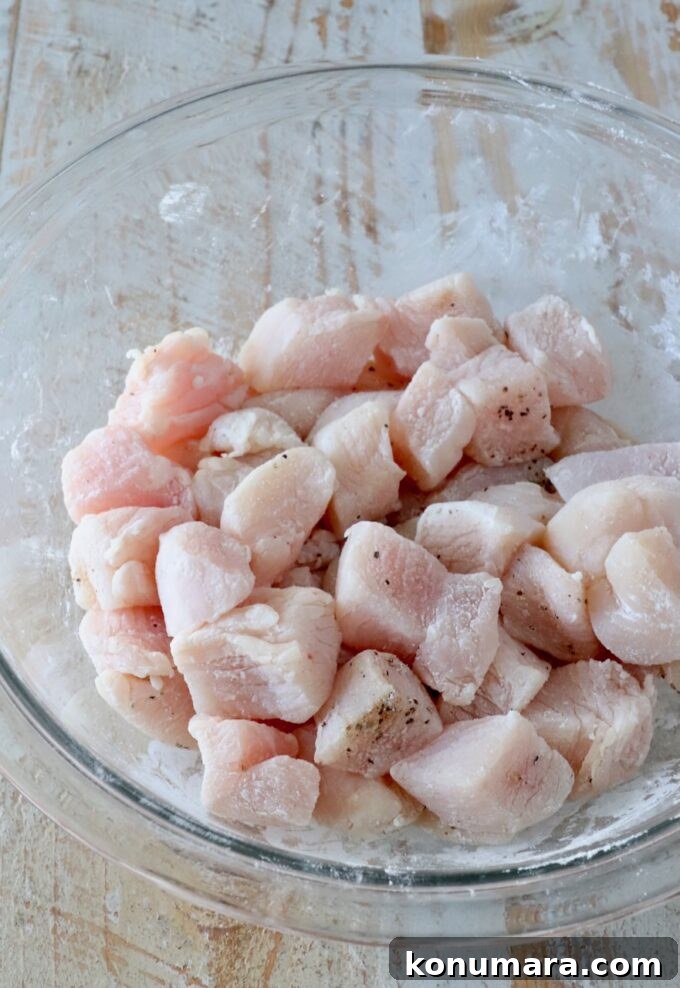
- Mix the sauce. Whisk gochujang paste with honey, soy sauce (or tamari), rice vinegar, neutral oil, toasted sesame oil, and crushed garlic until smooth. Set aside.
- Coat the chicken. Slice the chicken into roughly 3/4-inch pieces. Toss with cornstarch, salt, and black pepper in a bowl or a zipper bag until evenly coated.
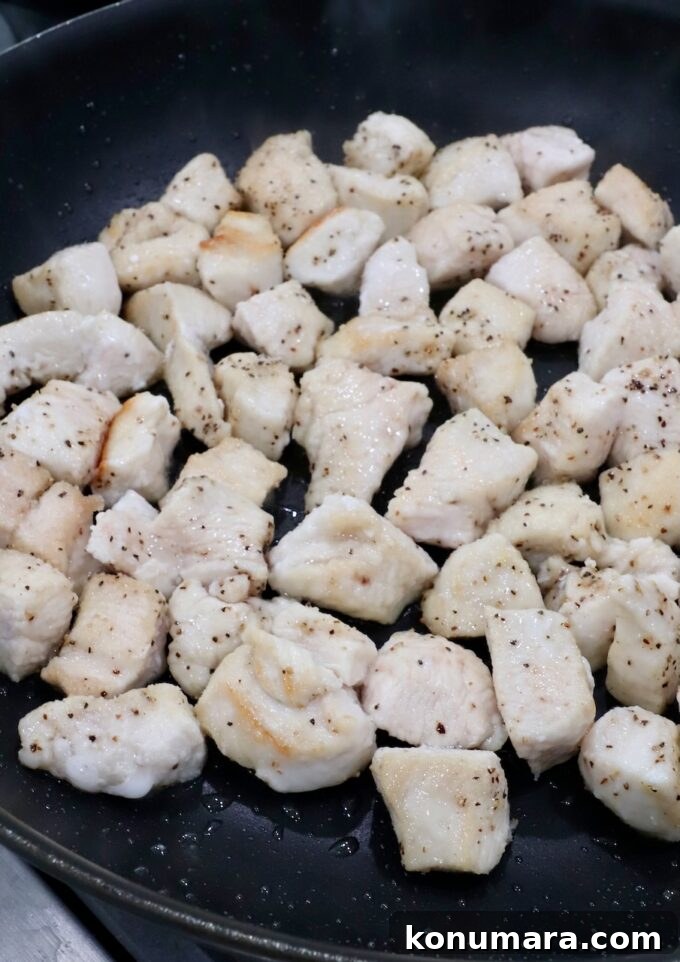
- Pan-fry the chicken. Heat a couple tablespoons of neutral oil in a large skillet over medium-high heat. Add the coated chicken and cook for about 5 minutes, stirring occasionally so all sides brown and the pieces are cooked through.
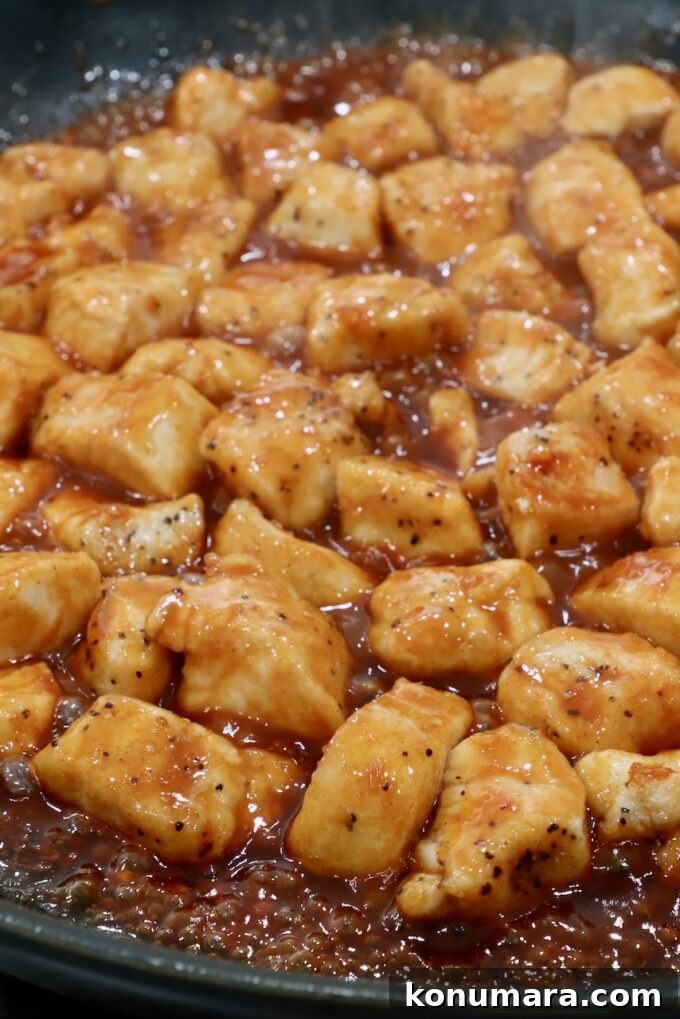
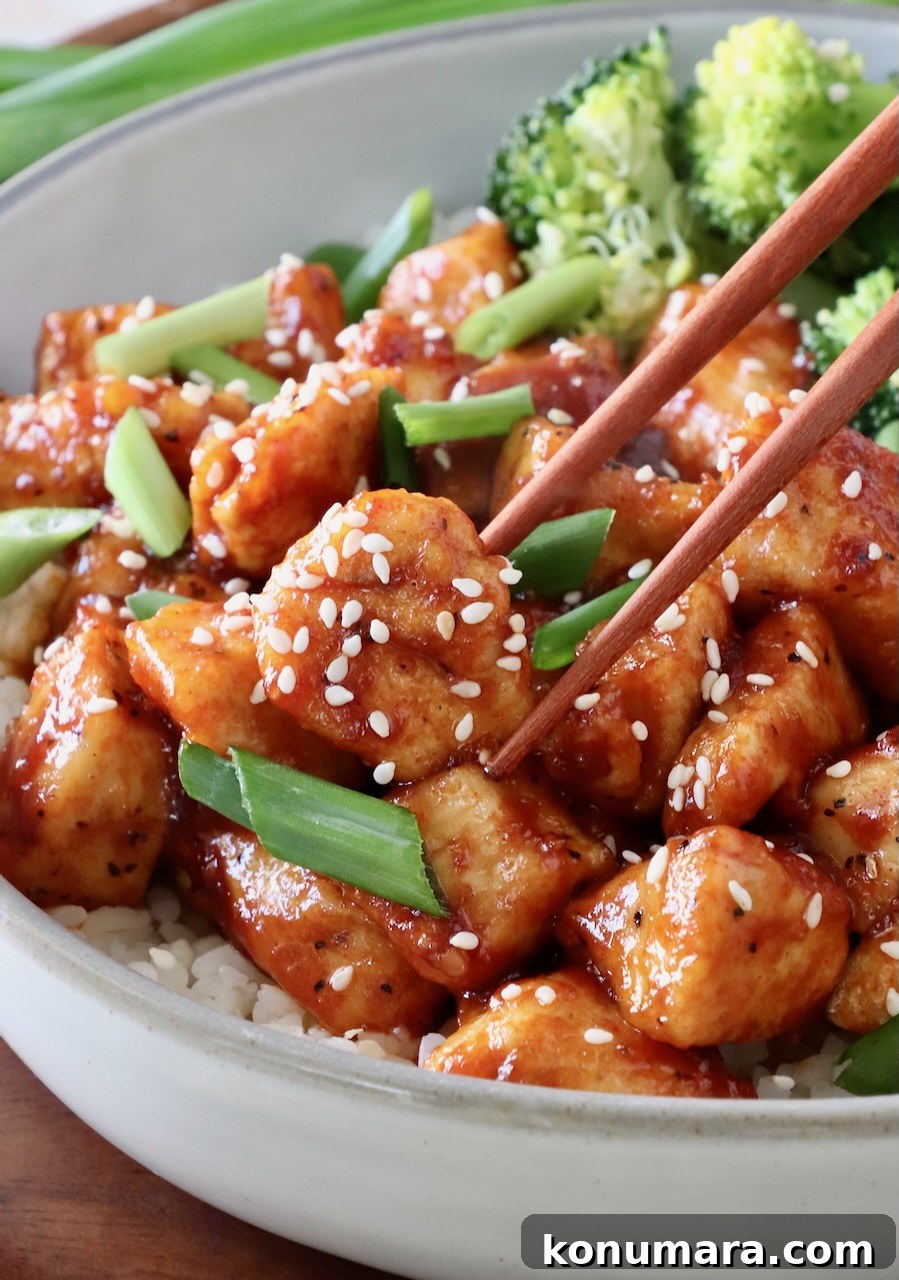
- Glaze the chicken. Pour the prepared gochujang sauce into the skillet and toss the chicken to coat. Cook 3–4 minutes more until the sauce thickens into a glossy glaze that clings to the chicken. Remove from heat and serve right away. Garnish with sesame seeds and sliced green onions if desired.
Tip: The sauce can be made up to 5 days ahead and stored in an airtight container in the refrigerator.
What to serve with it
This gochujang chicken pairs perfectly with steamed or fried rice and simple vegetables. Prepare sides before you fry the chicken so everything is hot and ready to serve.
- White rice — stove, rice cooker, or Instant Pot.
- Brown rice — a heartier whole-grain option.
- Steamed broccoli — bright and fresh alongside the rich sauce.
- Stir-fried vegetables — quick, colorful, and textural.
- Lettuce wraps — for a lighter, hands-on option.
Storage and reheating
Store leftovers in an airtight container in the refrigerator for up to five days.
Best reheated in an air fryer at 400°F for 4–5 minutes to refresh the crisp coating and keep the glaze sticky. If you don’t have an air fryer, reheat in a skillet over medium heat for 5–7 minutes, stirring occasionally.
More Asian recipes
If you enjoy this gochujang chicken, try these other popular, easy Asian-inspired dishes:
- Gluten Free General Tso’s Chicken
- Gluten Free Chinese Honey Chicken
- Miso Salmon
- Gluten Free Orange Chicken
- Spicy Vegetable Pad Thai
- Miso Ramen
Gochujang Chicken
Ingredients
Gochujang Sauce
- 4 tablespoons gochujang paste
- 2 tablespoons honey
- 2 tablespoons soy sauce (use tamari to make gluten-free)
- 1 tablespoon rice vinegar
- 1 tablespoon neutral oil (canola, vegetable, or avocado)
- 1 tablespoon toasted sesame oil
- 1 tablespoon crushed garlic (or 1 teaspoon garlic powder)
Chicken
- 1 pound boneless, skinless chicken breasts, sliced into 3/4-inch pieces (or use chicken thighs)
- 1/4 cup cornstarch (or tapioca starch / rice flour)
- 1/2 teaspoon salt
- 1/2 teaspoon black pepper
- 2 tablespoons neutral oil for frying
Instructions
- In a small bowl, whisk together all sauce ingredients until smooth. Set aside.
- Place chicken pieces in a medium bowl or large zipper bag. Add cornstarch, salt, and pepper and toss to coat evenly.
- Heat 2 tablespoons oil in a large skillet over medium-high heat until shimmering.
- Add the coated chicken and cook about 5 minutes, stirring occasionally, until browned and cooked through.
- Pour the gochujang sauce over the chicken. Stir and cook 3–4 minutes until the sauce thickens into a glossy glaze and coats the chicken.
- Remove from heat and serve immediately. Garnish with sliced green onions and sesame seeds if desired.
Notes
- Make it gluten-free: swap regular soy sauce for tamari or a certified gluten-free soy sauce.
- Make the sauce up to 5 days ahead and store it refrigerated in an airtight container.
- Prepare rice and vegetables before frying the chicken so everything is ready to serve while the chicken is hot.
Nutrition Facts (per serving)
Calories: 370 kcal | Carbohydrates: 29 g | Protein: 25 g | Fat: 17 g | Sodium: 1437 mg
Please consider leaving a star rating and a short review!