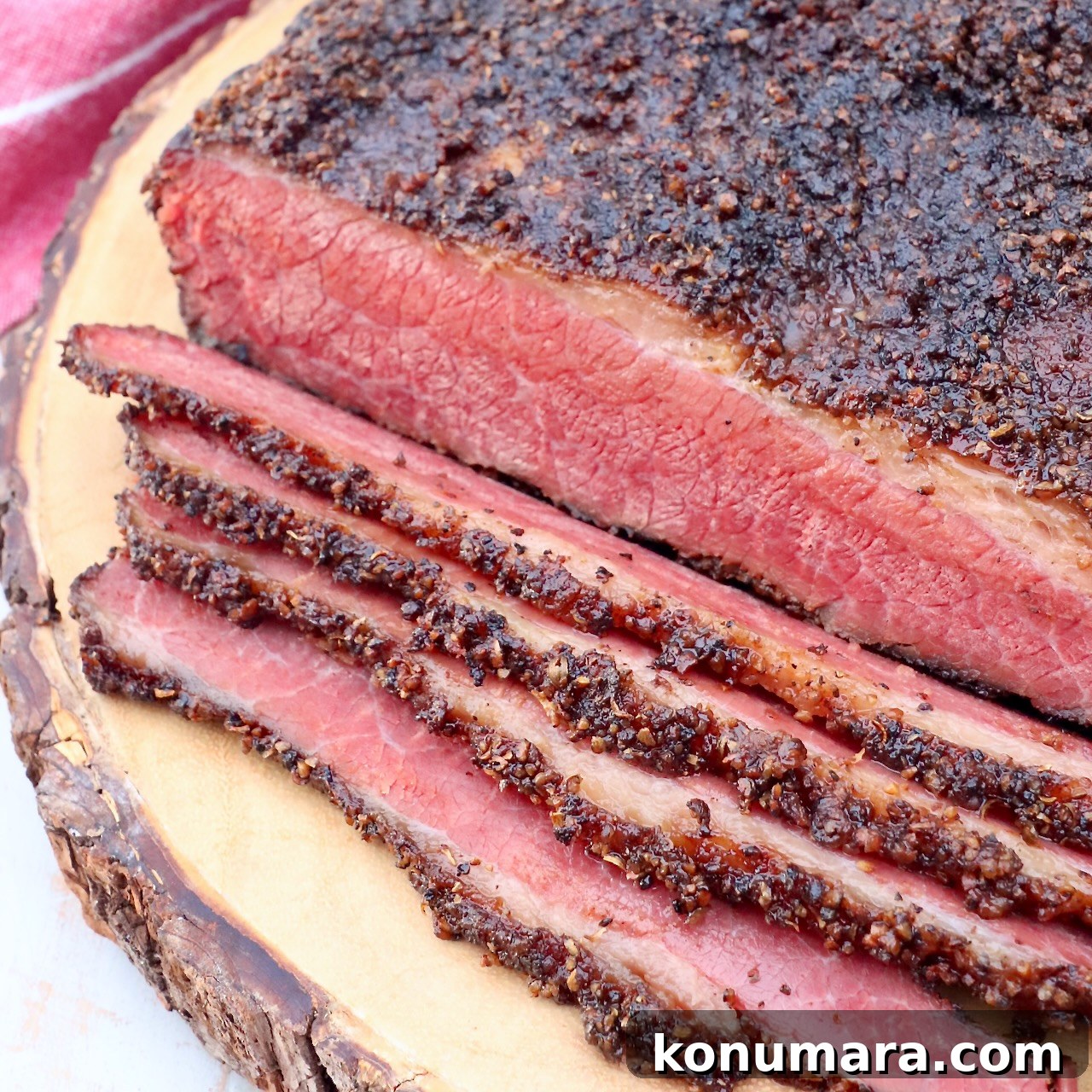
If you love the warm, peppery bite of a deli pastrami sandwich, you’ll adore this Homemade Pastrami. It’s smoky, peppery, tender and full of flavor. While it requires some planning and time for brining and slow cooking, the steps are simple and the results are well worth the effort. Follow these instructions to make tender pastrami from scratch at home.
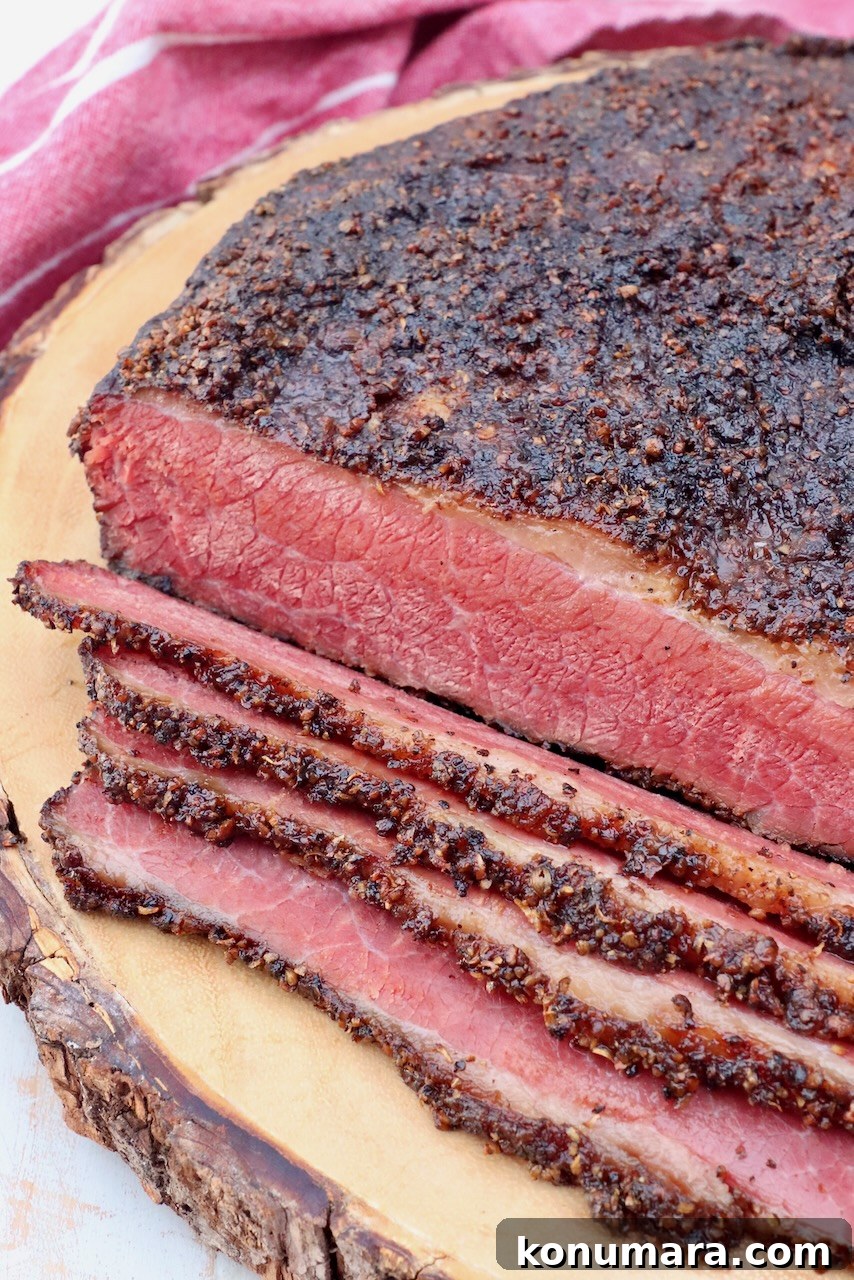
Table of contents
- Ingredients
- Instructions
- Brine the brisket
- Make the pastrami seasoning
- Season and smoke the brisket
- How to make it in the oven
- How to make it with store-bought corned beef
- Ways to serve it
- Recipe notes
- Storage instructions
- Tools you’ll need
- More beef recipes
After sharing a corned beef recipe earlier in the year, this pastrami recipe was the natural follow-up. Pastrami and corned beef begin the same way — with a brisket cured in a seasoned brine — but the finishing methods create different flavor profiles. Corned beef is typically simmered in a cooking liquid, while pastrami is coated in a peppery rub and smoked low and slow to develop that classic smoky, pepper-forward taste.
If you’re short on time, you can start with store-bought corned beef that has already been brined, then apply the pastrami spice rub and smoke or roast it. If you don’t own a smoker, you can still make excellent pastrami in the oven — details are below.
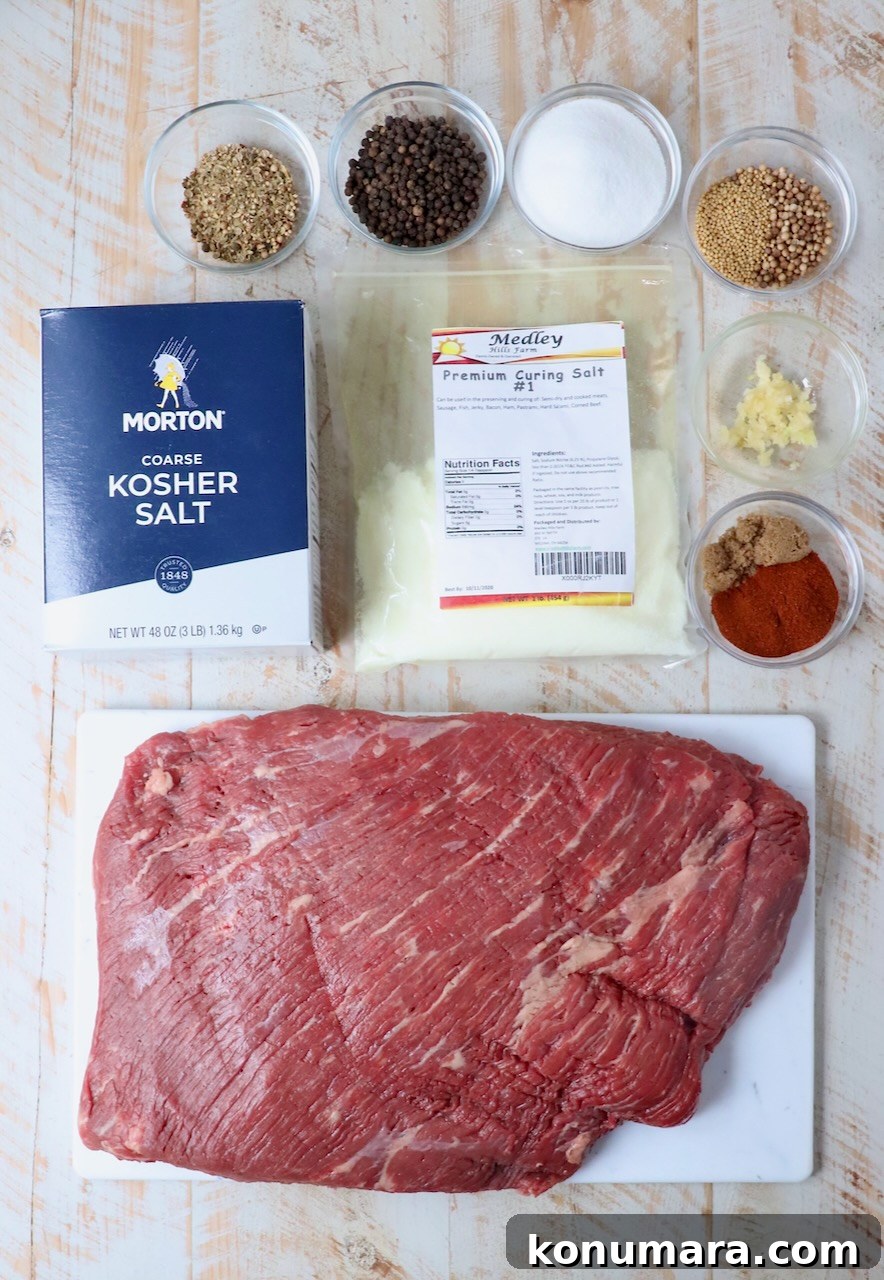
Ingredients
Note: quantities are included in the recipe card at the bottom. This is an overview of what you’ll need.
- Beef brisket – A flat-cut brisket is preferred for a leaner slice, though the point cut can also be used.
- Salt – Use pickling salt, coarse salt, or kosher salt for the brine. Weighing salt in ounces gives the most accurate results for brines.
- Granulated sugar – Adds balance to the brine.
- Pickling spice (corned beef seasoning) – A blend of coriander, peppercorns, mustard seed and other warm spices used in the brine.
- Pink curing salt (Prague Powder #1) – A small amount preserves color and helps safely cure the meat during the brining period.
- Garlic – Fresh minced garlic adds depth to the brine.
- Pastrami seasoning – A coarse rub of toasted black peppercorns, coriander seeds, mustard seeds, smoked paprika and a touch of brown sugar for balance.
Instructions
These instructions describe the three main stages: brining, seasoning, and cooking. Plan at least five days for brining, plus the cook time.
Brine the brisket
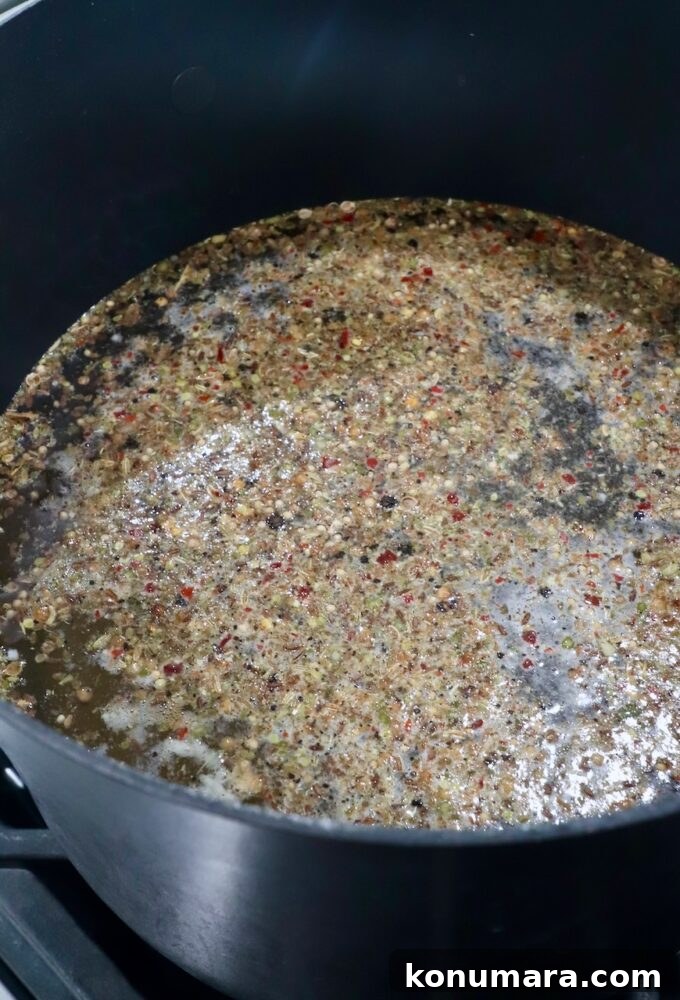
- Prepare the brine. In a large pot, combine water, granulated sugar, pickling spice, pink curing salt and minced garlic. Bring to a boil and stir until the salt and sugar dissolve. Turn off the heat and allow the brine to cool completely before using.
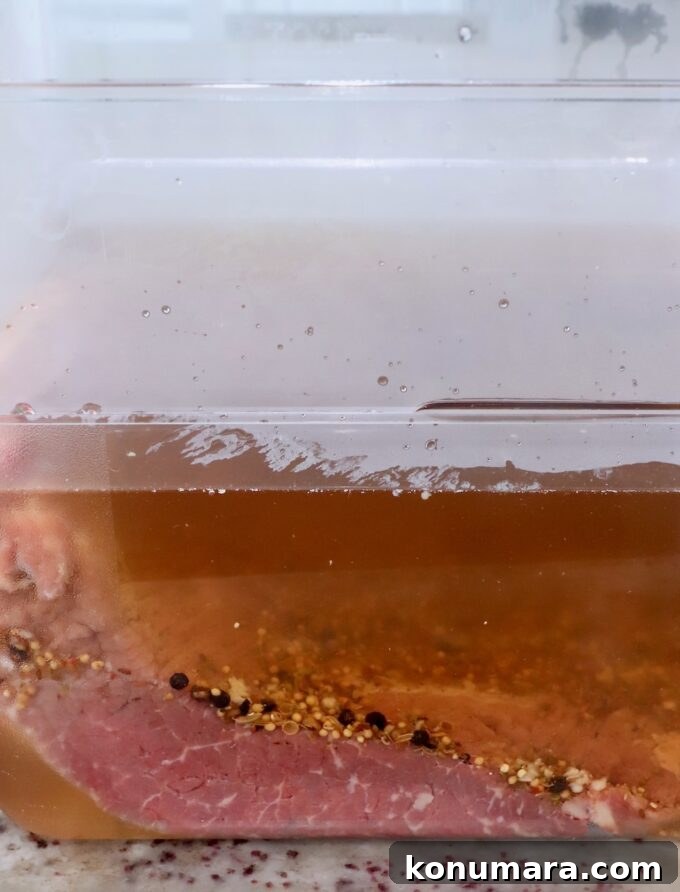
- Submerge and chill. Place the brisket in a container or heavy-duty food-safe bag large enough to hold the meat and the brine. Pour in the cooled brine and ensure the brisket is fully submerged. Refrigerate and cure the brisket for a minimum of 5 days and up to 10 days. If the meat is fully submerged, you will not need to flip it during brining.
Make the pastrami seasoning
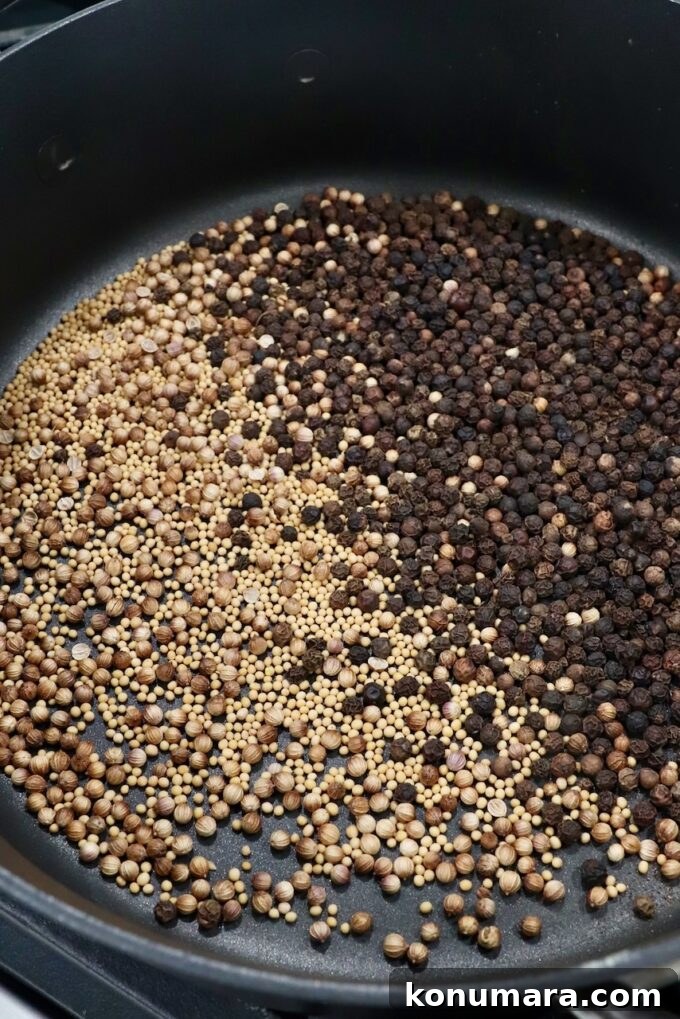
- Toast the seeds. In a dry skillet over medium heat, toast the coriander seeds, mustard seeds and black peppercorns for 1–2 minutes until fragrant, taking care not to burn them.
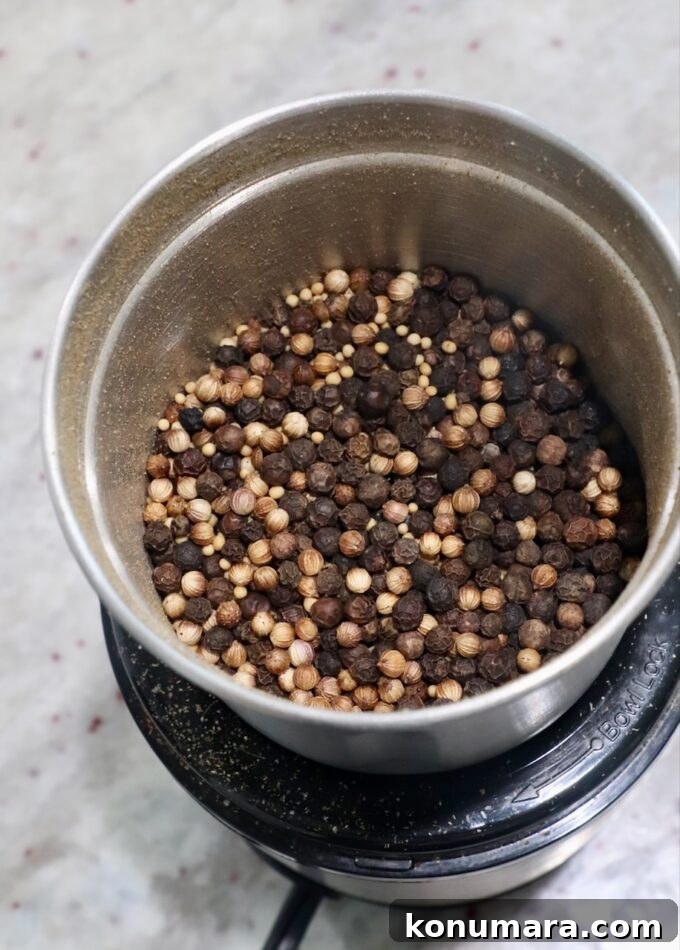
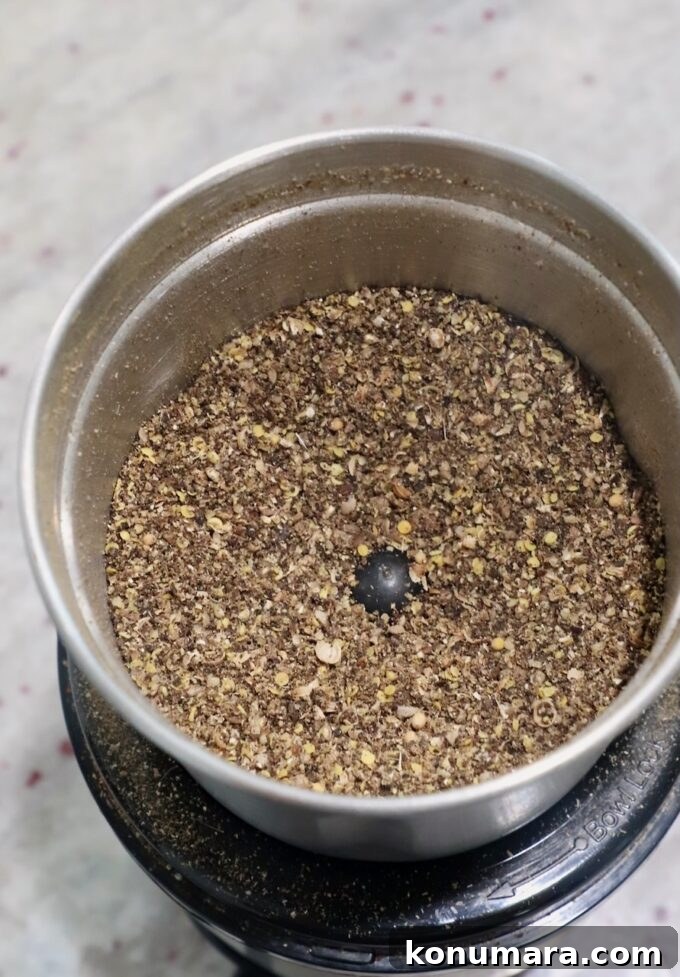
- Coarsely grind. Pulse the toasted seeds in a spice grinder or crush them with a mortar and pestle until coarse. The texture should be chunky, not finely powdered.
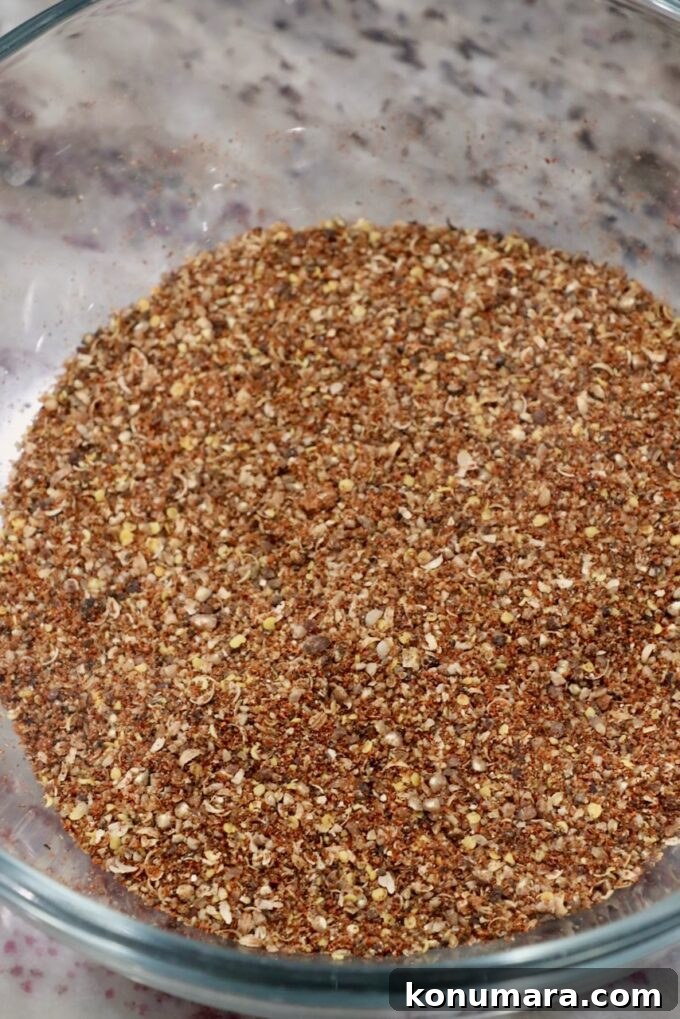
- Finish the rub. Combine the ground seeds with smoked paprika and brown sugar. Stir to blend evenly.
Season and smoke the brisket
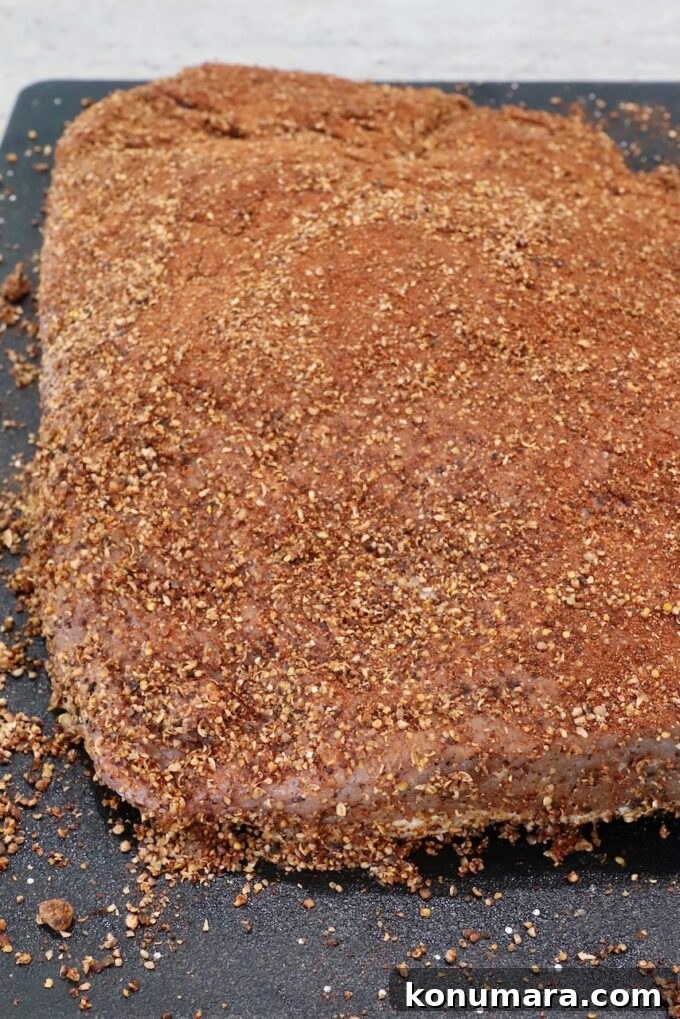
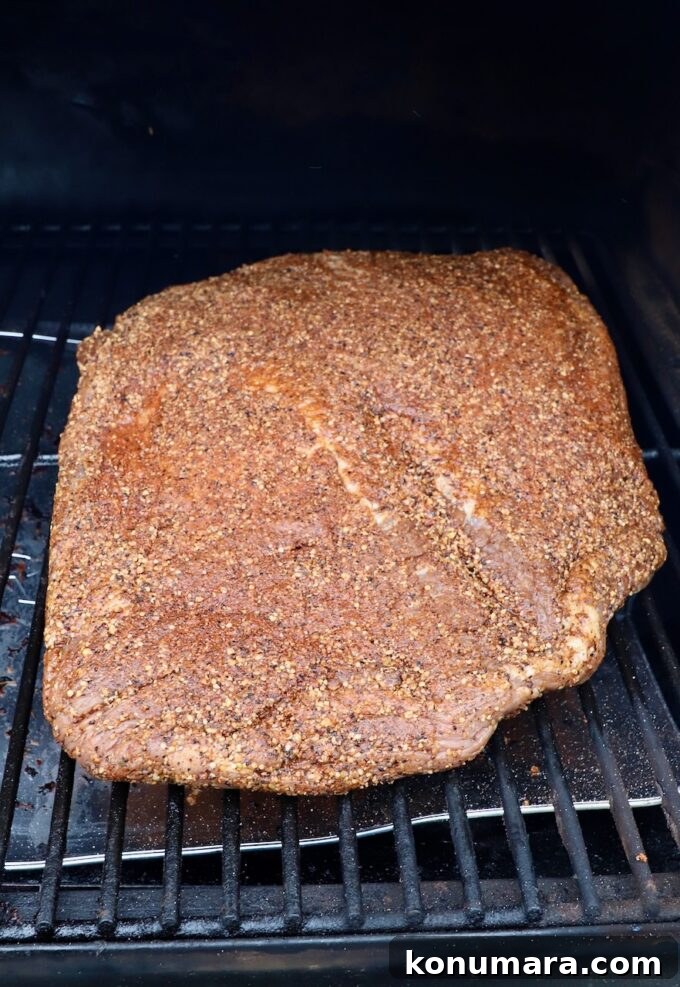
- Dry and coat. After brining, remove the brisket from the brine, rinse if desired, and pat completely dry. Press the pastrami seasoning into all sides of the brisket to form a thick, even crust.
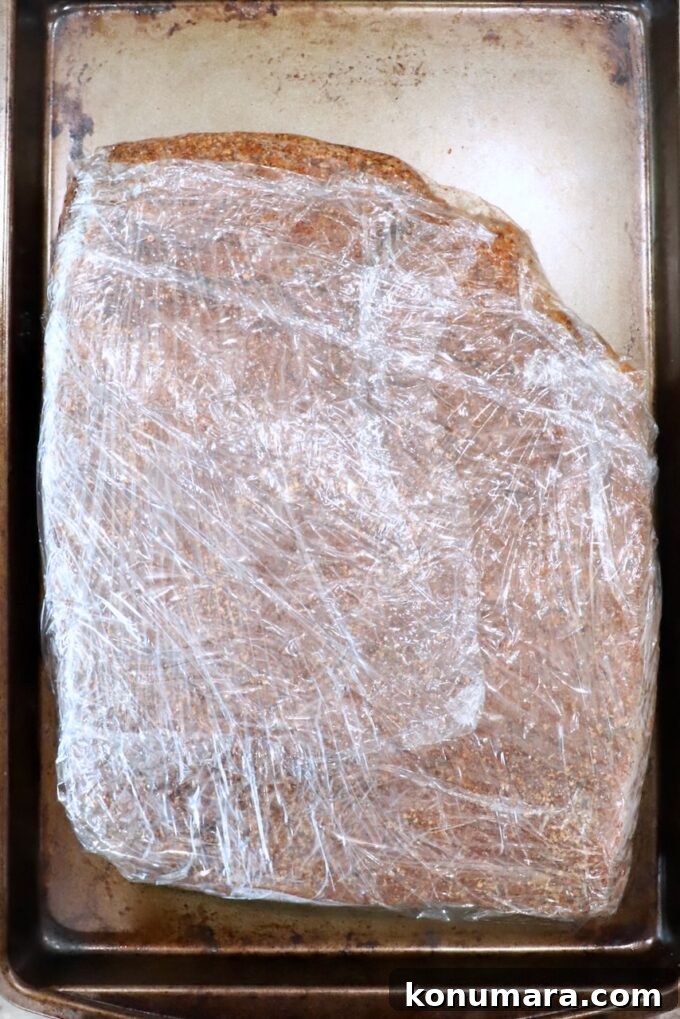
- Rest in the fridge. Wrap the seasoned brisket in plastic and refrigerate for 24–48 hours to let the seasoning adhere and deepen in flavor.
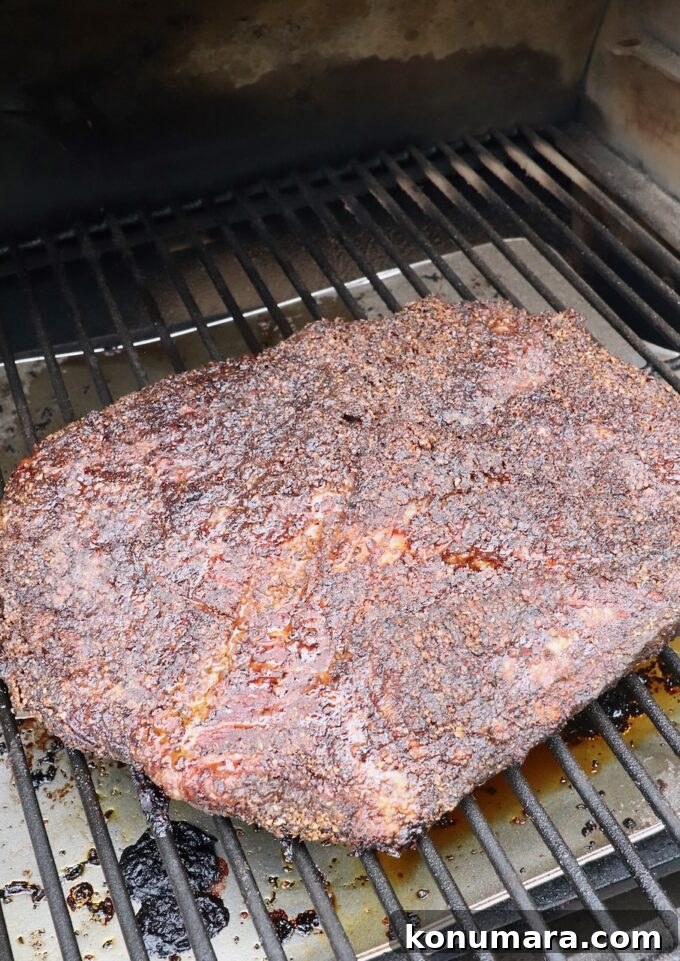
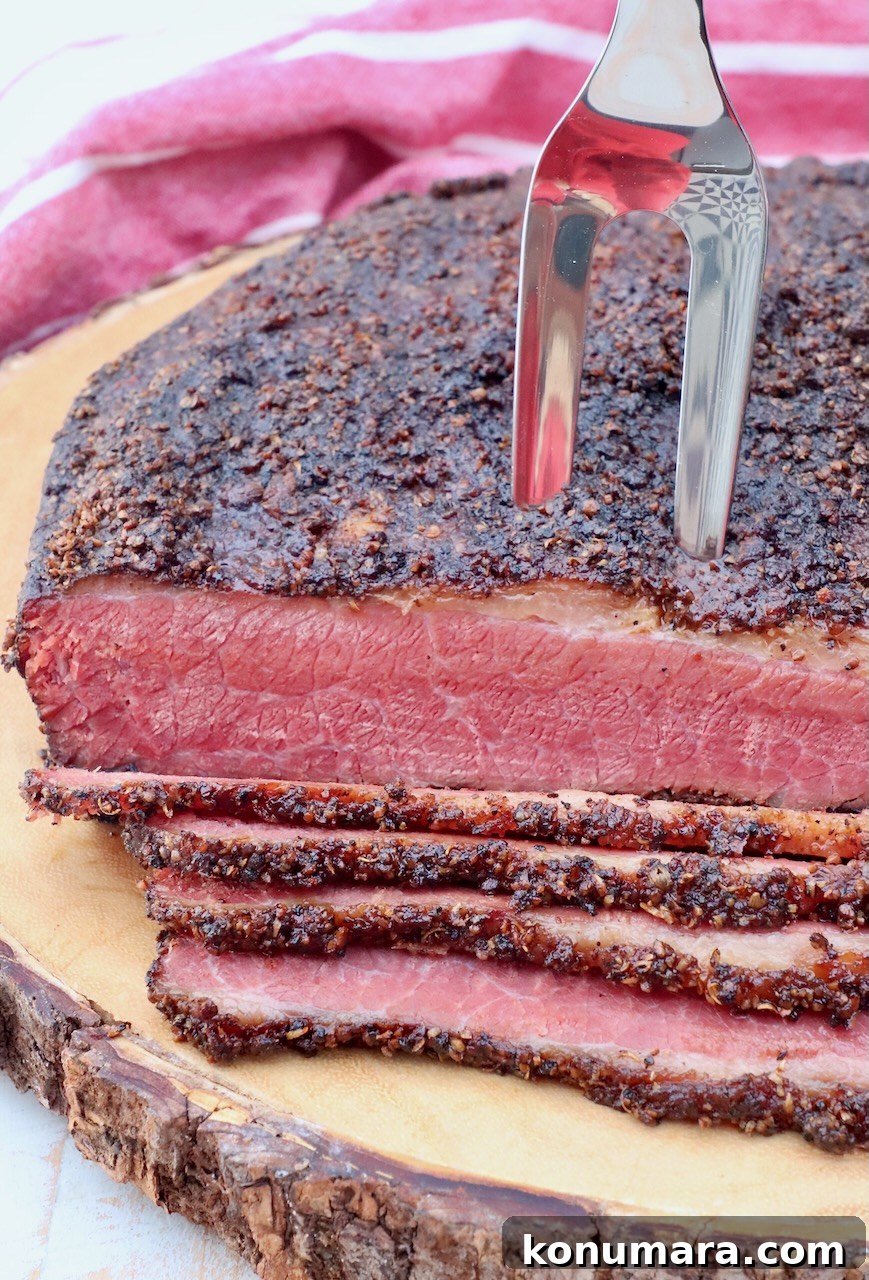
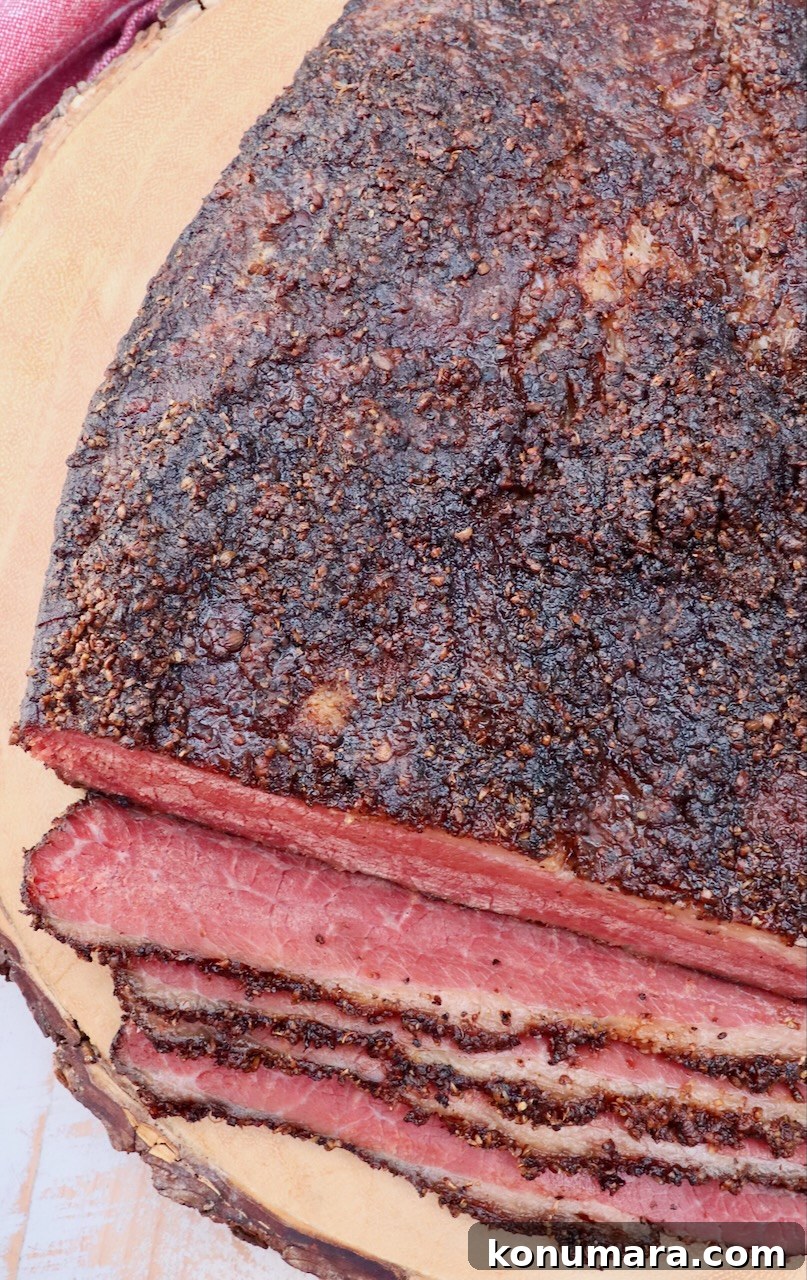
- Smoke low and slow. Bring the brisket to room temperature for 1–2 hours before cooking. Preheat a smoker to 250°F and place the brisket directly on the grates. Smoke until the internal temperature reaches about 200°F in the thickest part — typically 6–8 hours but timing will vary by size. Remove and tent with foil, then rest for at least 60 minutes before slicing very thinly against the grain.
How to make it in the oven
If you don’t have a smoker, you can cook pastrami in the oven with excellent results. The smoke flavor will be milder, but the meat will still be tender and richly seasoned.
Follow the same brining and seasoning steps. Wrap the seasoned brisket tightly in two layers of heavy-duty foil. Put 1 cup of water in a roasting pan, set a rack in the pan, and place the wrapped brisket on the rack so it does not touch the water. Cover the pan tightly with more foil and roast at 225°F for about 6 hours. Let the pastrami rest, loosely tented, for 30–60 minutes before slicing.
How to make it with store-bought corned beef
Using store-bought corned beef skips the brining step because the brisket has already been cured. Remove it from its packaging, drain and pat dry. Apply the pastrami seasoning, wrap in plastic, and chill for 24 hours. Then smoke or roast using the methods above until the internal temperature reaches 200°F and the meat is tender.
Ways to serve it
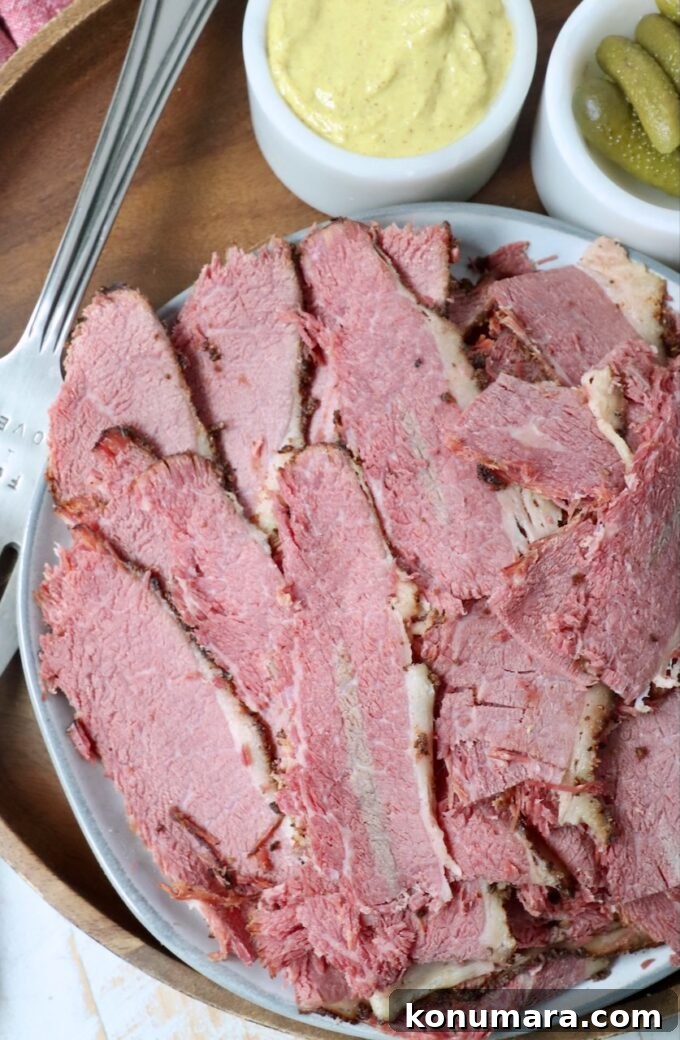
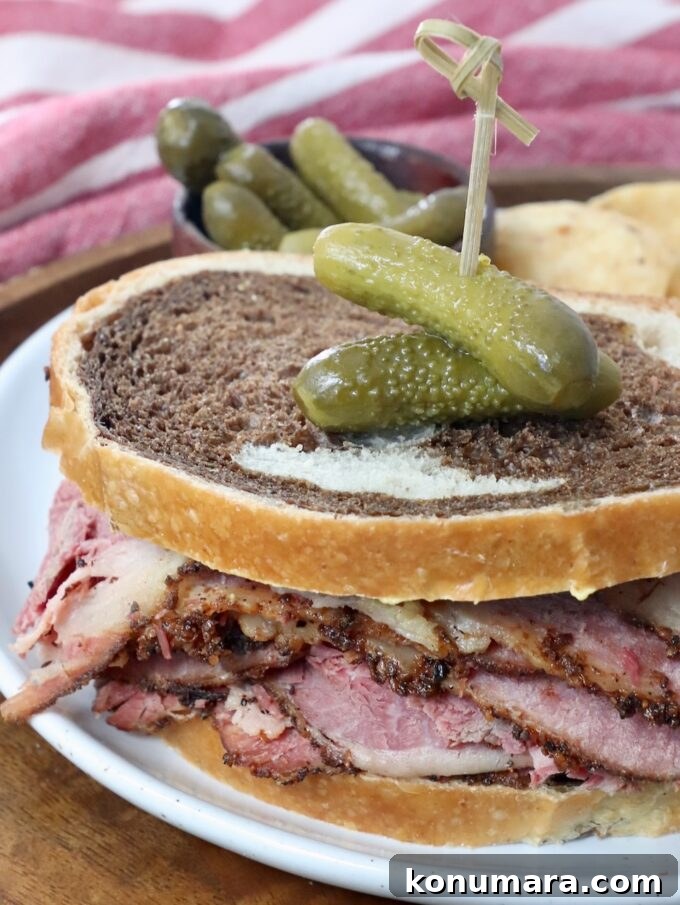
After resting, slice the pastrami as thinly as possible against the grain for the best texture. Thin slices are ideal for sandwiches.
- Serve sliced pastrami as a main course with roasted or mashed potatoes, steamed or roasted vegetables, or braised cabbage.
- Make a classic pastrami on rye: thinly sliced pastrami, rye bread and mustard, with pickles on the side.
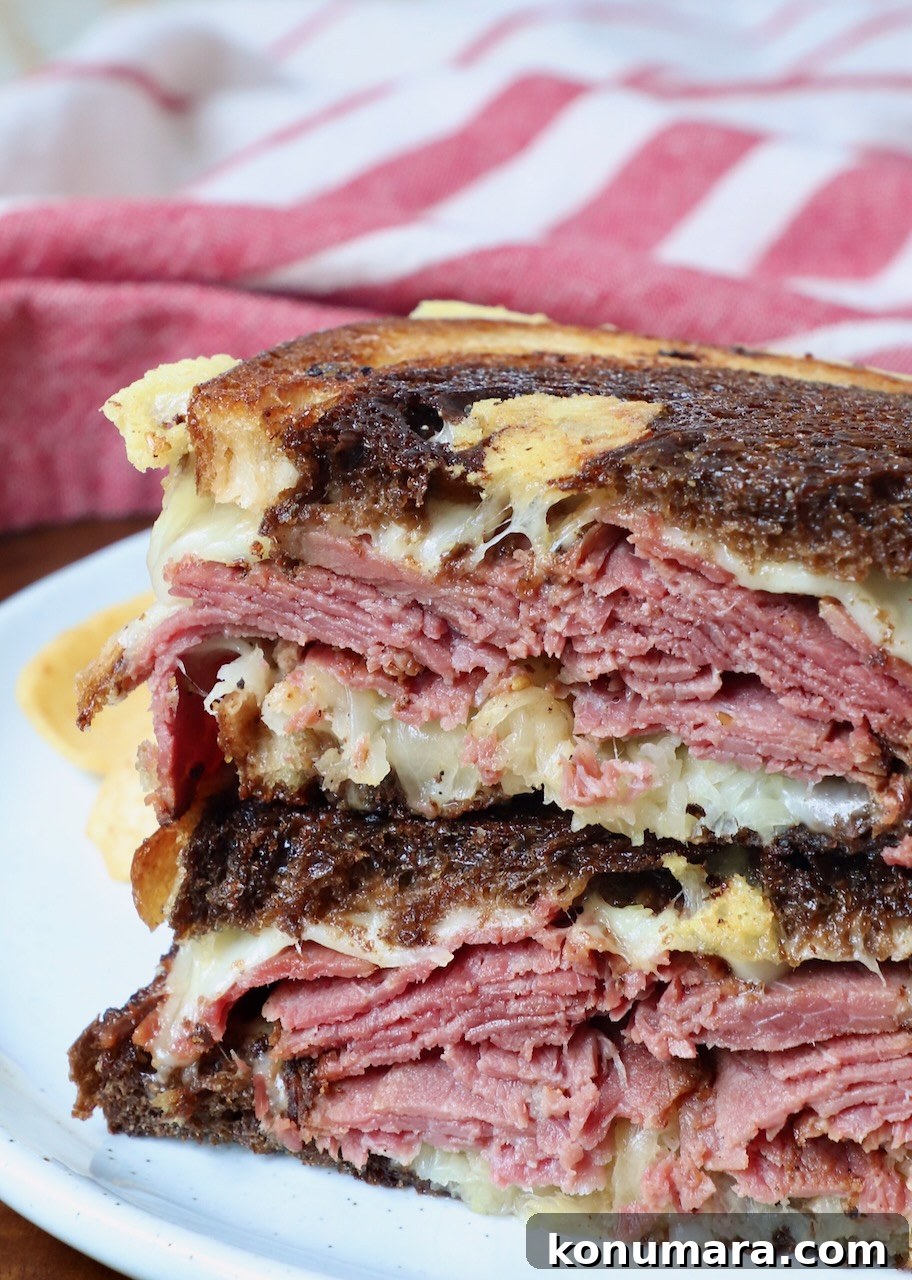
- Make a hot pastrami sandwich or Reuben variant with Swiss cheese, sauerkraut and Russian or Thousand Island-style dressing; grill until the bread is golden and the cheese melts.
- Use leftover pastrami in a hash, chopped and sautéed with potatoes and onions for a savory breakfast or brunch dish.
Recipe notes
- Brine time: Do not brine for more than 10 days or the meat will become too salty. Five days yields a milder cure, seven days is a good balance, and up to ten days increases saltiness and cure.
- Submersion: Ensure the brisket is fully covered by the brine so it cures evenly.
- Cool the brine quickly: To speed cooling, make the brine with slightly less water and add ice after the salt and sugar have dissolved.
- Cook by temperature, not time: Aim for an internal temperature of about 200°F in the thickest part of the brisket for tender pastrami. Depending on brisket size, cooking times often range from 6–10 hours in a smoker.
- Wood choice: Mesquite gives a bold smoke flavor; hickory or pecan are great alternatives for a more moderate smoke profile.
Storage instructions
Cooked pastrami will keep in the refrigerator for up to 7 days. To reheat, wrap the slices in foil and warm in a 350°F oven for about 15 minutes to retain moisture.
You can freeze cooked pastrami for up to 6 months in a freezer-safe container. Thaw in the refrigerator for 48 hours before reheating. Uncooked, brined brisket can also be frozen for up to 6 months; thaw fully in the refrigerator for roughly 48 hours before cooking.
Tools you’ll need
- Large container or heavy-duty food-safe bag for brining
- Spice grinder, mortar and pestle, or a sturdy bowl and pestle for crushing toasted seeds
- Smoker or an oven for the finish (see oven method above)
- Instant-read thermometer or probe thermometer to check internal temperature
- Sharp carving knife, electric knife or deli slicer to cut very thin slices for sandwiches
More beef recipes
Other popular beef dishes to try include roasted prime rib, beef Wellington, sirloin steak marinades, Salisbury steak, beef birria and smoked tri-tip. These dishes pair well with the same techniques of seasoning, slow cooking, and resting to develop deep flavor and tender texture.
Pastrami
Recipe details
Servings: 10 • Prep time: 30 minutes • Cook time: 6–8 hours • Brine time: 5–10 days • Total time: 6 days + 8 hours
Ingredients
Brine
- 1 gallon water
- 9 ounces pickling salt (or coarse salt)
- 1/2 cup granulated sugar
- 2 tablespoons pickling spice
- 2 teaspoons pink curing salt (Prague Powder #1)
- 4 garlic cloves, minced
- 5 pound beef brisket, flat cut preferred
Seasoning
- 4 tablespoons black peppercorns
- 2 tablespoons coriander seeds
- 1 tablespoon mustard seeds
- 2 tablespoons smoked paprika
- 1 tablespoon brown sugar
Instructions
Brine the brisket
- Combine water, salt, sugar, pickling spice, pink curing salt and garlic in a large pot. Bring to a boil and stir until dissolved. Cool completely.
- Place brisket in a container or bag large enough to hold it and the brine. Pour the cooled brine over the brisket, ensuring it is fully submerged. Refrigerate and brine for 5–10 days.
Season the brisket
- Remove the brisket from the brine and pat dry.
- Toast peppercorns, coriander and mustard seeds in a dry skillet until fragrant, 1–2 minutes. Coarsely grind to a chunky texture and stir in smoked paprika and brown sugar.
- Rub the seasoning all over the brisket, wrap in plastic, and refrigerate for 24–48 hours.
Cook the brisket
- Bring the brisket to room temperature for 1–2 hours.
- Preheat smoker to 250°F. Place the brisket on the smoker grates and smoke until the internal temperature reaches about 200°F in the thickest part, typically 6–8 hours depending on size.
- Remove from heat, tent loosely with foil, and rest at least 60 minutes before slicing thinly against the grain.
Notes
- If you don’t have a grinder, use a mortar and pestle or crush toasted seeds in a bowl with the end of a wooden spoon. The rub should be coarse.
- To cook in the oven, wrap the brisket in foil, place on a rack in a roasting pan with 1 cup water, cover tightly and roast at 225°F for about 6 hours. Rest 60 minutes before slicing.
- Using pre-brined corned beef saves time—simply season and smoke or roast as above.
Nutrition
Approximate per serving: 422 kcal • Carbs 17 g • Protein 48 g • Fat 18 g • Sodium will be high due to curing process—adjust servings accordingly.