
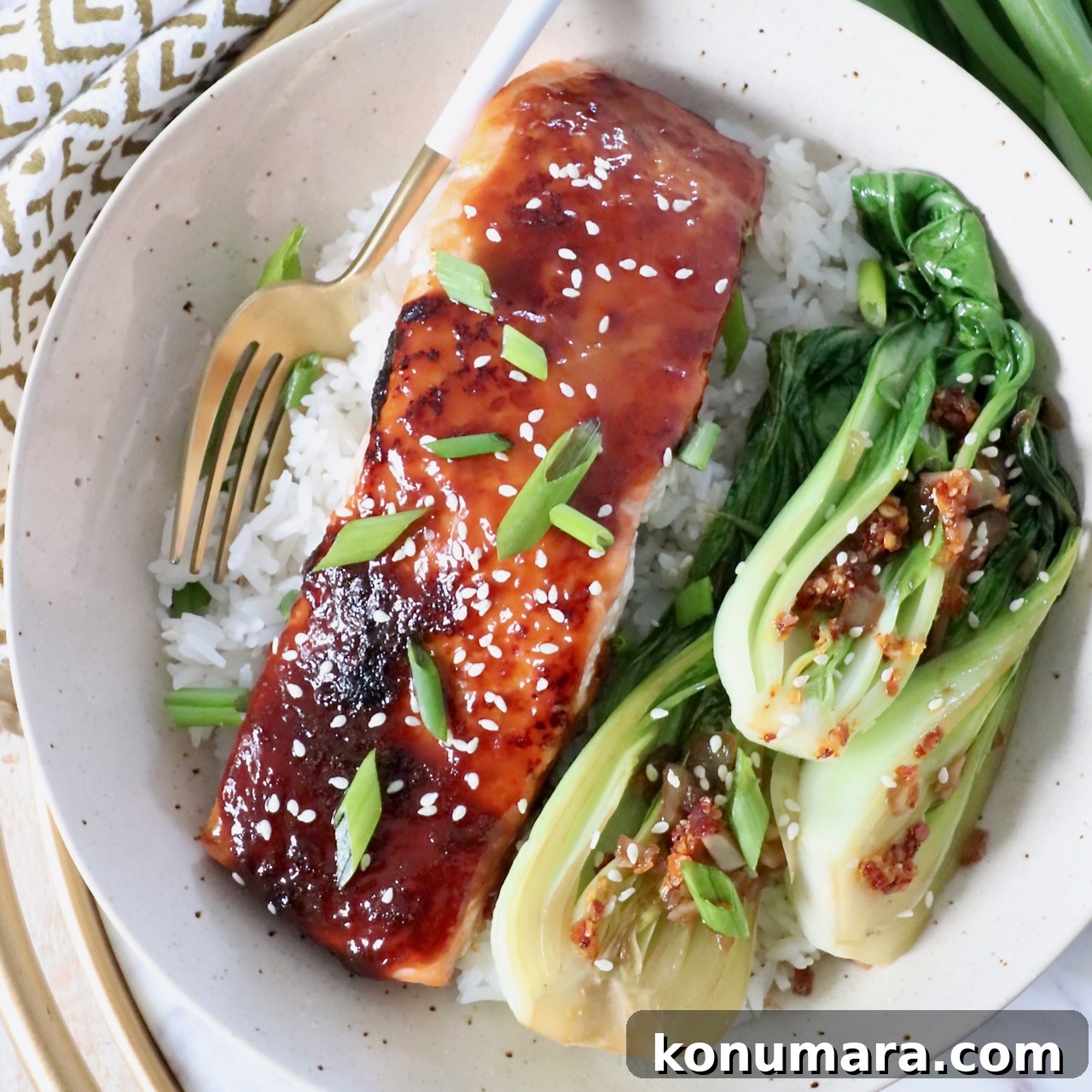
Make the best Miso Salmon at home with an easy, six-ingredient recipe that takes about 25 minutes from start to finish. A sweet, salty miso glaze caramelizes over the salmon in the oven, creating a tender, buttery texture and a sticky, flavorful finish. This simple dish works for a weeknight dinner or a special meal—and it’s likely to become a favorite.
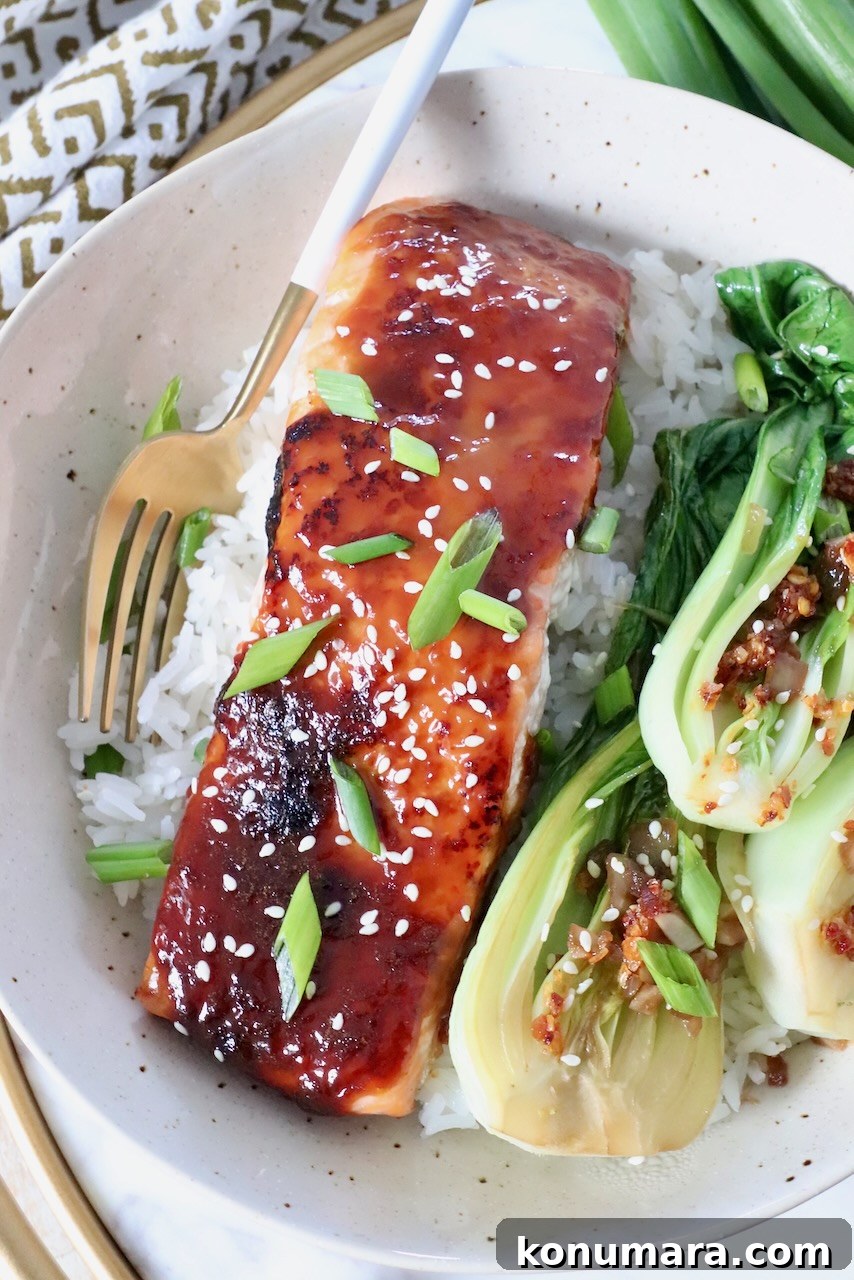
If you love miso black cod at Japanese restaurants, you’ll appreciate how quickly the same savory-sweet profile can be translated to salmon. Instead of a long marinade, this recipe uses a quick stovetop glaze that you spoon over the fillets before baking. The glaze thickens and caramelizes in the oven, giving the salmon a glossy, slightly crisp top while the inside stays moist.
This recipe is straightforward and forgiving. It’s ideal for cooks of any level: whisk together the glaze, simmer briefly until thick, coat the salmon, roast it at high heat, then finish under the broiler for that irresistible caramelized top. Below you’ll find ingredient notes, clear step-by-step instructions, serving suggestions, helpful tips, and nutrition information.
Ingredients
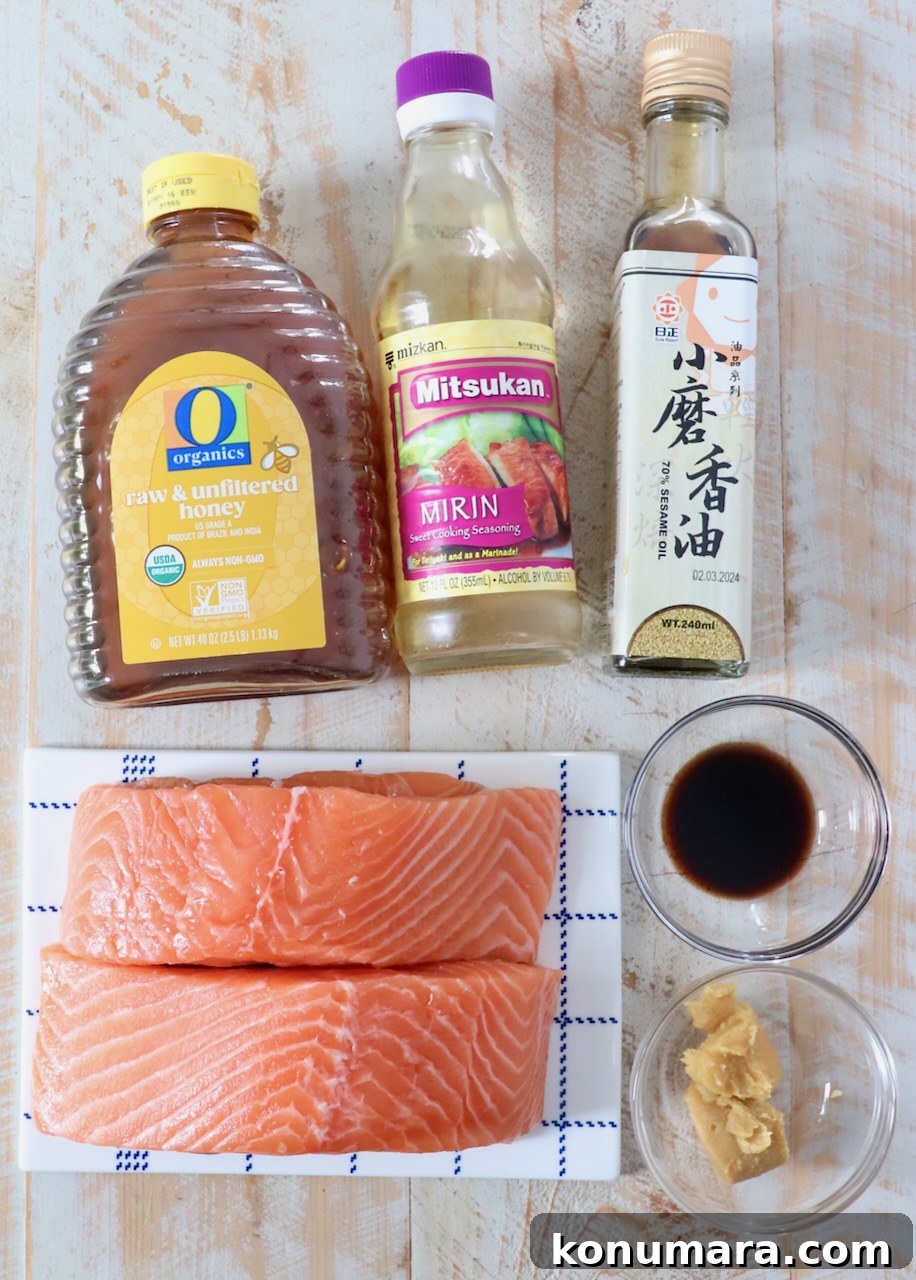
These ingredients create a balanced glaze that’s sweet, salty, and full of umami. Quantities are listed in the recipe card below; short substitution notes follow each core item to help you adapt the dish.
- Salmon – Four center-cut fillets, 6–8 ounces each, ideally similar thickness for even cooking. Skin can be left on; it keeps the fish moist.
- White miso paste (shiro miso) – A mild, slightly sweet fermented soybean paste. It adds the essential umami base for the glaze. White miso is milder than darker varieties and works best here.
- Honey – Balances the miso and helps the glaze caramelize. Maple syrup can be used if you prefer.
- Mirin – A sweet Japanese rice wine that adds brightness and depth. If you don’t have mirin, a small splash of rice vinegar, sake, or even dry white wine can be substituted.
- Low-sodium soy sauce – Complements the miso’s saltiness without overpowering the glaze. Adjust saltiness to taste.
- Sesame oil – A little goes a long way; it lends a toasty, nutty note and helps with browning.
Instructions
Preheat your oven and follow these straightforward steps. Watch closely during the final broil to avoid burning.
- Preheat the oven to 425°F (220°C).
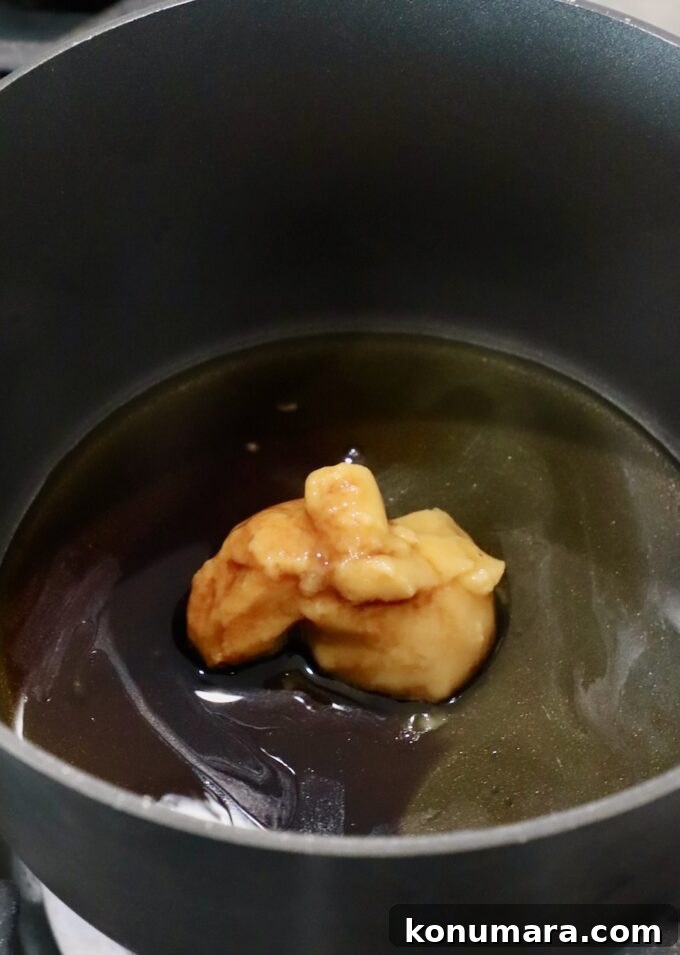
- Make the glaze: In a small saucepan over medium-high heat, combine the white miso paste, honey, mirin, low-sodium soy sauce, and sesame oil. Stir constantly and bring the mixture to a gentle simmer.
- Thicken the glaze: Simmer for about 5–7 minutes, stirring frequently, until the glaze becomes glossy and slightly thickened. Remove from heat and let cool about 5 minutes—the glaze will thicken a bit more as it cools.
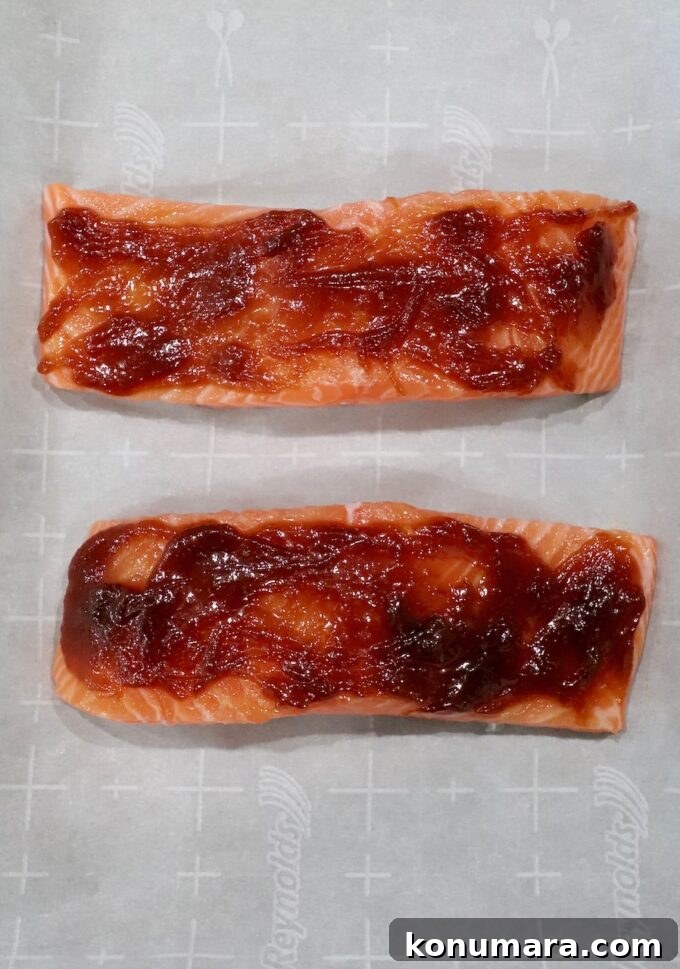
- Prepare the salmon: Line a baking sheet with parchment paper or foil for easy cleanup. Place the salmon fillets skin-side down and spread the glaze evenly over the tops of each fillet.
- Bake: Place the baking sheet on the middle rack and bake for 10 minutes. This time is based on fillets about 1 inch thick; adjust if your fillets are significantly thicker or thinner.
- Broil to finish: Switch the oven to broil on high and broil for 1–2 minutes, watching carefully until the glaze begins to bubble and brown. Remove immediately to prevent burning.
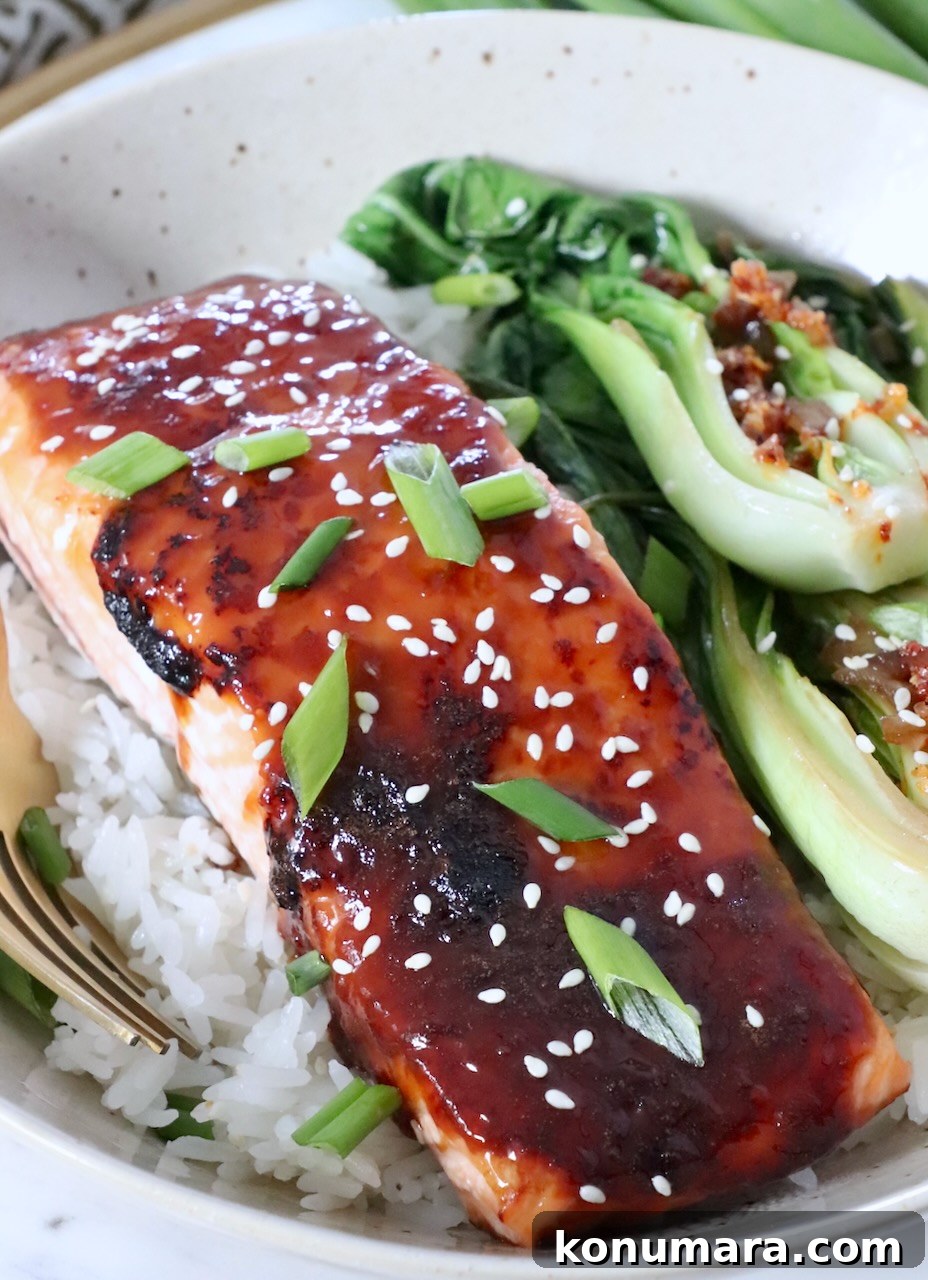
- Serve: Let the fish rest briefly, then garnish optional sesame seeds and diced green onions before serving.
What to serve it with
This miso salmon pairs beautifully with simple, slightly sweet, or bright sides that complement the glaze:
- Steamed white rice, brown rice, or sushi rice
- Lightly sautéed or steamed greens such as baby bok choy, bok choy, or broccoli
- Roasted or steamed Asian-style vegetables (carrots, green beans, or shredded cabbage)
- Cauliflower rice for a lower-carb option
- Edamame or a simple cucumber salad to refresh the palate
Notes & tips
- Finish under the broiler: Don’t skip broiling. That final minute gives the glaze its signature caramelized, slightly sticky top.
- Even fillets: Choose fillets of similar size so everything cooks evenly. If one fillet is much smaller, add it later or remove it earlier.
- Adjust for thickness: The guideline is roughly 10 minutes per inch of thickness before broiling. Thinner fillets may need 2–3 minutes less initial cook time.
- Keep the skin: Leaving the skin on helps retain moisture. The flesh should easily separate from the skin after cooking.
- No broiler? If your oven lacks a broiler, continue baking 2–5 minutes longer until the glaze is bubbling and slightly darkened.
- Internal temperature: Salmon continues to cook after removal from the oven. Remove it a few degrees below your preferred doneness; USDA recommends 145°F for well done, but many prefer to remove earlier for a moister result.
Nutrition Facts (approx. per serving)
- Calories: 330 kcal
- Carbohydrates: 17 g
- Protein: 36 g
- Fat: 13 g (Saturated fat: 2 g)
- Sodium: 864 mg
- Sugar: 12 g
- Potassium: 883 mg
Recipe summary
- Servings: 4
- Prep time: about 13 minutes
- Cook time: about 12 minutes (plus broil)
- Total time: approximately 25 minutes
- Author: Whitney Bond (recipe adapted for clarity)
Enjoy this miso glazed salmon as an easy weeknight highlight or a tasty dish for guests. The glaze stores well in the refrigerator for a few days—warm it gently and brush on extra before serving if you want top-ups of that glossy, savory-sweet finish.