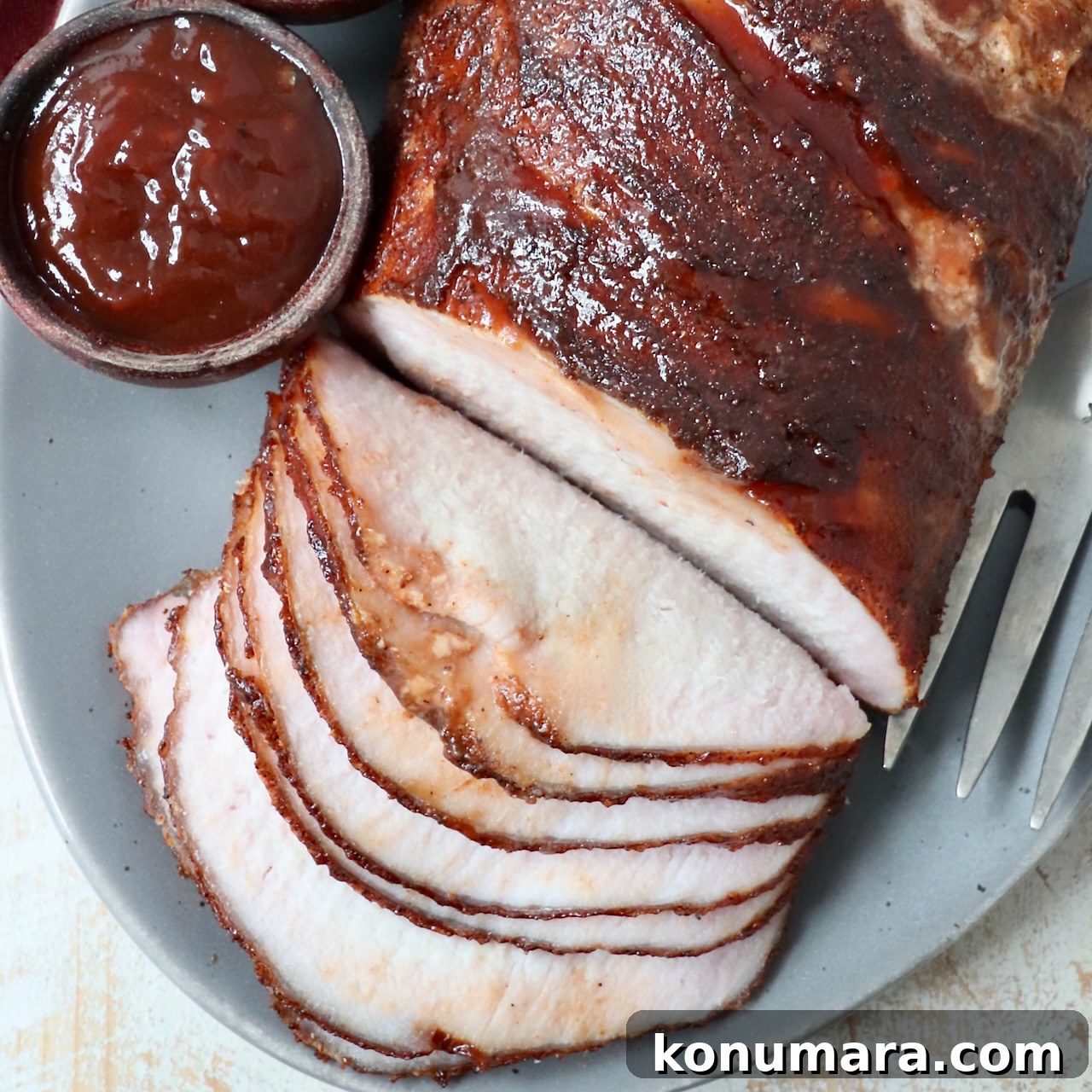
Create the most amazing, melt-in-your-mouth Smoked Pork Loin with this straightforward recipe. It begins with an overnight brine to tenderize and season the meat, then a sweet-and-savory dry rub is applied before the loin spends several hours in the smoker. A final glaze of your favorite BBQ sauce or pepper jelly builds glossy flavor and helps form a beautiful finish. This reliably juicy, tender smoked pork loin is perfect for gatherings or an impressive weeknight dinner.
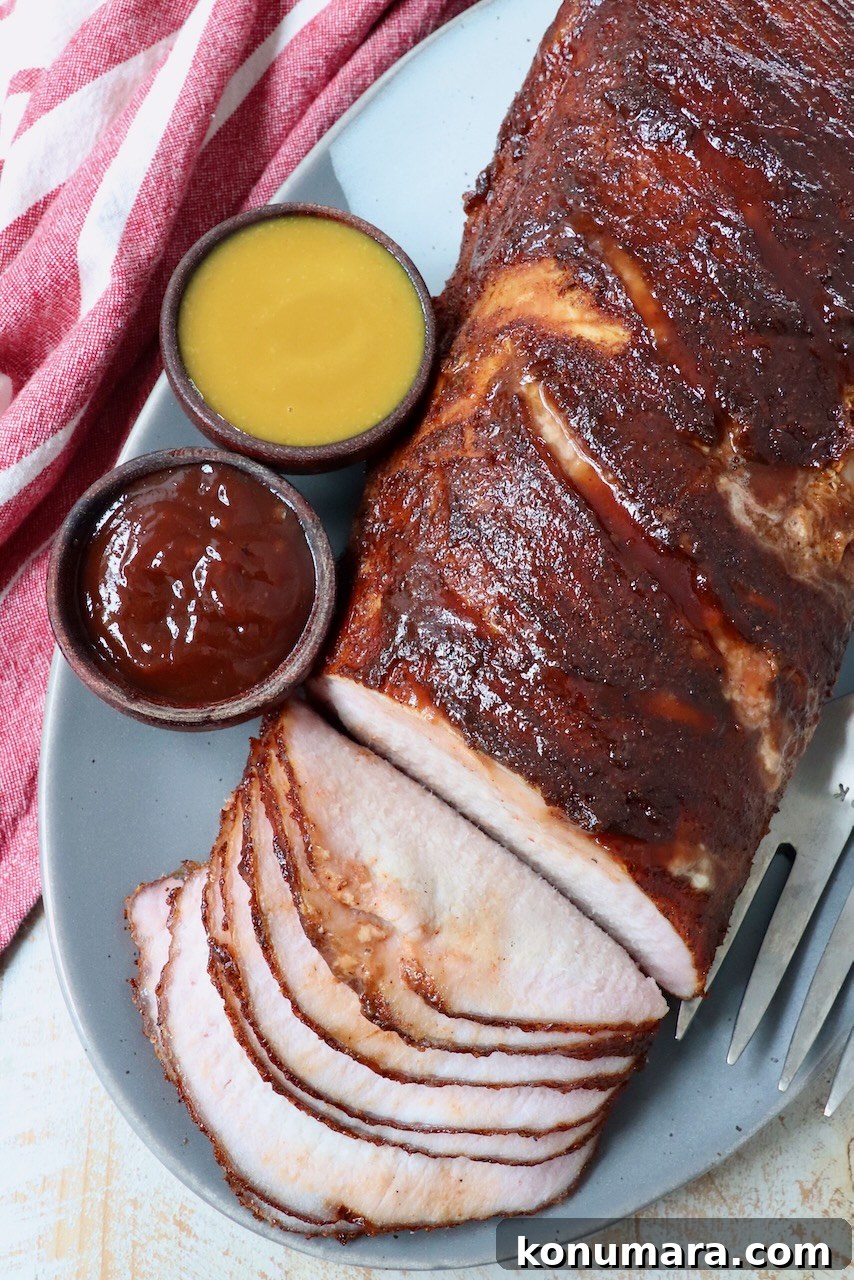
Table of contents
- Ingredients
- Instructions
- Recipe tips
- Storage and reheating
- What to serve with it
- Tools you’ll need
- More recipes for the smoker
We love smoking pork in many forms: shoulder, tenderloin, chops — if the smoker is on, there’s often pork involved. This smoked pork loin follows the same approach that makes tenderloin so irresistible: an overnight brine, a flavorful dry rub, a low-and-slow smoke, and a saucy finish. Each step layers flavor and keeps the meat juicy and tender.
Ingredients
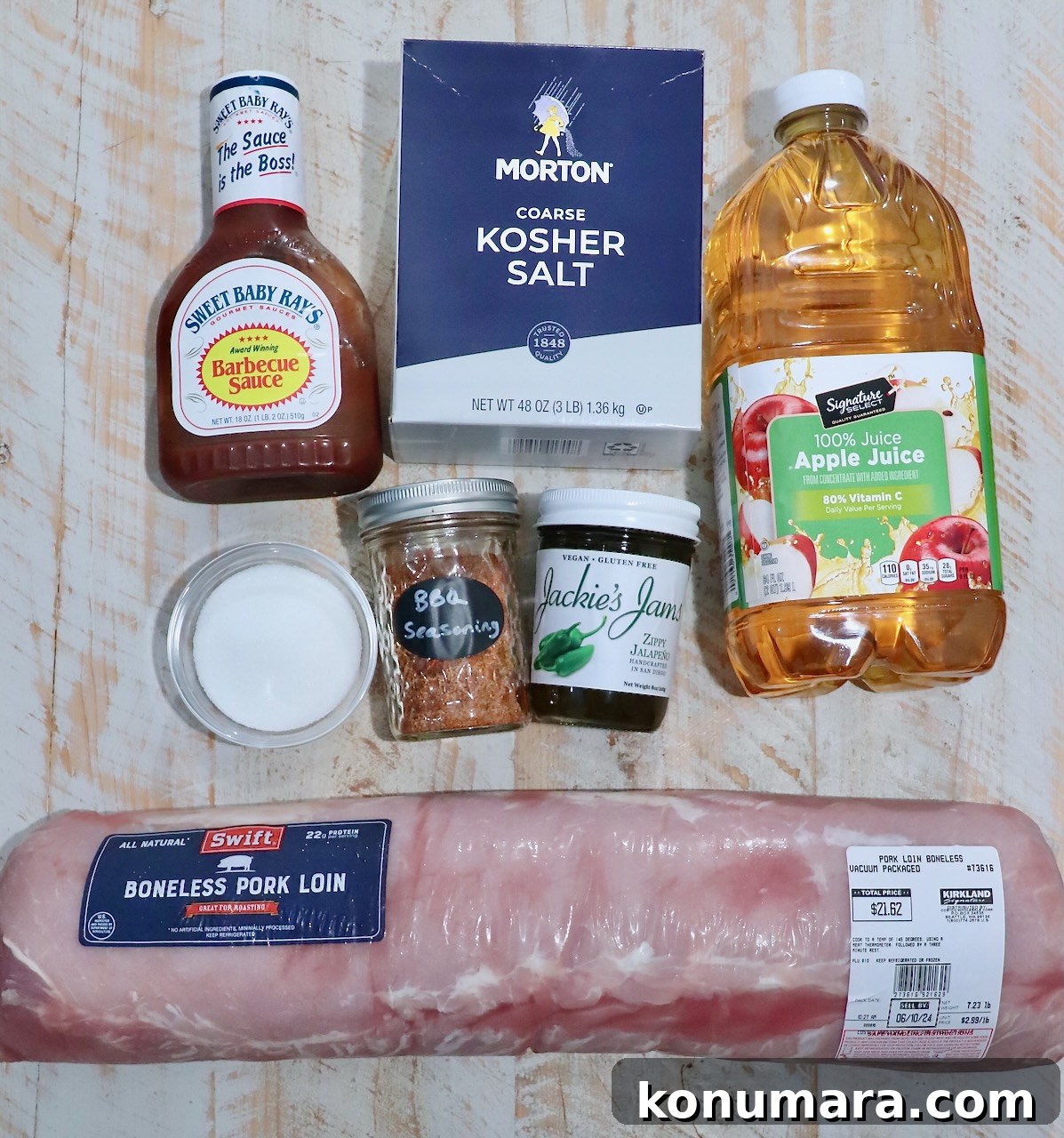
- Boneless pork loin – Pork loin is a larger, broader cut from the back of the animal and should not be confused with pork tenderloin. This recipe was tested with a 4-pound pork loin, but it adapts to smaller or larger pieces. Grocery stores often sell pork loin in 2–3 pound portions; ask your butcher if you prefer a whole loin.
- Kosher salt and granulated sugar – Used to make the brine that seasons and helps tenderize the meat.
- BBQ seasoning (dry rub) – A balanced mix of smoked paprika, black pepper, onion and garlic powders, and brown sugar works great. Use your favorite rub if you have one.
- Bbq sauce or pepper jelly – Used as a finishing glaze during the last stage of smoking. You can substitute fruit-based jams or jellies (apple, peach, apricot) for a different sweet-savory finish.
- Apple juice (optional) – A spray for spritzing the pork every 30 minutes keeps the surface moist and helps develop a glossy bark. This step is optional if you prefer not to open the smoker frequently.
Instructions
Below are clear, step-by-step instructions for brining, prepping, smoking, glazing, and resting your pork loin. Refer to the ingredient list for quantities.
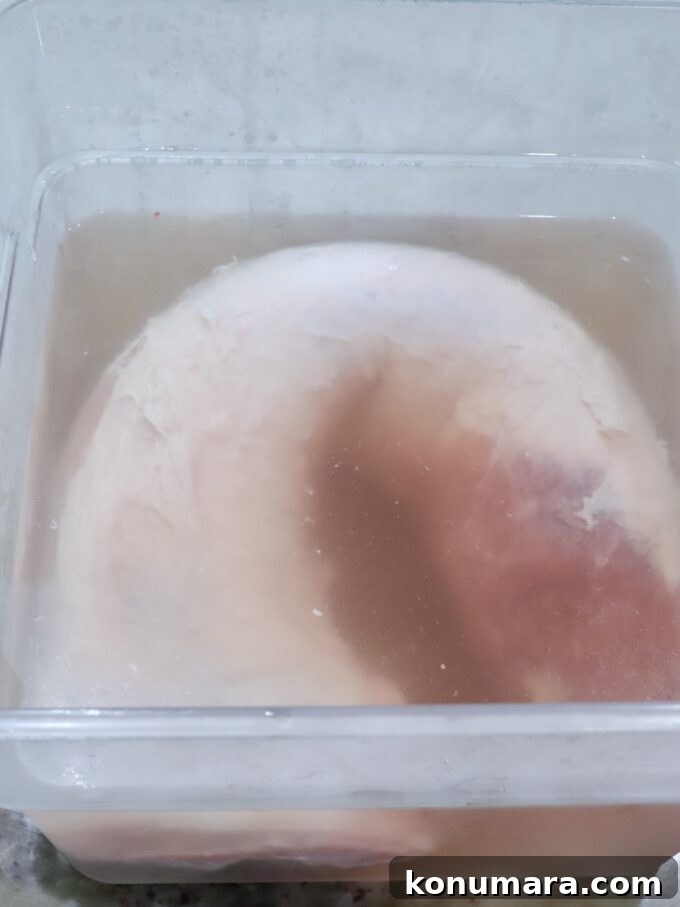
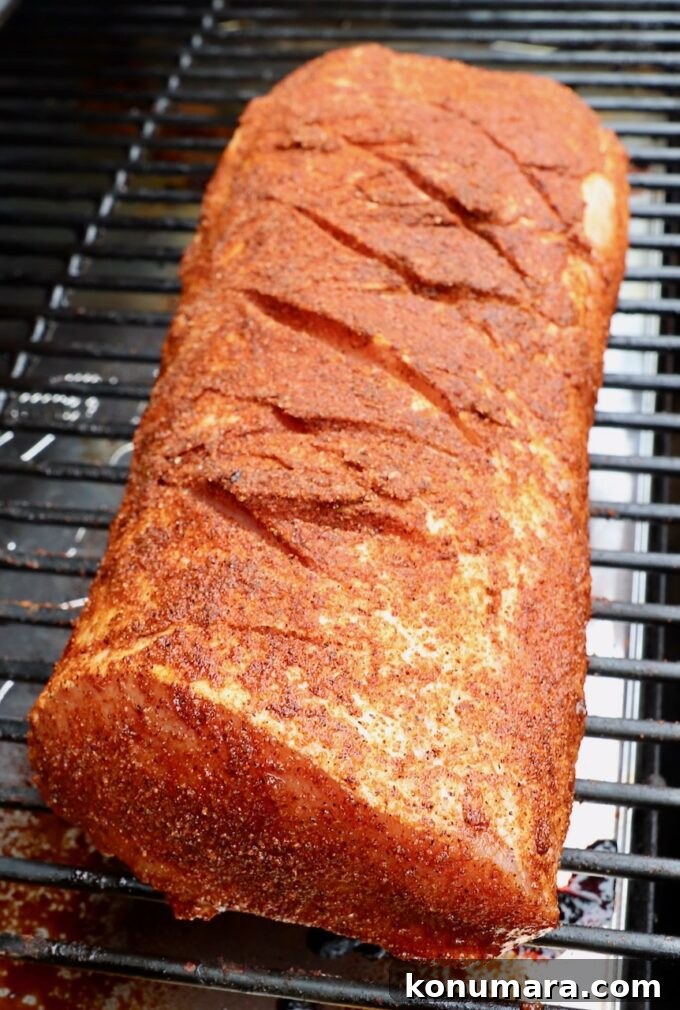
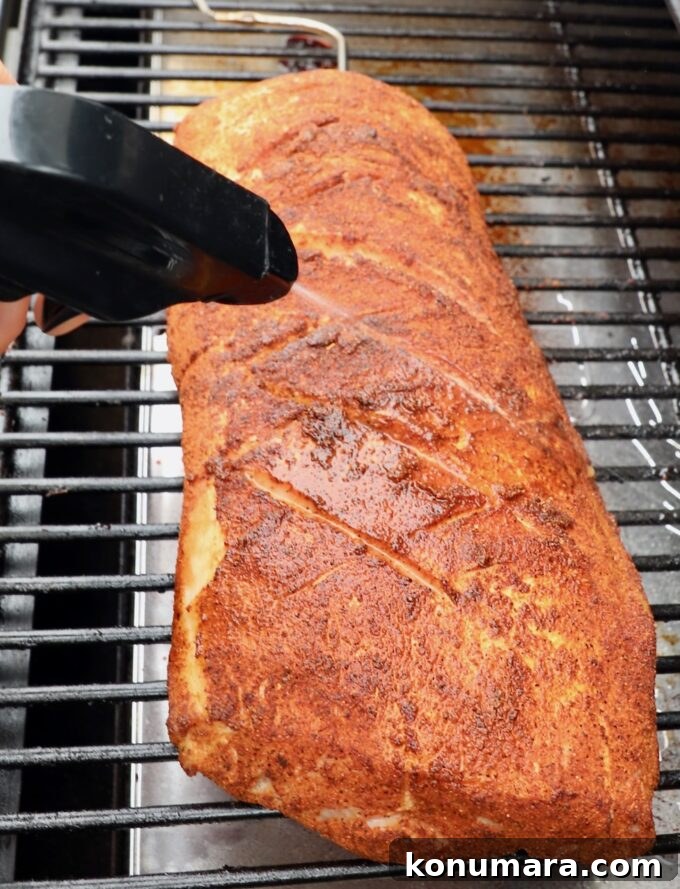
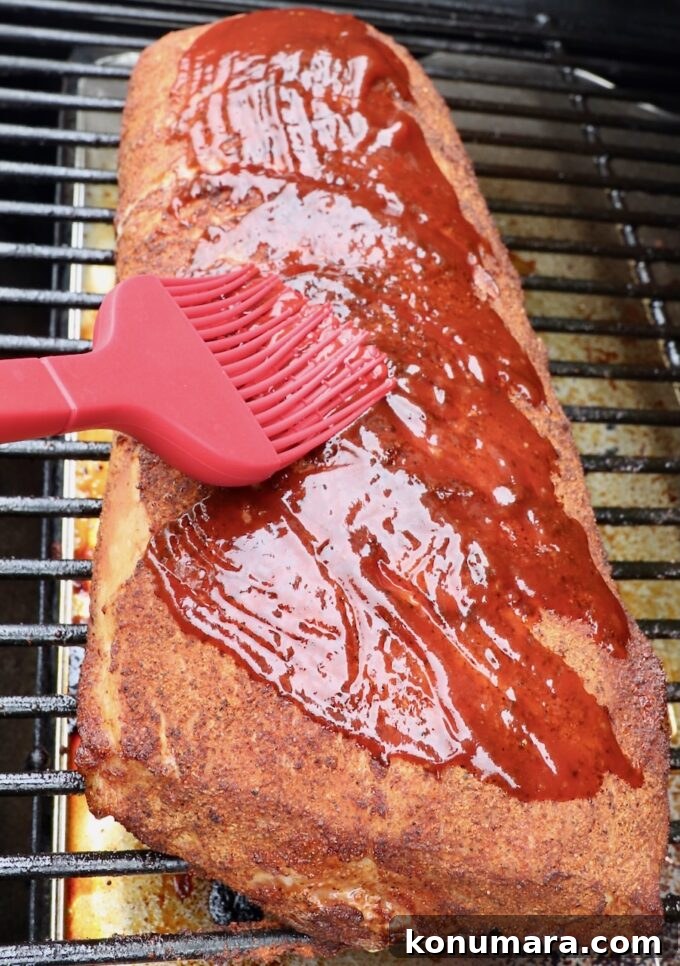
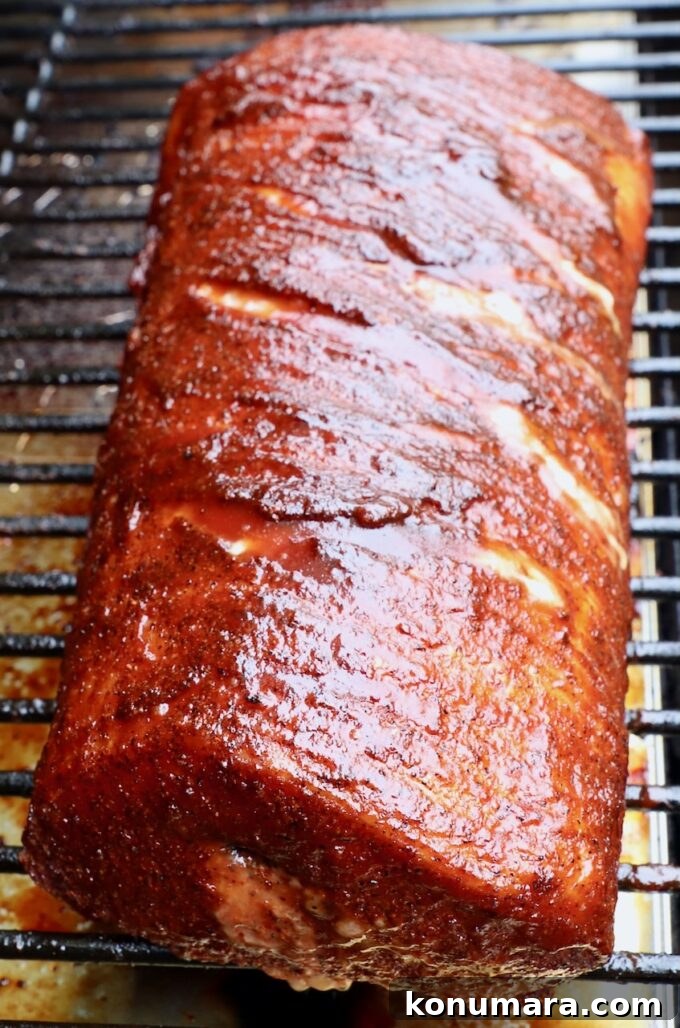
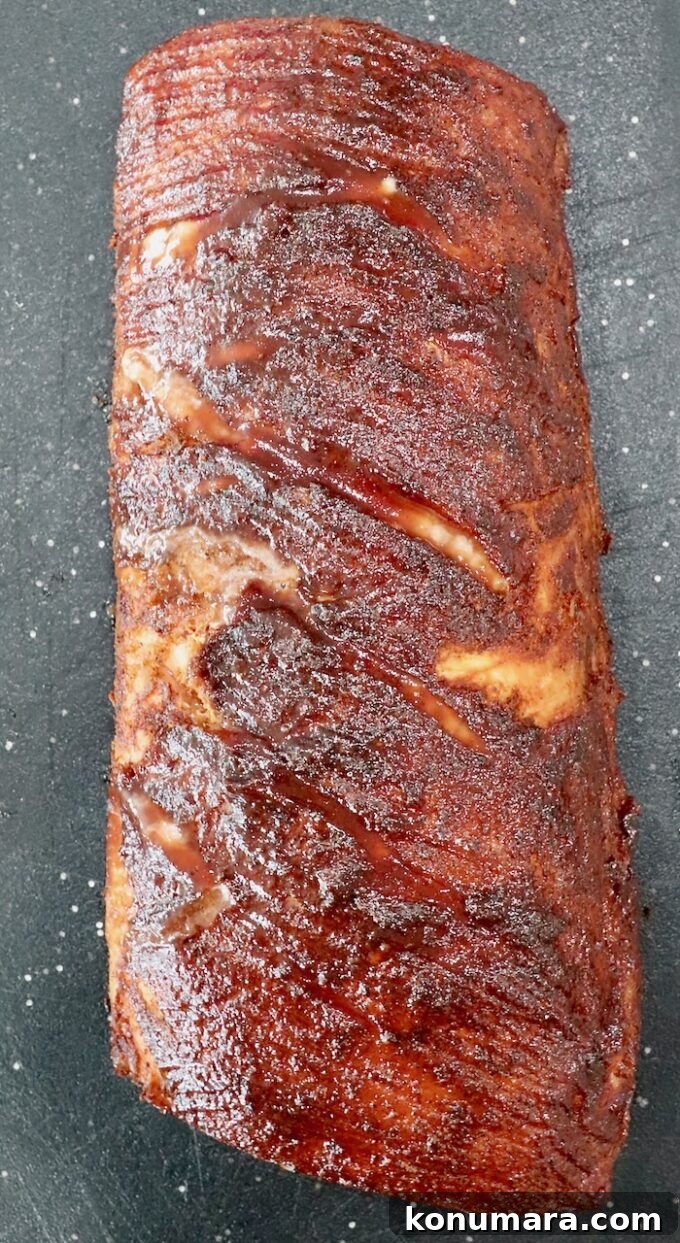
- Make the brine. In a medium pot, bring 16 ounces (2 cups) of water to a boil. Add the kosher salt and granulated sugar, stirring until completely dissolved (about 2–3 minutes). Remove from heat and add 3–4 cups of ice to cool the liquid quickly.
- Brine the pork. Place the pork loin in a large container or a heavy-duty zipper bag. Pour the cooled brine over the meat, adding cold water if needed to ensure the pork is fully submerged. Cover and refrigerate for 8–10 hours, or overnight. Do not brine longer than 24 hours to avoid over-seasoning and textural changes.
- Prep the meat. When the brine time is complete, remove the pork loin and pat it dry with paper towels. Trim any excess fat thicker than 1/4 inch. Score the fat cap in a diagonal crosshatch about 1/4 inch deep to help render fat and allow seasoning penetration. Rub the entire loin with your BBQ seasoning so it’s evenly coated.
- Set up the smoker. Preheat your smoker to 225°F. Use a mild to medium fruit wood—apple or cherry are excellent choices for pork. Place the pork loin on the grill grates with the fat side up.
- Smoke to temperature. Smoke the loin until its internal temperature reaches 138°F. This usually averages about 1 hour per pound, but times vary—always smoke to temperature rather than an exact time. Optional: spritz the pork with apple juice every 30 minutes to maintain surface moisture and encourage a beautiful exterior.
- Glaze and finish. When the loin hits 138°F, brush a thin layer of BBQ sauce or pepper jelly over the top and return it to the smoker. Continue until the internal temperature reaches 140°F.
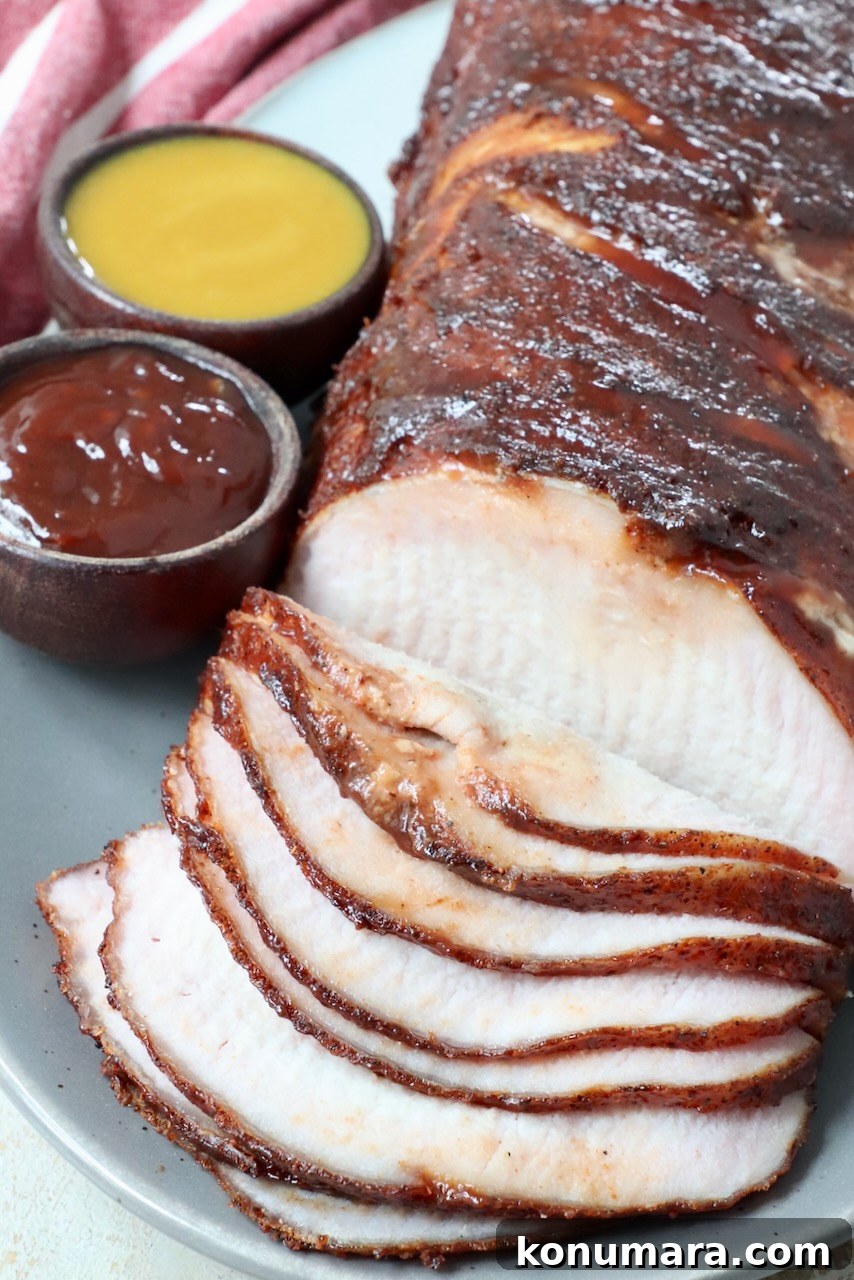
- Rest and slice. Remove the pork from the smoker and loosely tent it with foil. Let it rest for at least 20 minutes; the internal temperature will rise an additional 5–10°F during resting. Slice thinly—about 1/4 inch—using an electric knife or a very sharp carving knife for the best presentation and texture.
Recipe tips
- Cook to temperature, not time. Variables like smoker efficiency, outside temperature, and the exact shape of the loin affect cooking time. Expect roughly 1 hour per pound as a guideline, but rely on an instant-read thermometer for accuracy. Start checking after about 45 minutes per pound, then every 15–20 minutes as you approach the target temperature.
- Slice thin for the best texture. Thin slices showcase the tender interior and let the smoky exterior shine. An electric knife or a well-sharpened carving knife makes clean, even slices.
- Brining is optional but beneficial. If you’re short on time, you can skip the overnight brine—your rub and low-and-slow smoking will still deliver great flavor. The brine, however, enhances juiciness and seasoning depth.
- Don’t over-brine. Brining beyond 24 hours can make the meat excessively salty and can negatively affect texture.
Storage and reheating
Leftovers will keep in the refrigerator for up to 5 days. Thinly slice or dice the pork for sandwiches, wraps, salads, or breakfast scrambles. Reheat gently—either in a low oven, in a covered skillet with a splash of water or apple juice, or briefly in the microwave—to avoid drying it out. Tossing slices with warm BBQ sauce also refreshes flavor and moisture.
What to serve with it
This smoked pork loin pairs beautifully with classic barbecue sides. Try smoked mac and cheese cooked alongside the pork in the smoker during the final hour for a coordinated meal.
- Smoked mac and cheese
- Air-fryer or baked potatoes
- Roasted baby potatoes or loaded mashed potatoes
- Green beans with bacon and blue cheese
- Corn casserole, squash casserole, or classic mac and cheese
- Coleslaw, broccoli salad, or pasta salad
- Fresh watermelon or tomato salad for a summer menu
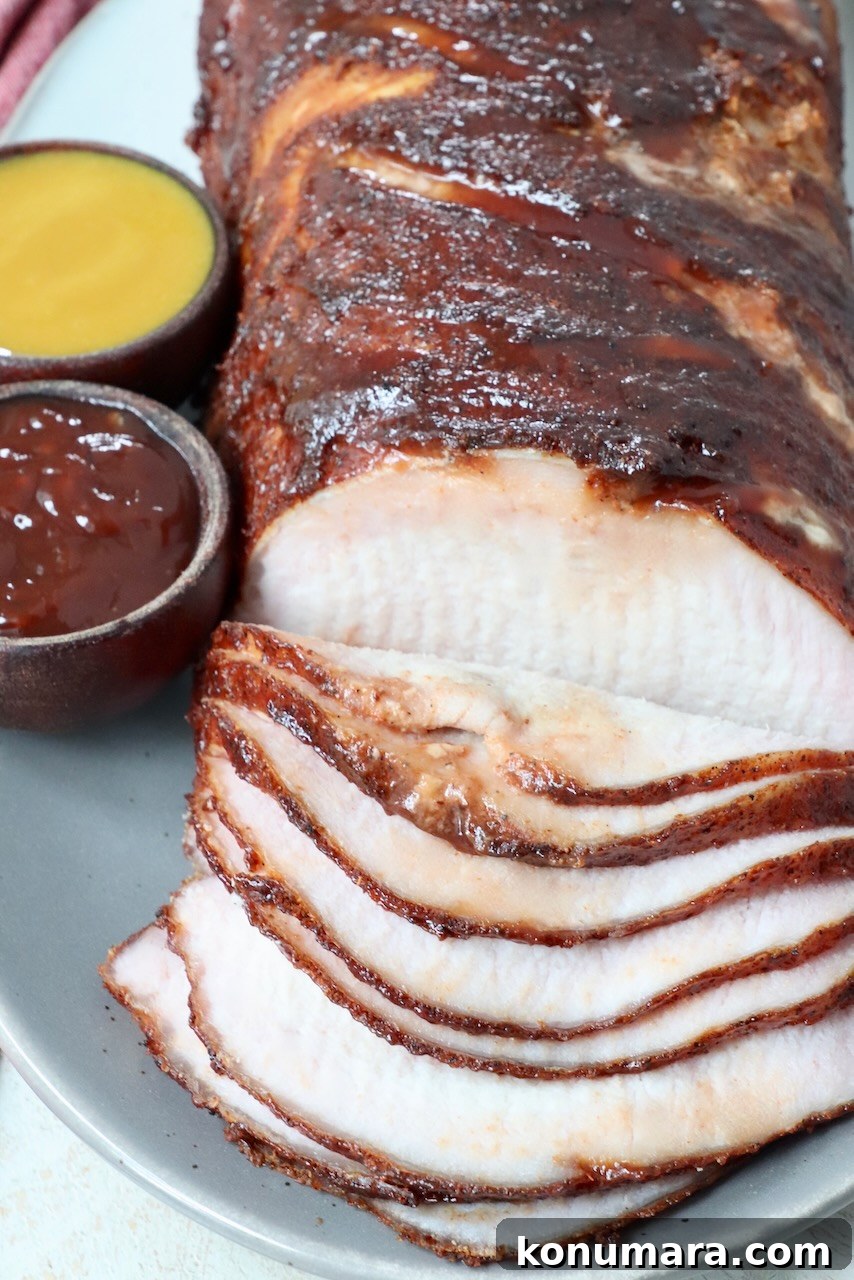
Offer a BBQ sauce on the side for dipping—white, Carolina-style, or a favorite tangy-sweet sauce all work well.
Tools you’ll need
- Smoker or pellet grill – Any backyard smoker will work; choose one you’re comfortable operating.
- Wood or pellets – Fruit woods like apple or cherry are ideal for pork.
- Spray bottle – Useful for spritzing apple juice during cooking, if desired.
- Thermometer – An instant-read thermometer or probe is essential to cook to the correct internal temperature.
- Sharp knife or electric carving knife – For trimming fat and slicing the rested pork loin thinly.
More recipes for the smoker
If you enjoy this smoked pork loin, try other smoker favorites such as smoked tri-tip, smoked chicken wings, pastrami, smoked meatloaf, smoked turkey breast, or smoked brisket. Each cut benefits from low-and-slow cooking and a good balance of seasoning and smoke.
Smoked Pork Loin — Recipe Card
Ingredients
- 16 ounces water
- 4 ounces kosher salt
- 1 ounce granulated sugar
- 4 pounds boneless pork loin (adjust quantity for larger or smaller loins)
- 4 tablespoons BBQ seasoning (dry rub)
- 1/2 cup apple juice (for spritzing, optional)
- 4 tablespoons BBQ sauce or pepper jelly (for glazing)
Instructions
- Bring 16 ounces water to a boil. Stir in kosher salt and sugar until dissolved, then cool the brine quickly with ice.
- Pour cooled brine over the pork loin in a container or zipper bag. Add cold water to cover if needed. Refrigerate 8–10 hours or overnight.
- Preheat smoker to 225°F and load with applewood or another mild-to-medium wood.
- Remove pork from brine, pat dry, trim fat thicker than 1/4 inch, and score the fat cap. Rub the loin with BBQ seasoning on all sides.
- Place pork in the smoker fat side up. Smoke until internal temperature reaches about 138°F, spritzing with apple juice every 30 minutes if desired.
- When the loin reaches 138°F, brush with BBQ sauce or pepper jelly and continue smoking until the internal temperature reaches 140°F.
- Remove from smoker, tent loosely with foil, and rest 20 minutes. Slice into 1/4-inch slices and serve.
Notes
- Adjust the recipe multiplier for larger or smaller loins: roughly 1 hour per pound is a helpful guideline.
- Brining enhances moisture and flavor but can be skipped if short on time.
- Do not brine longer than 24 hours to avoid an overly salty or mushy texture.
- Leftovers keep in the fridge up to 5 days and are great in sandwiches, salads, or breakfasts.
Nutrition (approximate)
Calories: 358 kcal | Carbohydrates: 14 g | Protein: 52 g | Fat: 10 g | Sodium: varies with brining