
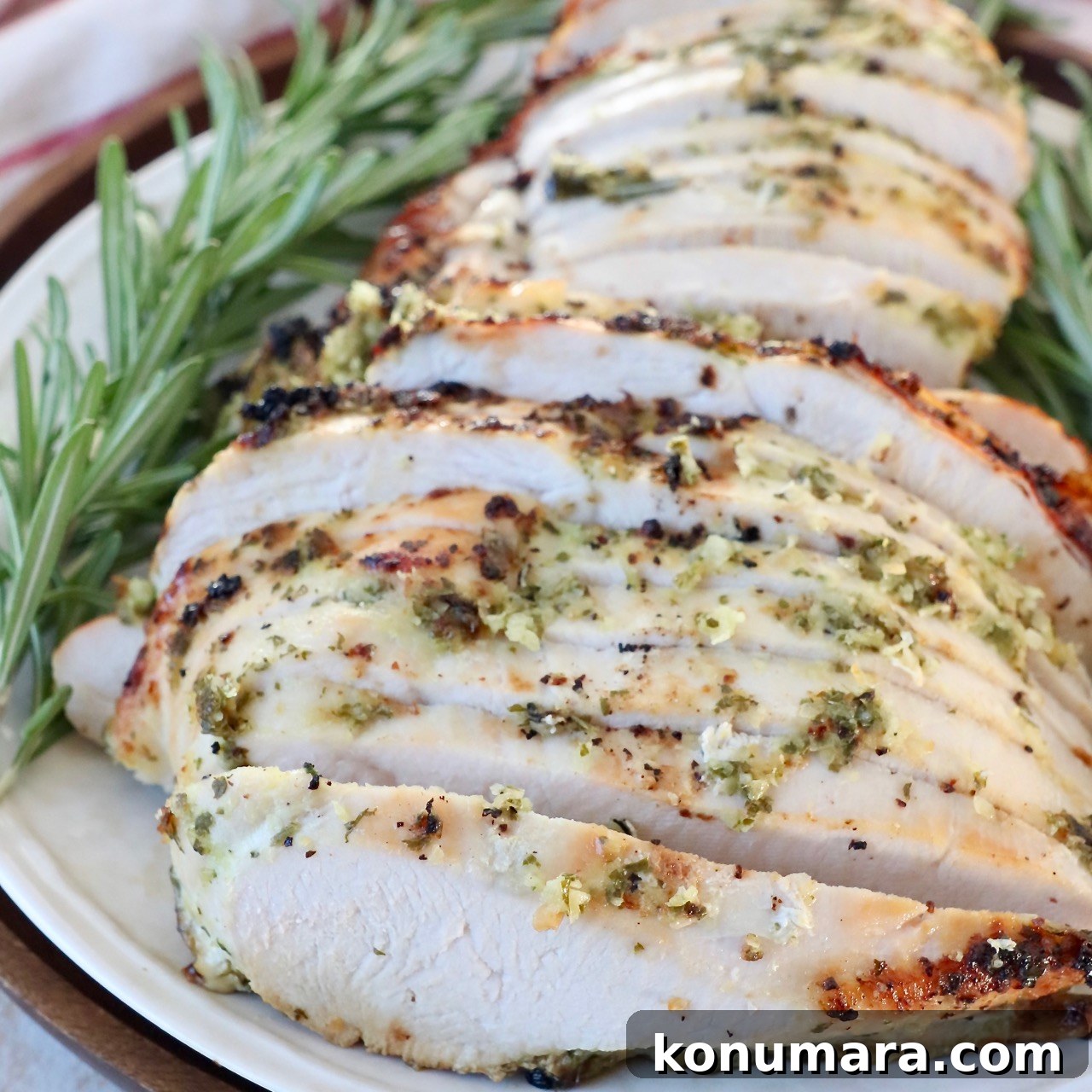
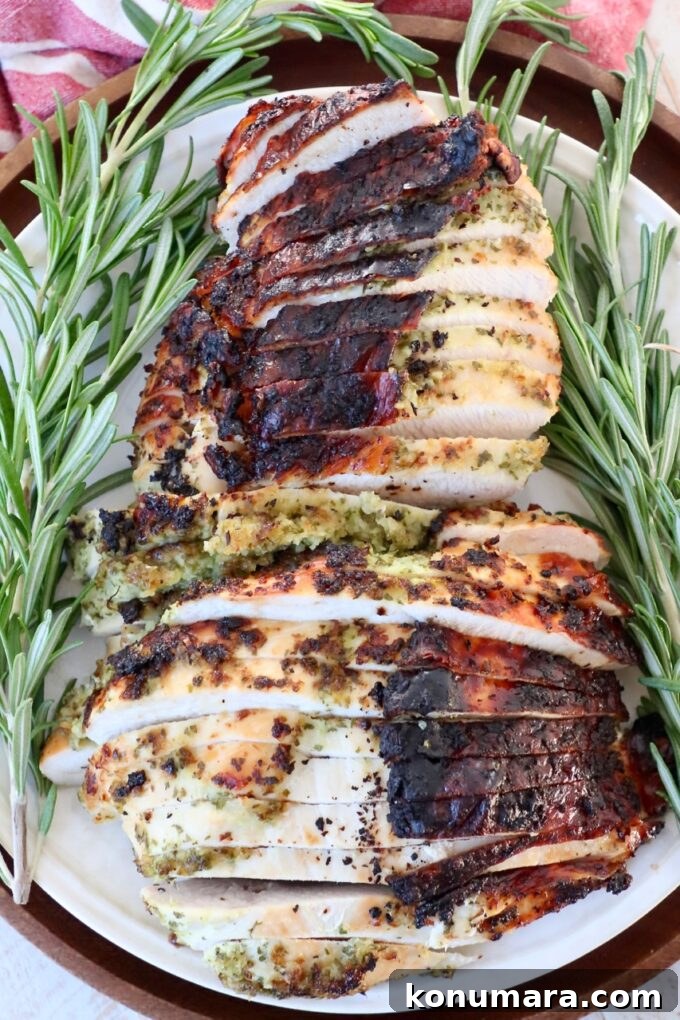
A flavorful herb rub makes this the best oven roasted turkey breast. It’s easy to prepare using a boneless turkey breast and full of fresh herb and lemon flavor. Ideal for a small Thanksgiving or any night of the year when you want a simple, impressive roast.
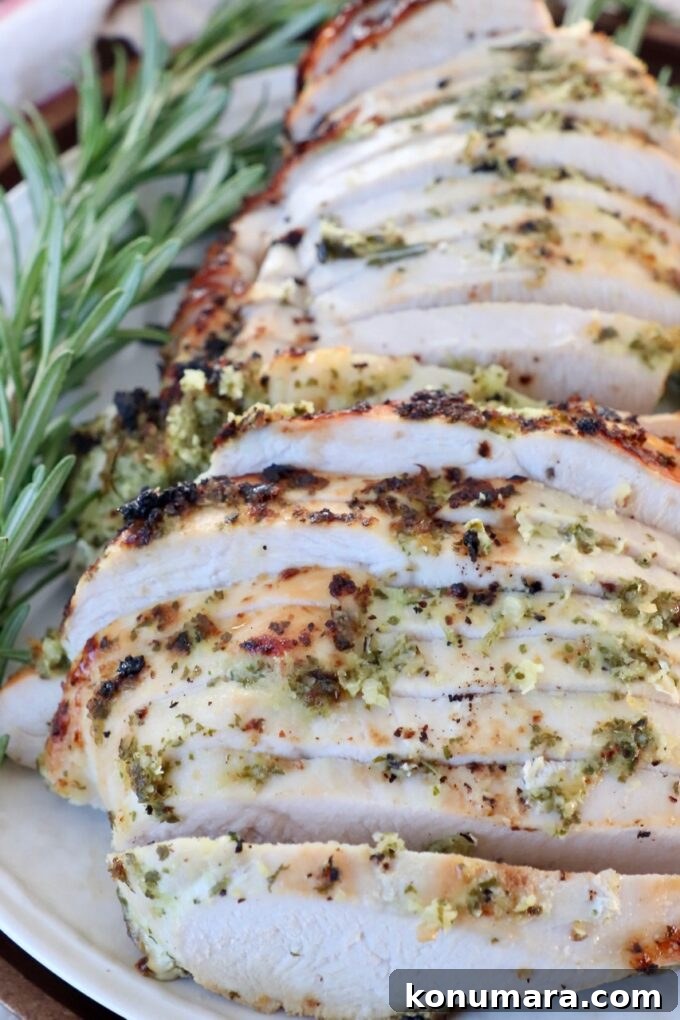
For many years our family has chosen turkey breasts for Thanksgiving instead of a whole bird. With a smaller family and a preference for white meat, a turkey breast fits perfectly. I also cook turkey breasts year-round — they make a quick, healthy dinner, and leftovers are excellent for sandwiches, salads, soups and more.
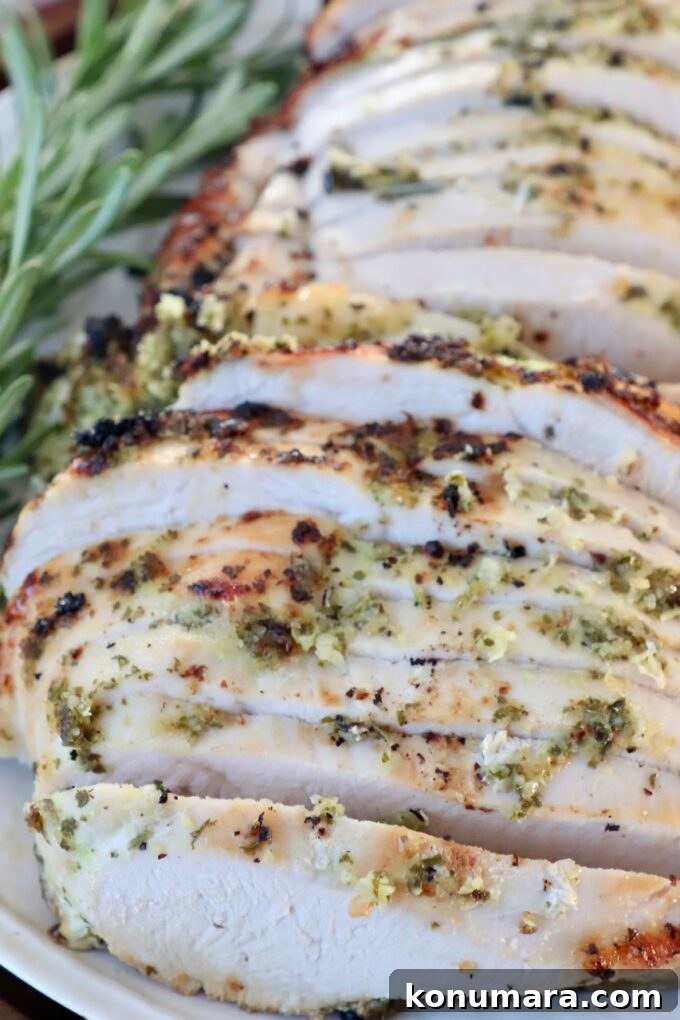
This oven roasted turkey breast recipe highlights a simple lemon-herb paste that keeps the meat moist and deeply seasoned. It’s healthy and relatively low in calories, while the herb rub gives each bite a bright, aromatic finish. The method is straightforward and works with either boneless or bone-in breasts; instructions below explain timing adjustments for both.
Table of contents
- Ingredients
- Step-by-step instructions
- Frequently asked questions
- What type of turkey breast to use
- Ways to use leftover turkey
- What to serve with it
- Recipe card (ingredients, instructions, notes, nutrition)
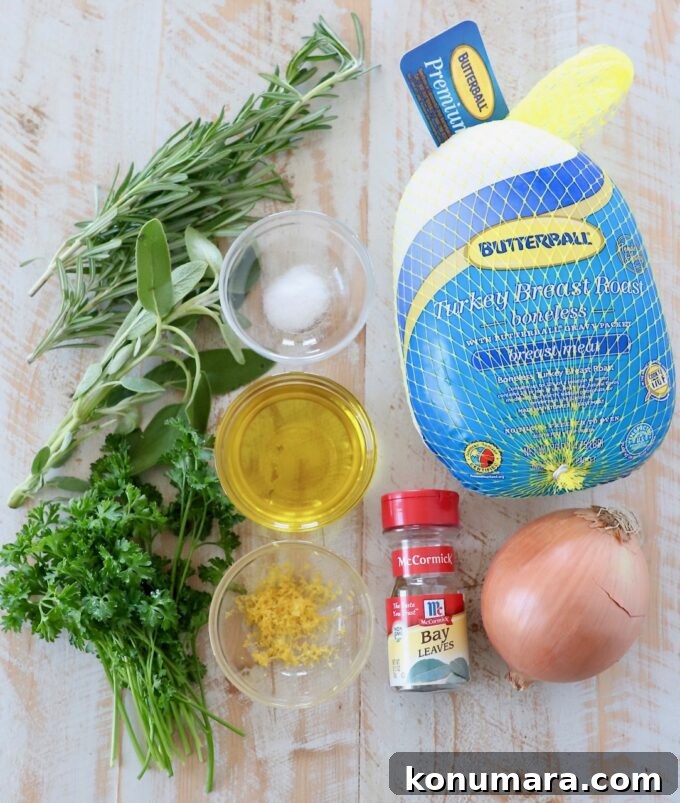
Ingredients
- Turkey breast – 4–5 pound boneless, skin-on turkey breast (or use bone-in if preferred; see guidance below)
- Bay leaves
- Fresh rosemary sprigs
- Fresh sage leaves
- Onion – about 1 cup diced
- Lemon – zest of one lemon
- Fresh parsley – about 1/3 cup
- Olive oil – 6 tablespoons total, divided
- Salt – about 1/2 teaspoon (adjust to taste)
Step-by-step instructions
- Preheat the oven to 425°F (220°C).
- Line a rimmed baking sheet or roasting pan with foil.
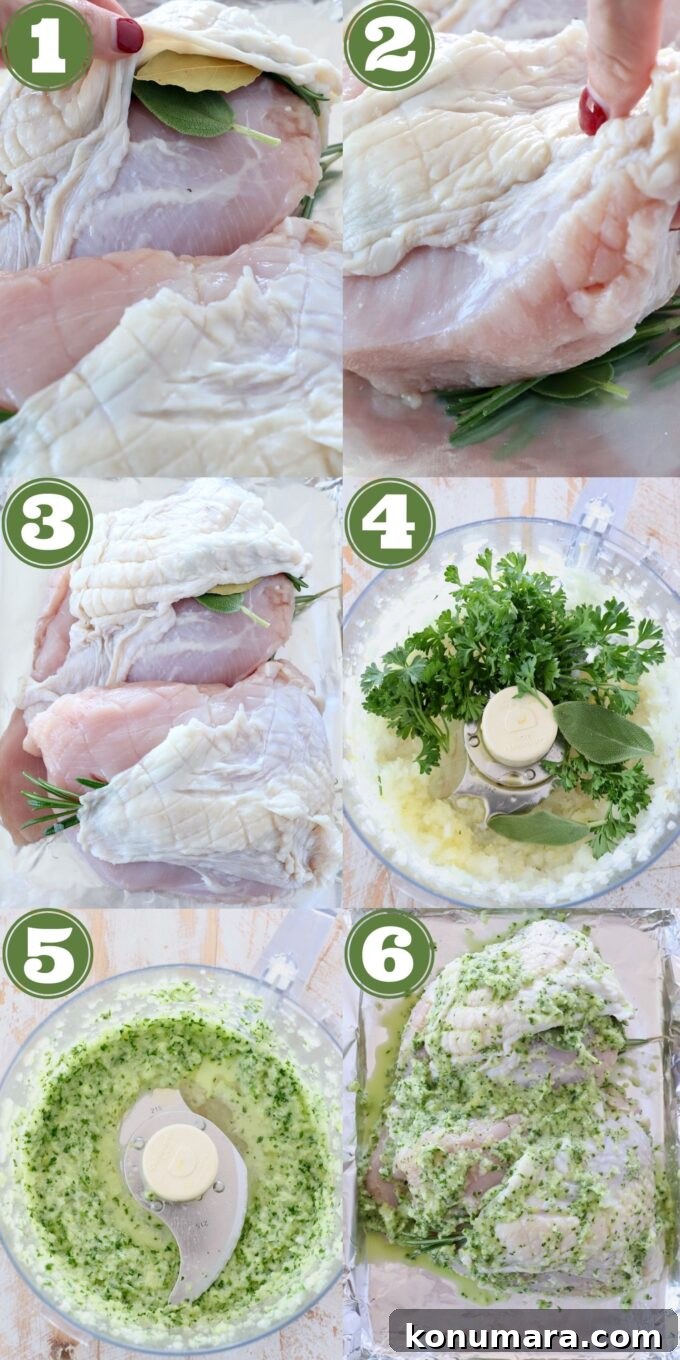
- Place the turkey breast skin-side up on the foil. Gently loosen the skin and slide 2 sage leaves, 2 bay leaves and 2 rosemary sprigs under the skin. Leave the herb stems poking out a bit so you can remove them easily after roasting.
- Lift the turkey slightly and tuck an additional 2 sage leaves, 2 bay leaves and 2 rosemary sprigs under the breast (between the breast and the foil), so the pan’s heat helps infuse the meat with herb aroma.
- In a food processor, add the diced onion and lemon zest and pulse until very finely minced. Add 2 sage leaves, the parsley, 3 tablespoons olive oil and 1/2 teaspoon salt. Pulse until a paste forms.
- Rub half of the herb paste gently under the skin, pressing it over the meat. Spread the remaining paste over the top and sides of the breast.
- Roast at 425°F for 20 minutes. Remove briefly and brush/baste with the remaining 3 tablespoons of olive oil. Return to the oven and roast another 25–30 minutes, or until an instant-read thermometer inserted into the thickest part of the breast reaches 165°F (74°C).
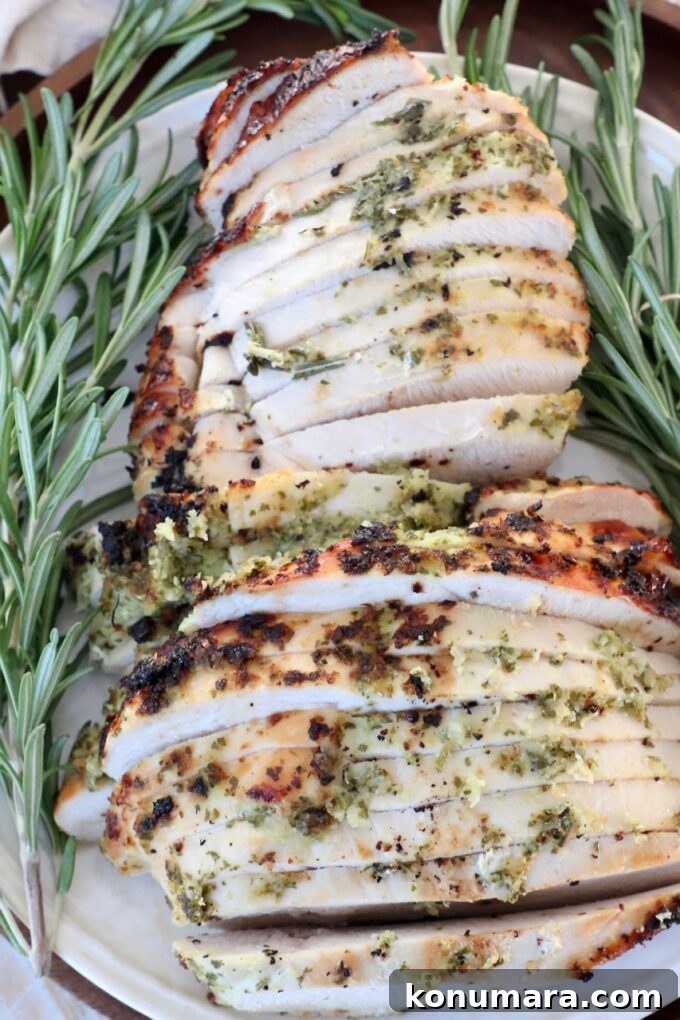
- Transfer the turkey to a cutting board and let rest 10–15 minutes so juices redistribute. Remove any whole bay leaves and rosemary sprigs from under the skin, then slice and serve.
Tip: Carve with a sharp knife or an electric carving knife for even slices. Allowing the meat to rest before slicing preserves juiciness and makes carving easier.
Frequently asked questions
- Can you remove the skin after roasting? Yes. You can remove the skin after roasting, but much of the herb rub will be attached to it. If you prefer no skin, remove it before you begin and place the herbs directly under and around the breast instead.
- Can you make this without skin? Yes. Remove the skin before starting and tuck the herbs under the breast rather than under the skin. Rub the paste evenly over the exposed meat.
- Can you use a bone-in turkey breast? Yes. Bone-in breasts often have more flavor but take longer to cook. Add about 10–15 minutes to the roasting time and always check the internal temperature; the safe temperature for turkey breast is 165°F (74°C).
- How long will leftovers last? Store leftover turkey in an airtight container in the refrigerator for up to 7 days.
- Should the turkey be roasted covered or uncovered? Roast uncovered to develop the herb crust and allow the skin to crisp. If using skinless breast, uncovered roasting still produces nicely browned edges from the herb paste and oil.
What type of turkey breast to use
At the store you’ll usually find fresh or frozen options, boneless or bone-in breasts, and pre-shaped breast roasts. Here’s how they differ and which to choose for this recipe:
- Boneless turkey breast – The bone is removed and the breast is often sold in a netting wrap. These typically range from about 3–5 pounds and are easier to carve and fit in smaller ovens or slow cookers.
- Bone-in turkey breast – This is the breast attached to the bone. It can weigh more (5–12 pounds) and often offers more flavor due to the bone, but requires slightly longer cooking time and a bit more effort to carve.
- Turkey breast roasts – These are sometimes pre-seasoned or a combination of white and dark meat; check the label to ensure it’s suitable for a simple herb-roast method.
Fresh breasts are preferred when available because they usually don’t contain added solutions. Frozen breasts are widely available year-round and work well for this recipe. If using a boneless breast that’s wrapped with netting, remove the netting before applying the herb paste so it doesn’t pull the rub away after roasting. If the breast comes as two pieces, you can roast them side-by-side or tie them together with kitchen twine after applying the paste.
Ways to use leftover turkey
Leftover herb-roasted turkey is versatile. Beyond the classic turkey sandwich, try these ideas:
- Make turkey tostadas or tacos
- Use in a buffalo turkey grilled cheese
- Simmer into turkey soup with vegetables and dumplings
- Turn into a comforting turkey pot pie
- Create puff pastry parcels with turkey and cranberry sauce
- Use in quiche with mushrooms and spinach
What to serve with it
This roast pairs beautifully with traditional sides or simple weekday vegetables. Suggested side dishes include:
- Mashed potatoes (instant pot or stovetop)
- Broccoli cheese casserole
- Creamed corn
- Rosemary and blue cheese mashed potatoes
- Mashed sweet potatoes
Recipe: Oven Roasted Turkey Breast
Ingredients
- 4–5 pound boneless, skin-on turkey breast
- 6 fresh sage leaves, divided
- 4 bay leaves
- 4 sprigs fresh rosemary
- 1 cup diced onion
- 1 teaspoon lemon zest
- 1/3 cup fresh parsley
- 6 tablespoons olive oil, divided
- 1/2 teaspoon salt
Instructions
- Preheat oven to 425°F (220°C). Line a rimmed baking sheet or roasting pan with foil.
- Place turkey breast skin-side up. Tuck 2 sage leaves, 2 bay leaves and 2 rosemary sprigs under the skin. Tuck an additional 2 sage leaves, 2 bay leaves and 2 rosemary sprigs under the breast between the meat and pan.
- In a food processor, pulse onion and lemon zest until finely minced. Add 2 sage leaves, parsley, 3 tablespoons olive oil and salt. Pulse to a paste.
- Rub half the paste under the skin and the rest over the top and sides. Roast for 20 minutes.
- Remove and baste with the remaining 3 tablespoons olive oil. Return to oven and roast 25–30 more minutes, or until internal temperature reaches 165°F (74°C).
- Let rest 10–15 minutes. Remove any whole herbs from under the skin, then slice and serve.
Notes
- If using a bone-in breast, add about 10–15 extra minutes of roasting time and verify doneness with a thermometer.
- To make this skinless, remove the skin before starting and place herbs under and around the breast. Rub the paste over the exposed meat.
- Leftovers keep up to 7 days refrigerated in an airtight container.
- A 4-pound boneless breast typically serves about 8 people at roughly 1/2 pound per person.
Nutrition (approximate per serving)
Serving: 4 servings per recipe example; Calories: 458 kcal; Protein: 50 g; Fat: 26 g; Carbohydrates: 2 g. Sodium, cholesterol and micronutrient values will vary with portion size and specific ingredients.