
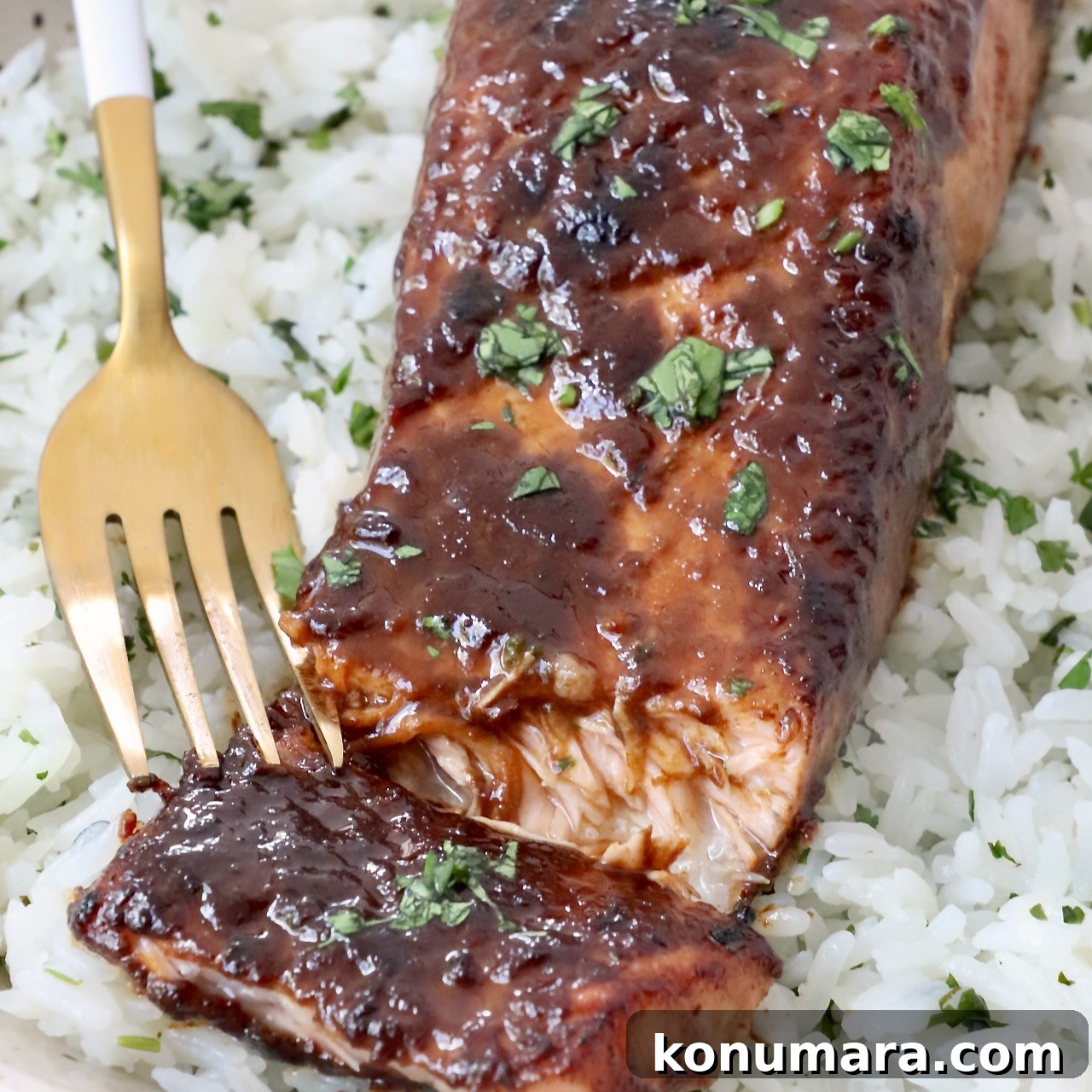
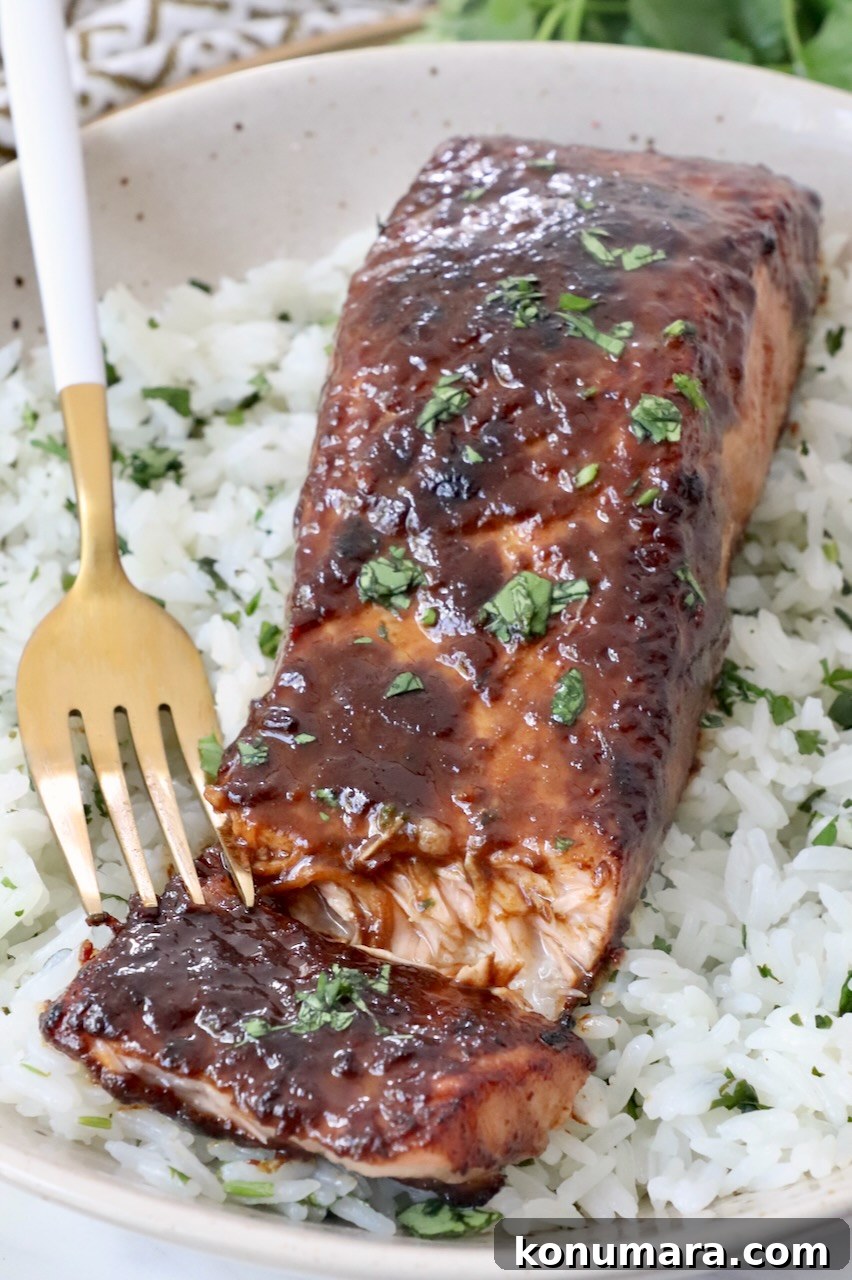
Make the best-tasting salmon with this tried-and-true Salmon Marinade. With just six simple ingredients and a short marinade time, this recipe turns bland salmon into a sweet, salty, tangy favorite. After marinating, the marinade is reduced to a glaze and brushed over the fillets before a quick bake or grill for an easy, flavorful meal.
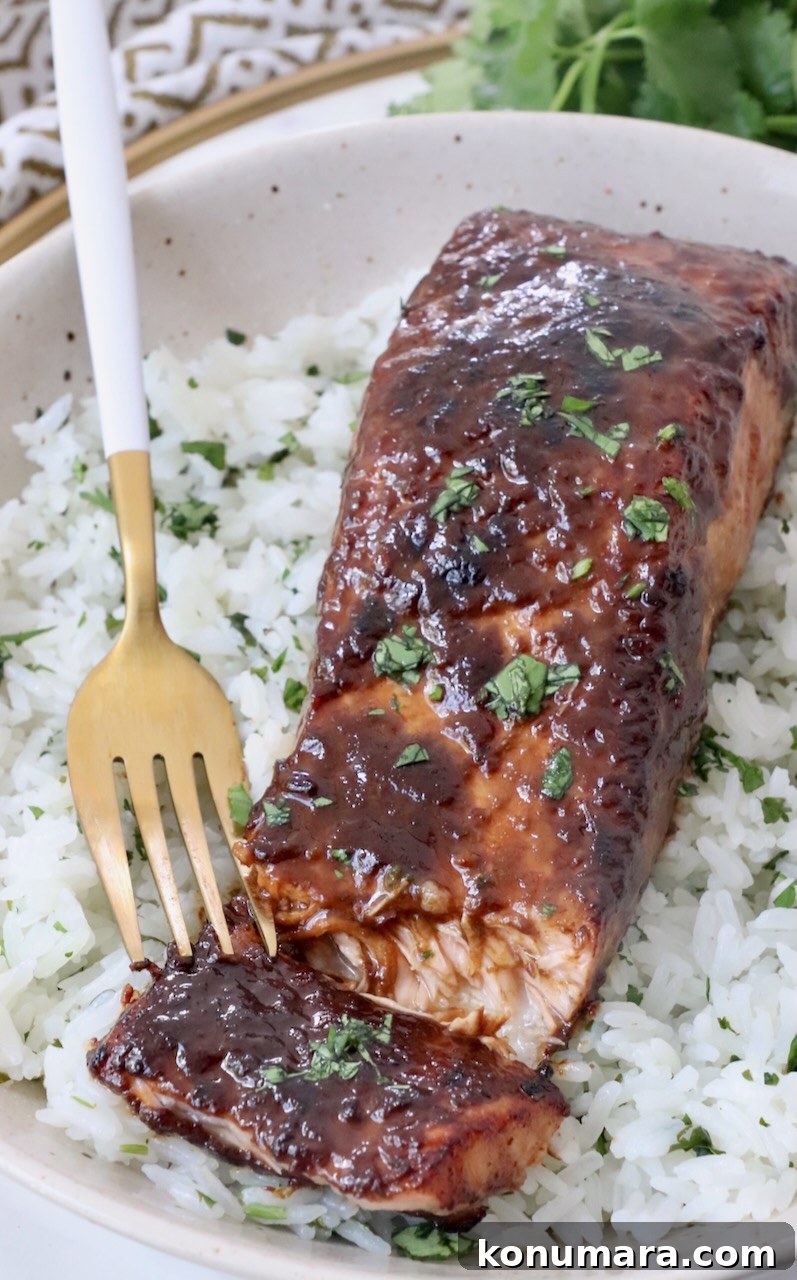
Table of contents
- Ingredients
- Instructions
- How to grill the salmon
- Recipe notes
- What to serve with it
- More seafood recipes
We enjoy salmon regularly, so I’m always refining simple ways to boost its flavor. This recipe evolved from a balsamic-glazed version into a two-step flavor approach: marinate first, then reduce the leftover marinade into a glaze and brush it on before cooking. That combination—marinade plus glaze—intensifies the flavor and gives the salmon a sticky, caramelized finish whether you bake or grill it.
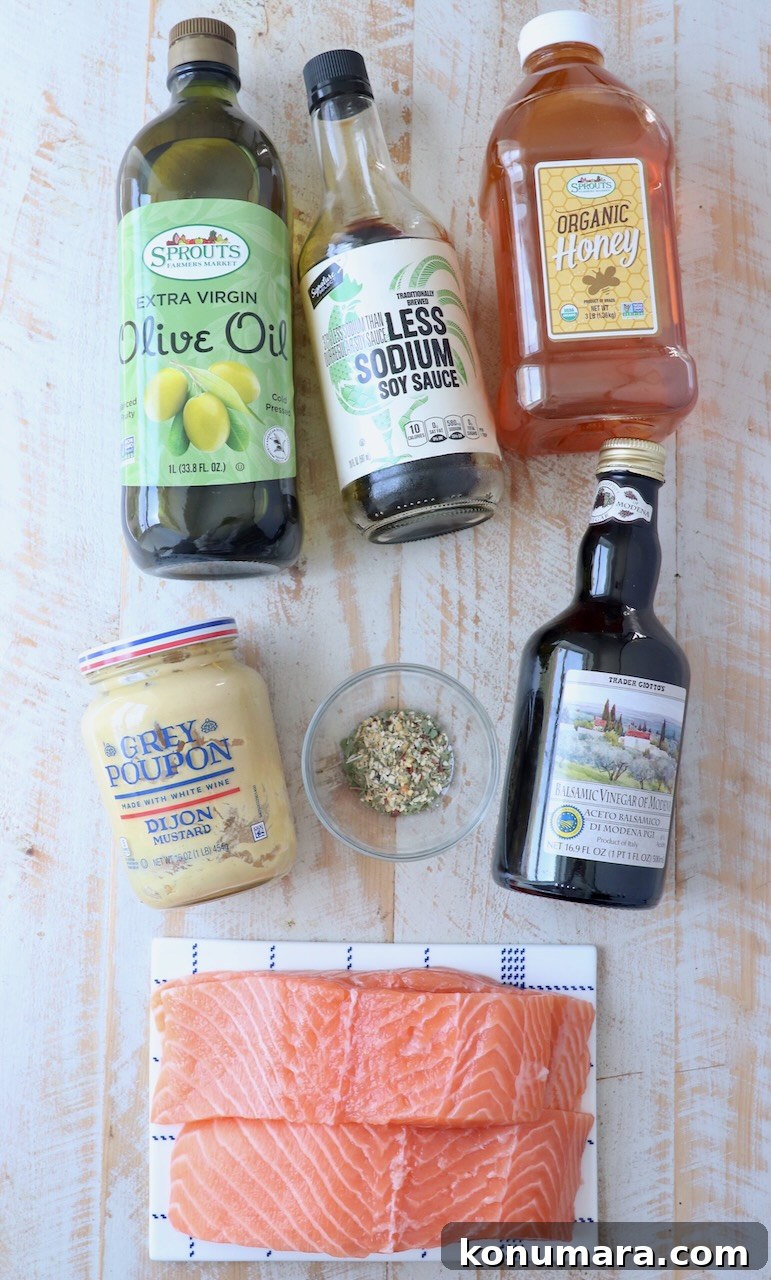
Ingredients
- Salmon – Four salmon fillets, 6–8 ounces each. Choose fillets with similar thickness so they cook evenly.
- Olive oil – Or another neutral oil such as avocado or canola. Oil helps keep the salmon moist and carries flavor.
- Balsamic vinegar – Adds bright acidity and a sweet tang that complements salmon beautifully.
- Honey – Sweetens the marinade and encourages caramelization during cooking. Maple syrup can be used as a substitute.
- Soy sauce – Low-sodium soy sauce balances the sweetness with savory salt. Coconut aminos work as a soy-free alternative (see notes).
- Dijon mustard – Helps the marinade cling to the fish and adds depth of flavor.
- Italian seasoning – A pinch of dried herb mix brings an herby background; use a homemade blend or a store-bought mix.
Instructions
Below are clear step-by-step directions. Quantities and a printable ingredient list are included in the recipe card further down.
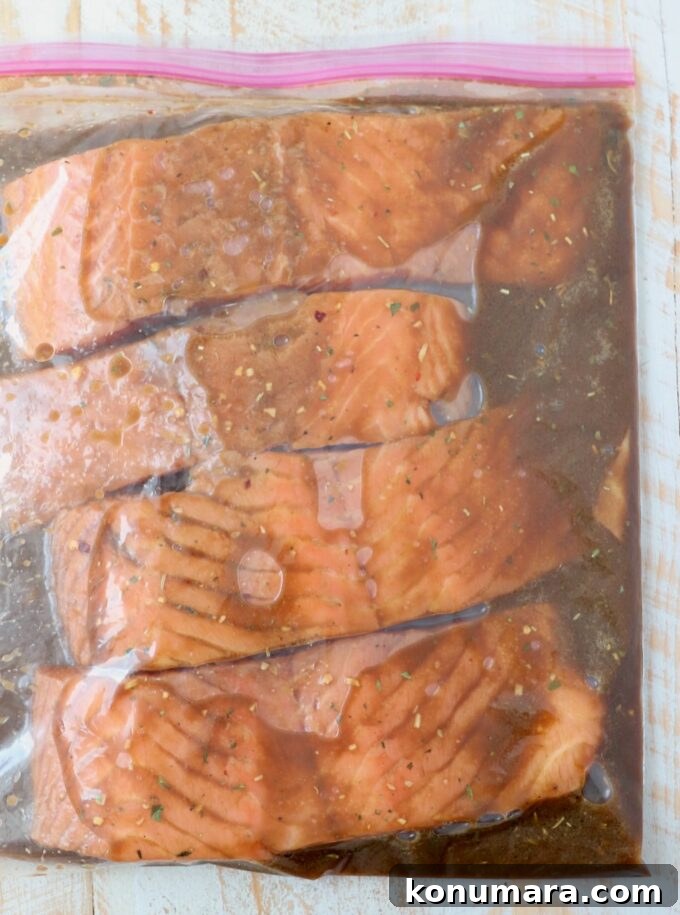
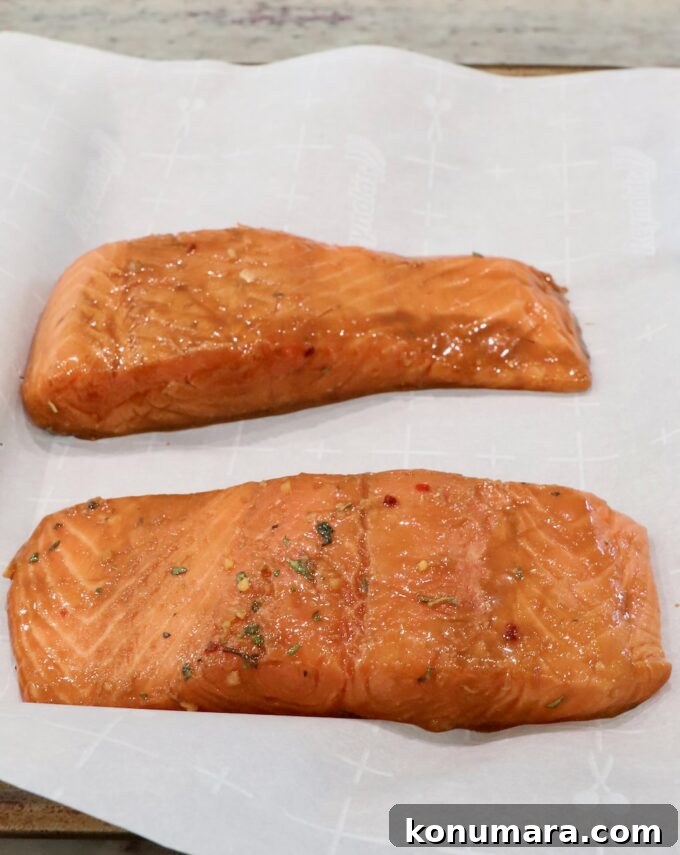
- Combine the marinade. In a bowl or a large resealable bag, whisk together 1/4 cup olive oil, 1/4 cup low-sodium soy sauce, 1/4 cup balsamic vinegar, 1 tablespoon Dijon mustard, 1 tablespoon honey, and 1 teaspoon Italian seasoning.
- Marinate the salmon. Add the fillets to the marinade and make sure each piece is coated. Refrigerate for at least 30 minutes and up to 6 hours.
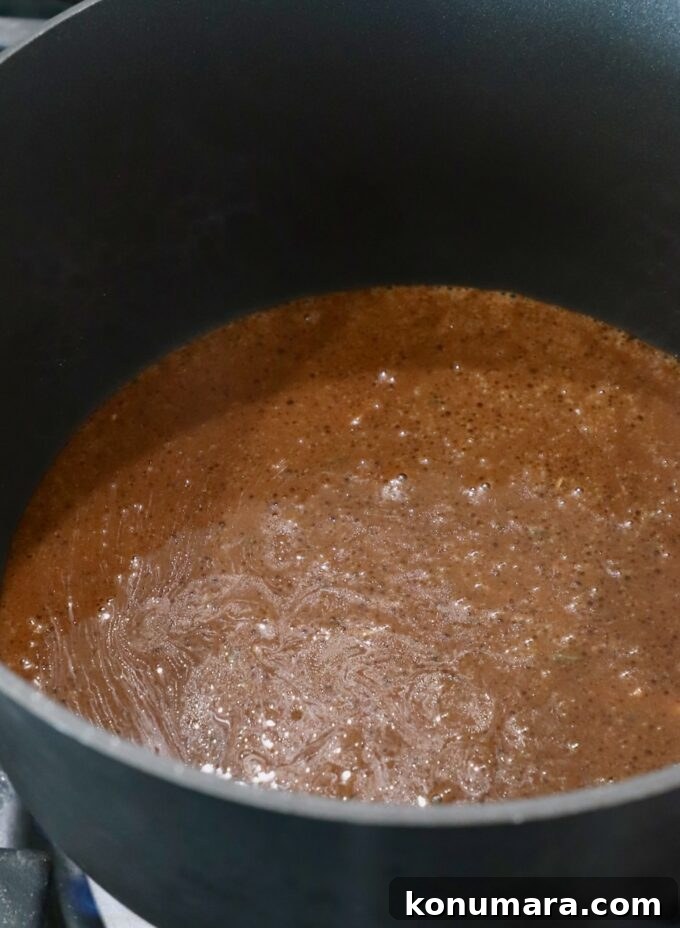
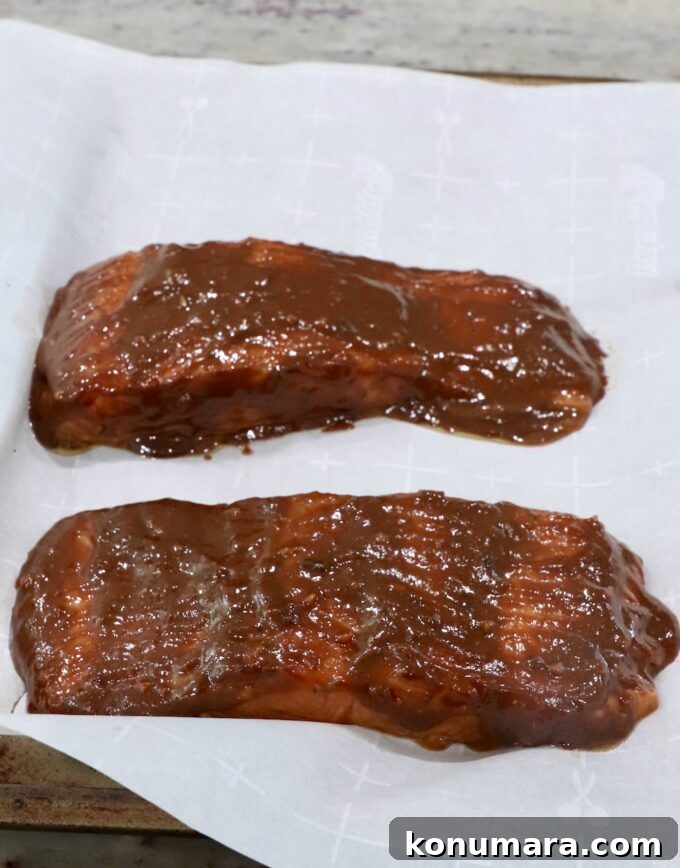
- Prepare the glaze. When the salmon has finished marinating, remove the fillets and arrange them on a parchment-lined baking sheet. Pour the remaining marinade into a small saucepan and bring it to a boil over medium-high heat. Reduce to a simmer and cook 5–7 minutes, until it thickens to a syrupy glaze. Remove from heat and let cool slightly; it will continue to thicken.
- Glaze the fillets. Brush the reduced glaze evenly over each piece of salmon.
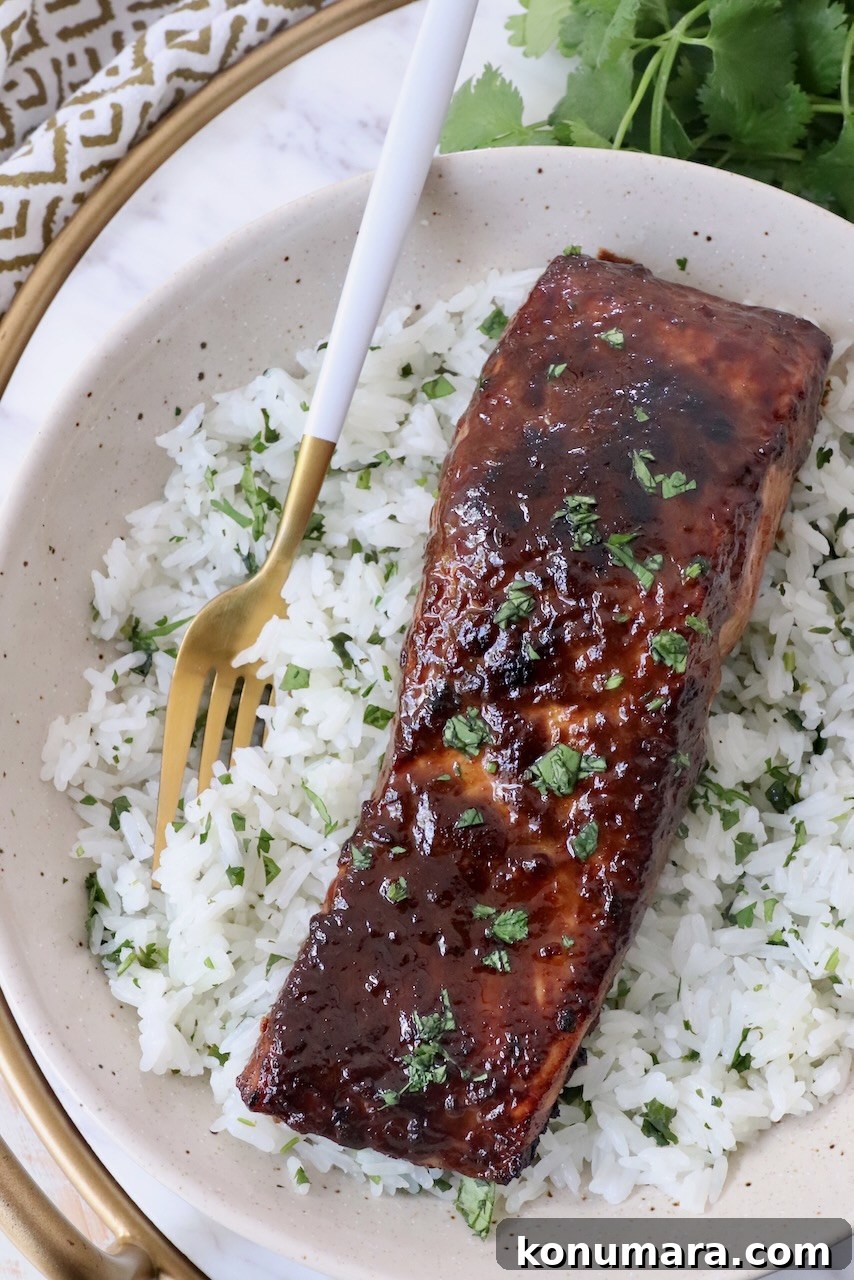
- Bake and broil. Bake in a preheated 425°F (220°C) oven for 10 minutes. Switch the oven to broil (high) and broil 1–2 minutes, watching closely, until the glaze bubbles and browns slightly. If your oven has no broiler, simply bake 12–15 minutes in total. Salmon is done when it flakes easily with a fork and reaches your preferred internal temperature.
How to grill the salmon
Grilling gives the fillets a smoky char and is just as simple:
- Marinate the salmon and reduce the leftover marinade into a glaze, but do not glaze the fillets yet.
- Preheat the grill to medium heat. Lightly brush the salmon flesh with oil to prevent sticking.
- Place the fillets flesh-side down on the hot grates and cook 3–4 minutes.
- Flip so the skin side rests on the grates, brush the flesh with the glaze, and cook another 3–4 minutes. Remove when the fish flakes easily.
Recipe notes
- Soy-free option: Substitute coconut aminos for soy sauce to make this soy- and gluten-free. Because coconut aminos are less salty, add 1/2 teaspoon salt to the marinade if you use them.
- Why broil: Broiling at the end caramelizes the glaze for a glossy, slightly sticky finish—don’t skip it unless your oven lacks a broiler.
- Fillet thickness: This recipe targets fillets about 1 inch thick. Thinner fillets will need 2–3 minutes less in the oven; on the grill, cook 3 minutes per side for thinner pieces.
- Even cooking: Aim for similar-sized fillets so all pieces finish at the same time. If one is much smaller, add it to the pan a couple minutes after the others.
- Skin on: Leave the skin on while cooking to retain moisture. The flesh will separate easily from the skin after cooking and you can discard the skin if you prefer.
- Doneness: Salmon ranges from rare at 110°F to well done at 145°F. Remove fillets from the heat 5–10°F below your target since they continue to cook while resting.
- Batch size: This marinade works for up to 2 pounds of salmon.
What to serve with it
This marinated salmon pairs well with a variety of sides. Try it with fluffy white or brown rice, sushi rice, or cauliflower rice for a low-carb option. For vegetables, roasted asparagus, steamed or smashed broccoli, honey-glazed carrots, or sautéed garlic green beans are all great choices. If you prefer a salad, a grilled Caesar or a simple Italian-style salad complements the salmon nicely.
More seafood recipes
Looking for more inspiration? Here are a few tried-and-true favorites to try next:
Miso Salmon
Lemon Herb Salmon
Bruschetta Salmon
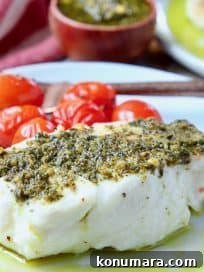
Baked Chilean Sea Bass with Pesto

Blackened Mahi Mahi Fish Tacos

Chipotle Honey Glazed Salmon Tacos
Salmon Marinade
A simple, flavorful marinade that doubles as a glaze for perfectly caramelized baked or grilled salmon.
Servings: 4
Prep Time: 5 minutes
Marinade Time: 30 minutes (up to 6 hours)
Cook Time: 10–12 minutes (plus broil)
Total Time: About 45 minutes
Author: Whitney Bond
Ingredients
- 1/4 cup olive oil
- 1/4 cup low-sodium soy sauce (or coconut aminos)
- 1/4 cup balsamic vinegar
- 1 tablespoon Dijon mustard
- 1 tablespoon honey
- 1 teaspoon Italian seasoning
- 4 salmon fillets, 6–8 ounces each
Instructions
- Combine the oil, soy sauce, balsamic vinegar, mustard, honey, and Italian seasoning.
- Add salmon and coat. Refrigerate 30 minutes to 6 hours.
- Remove fillets and place on a parchment-lined baking sheet.
- Boil the leftover marinade, then simmer 5–7 minutes until it becomes a glaze. Cool slightly.
- Brush glaze over salmon and bake at 425°F for 10 minutes. Broil 1–2 minutes until the glaze bubbles and browns.
Notes
- For soy-free or gluten-free, use coconut aminos and add 1/2 teaspoon salt to the marinade.
- Adjust cooking times for fillet thickness. Salmon is done when it flakes easily with a fork.
Nutrition Facts (approx. per serving)
Calories: 403 kcal • Carbohydrates: 8 g • Protein: 35 g • Fat: 24 g • Sodium: 694 mg