
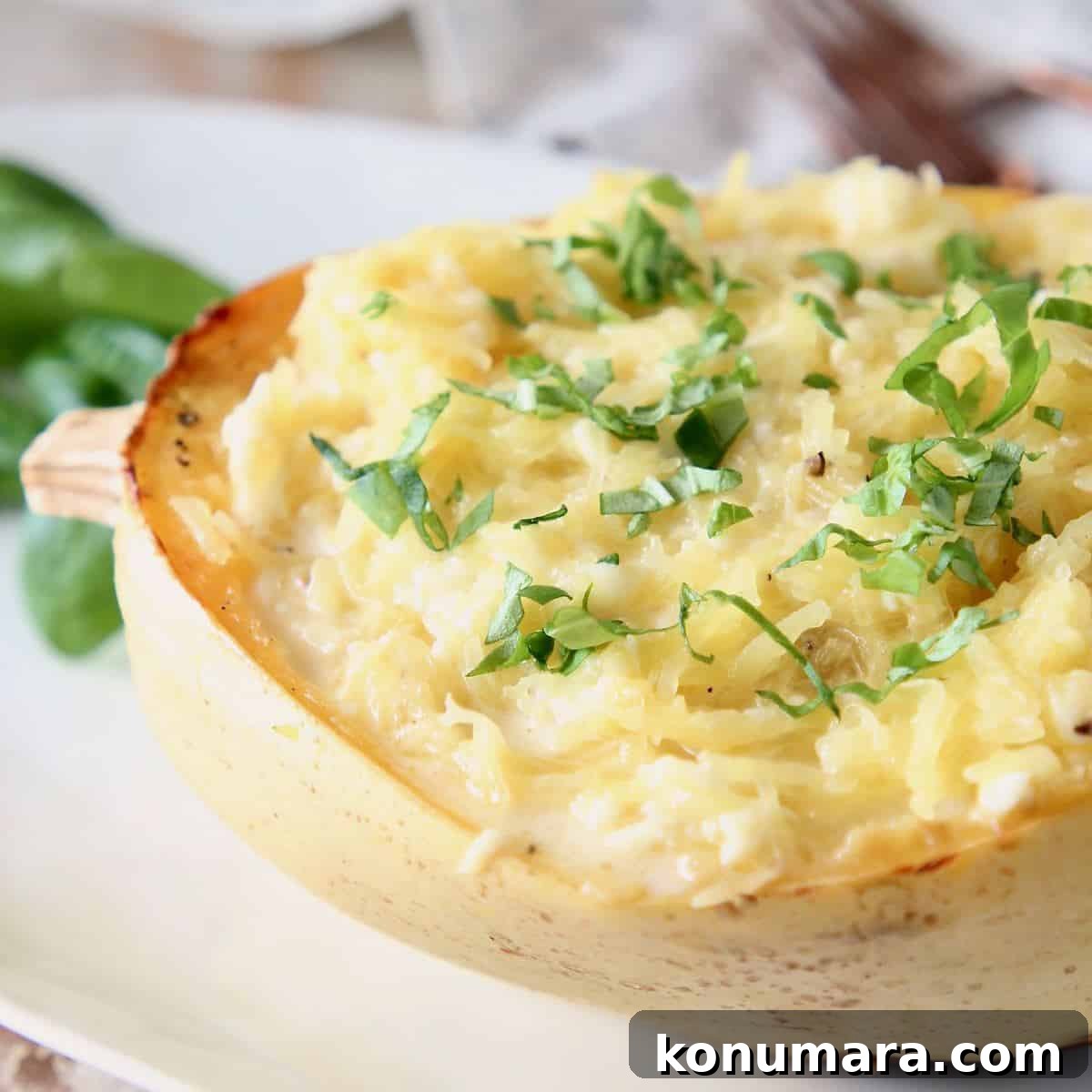
Spaghetti Squash Mac and Cheese offers a lighter take on a classic comfort food. This gluten-free, low-carb, vegetarian-friendly dish works well as a side or a main course — ideal for Meatless Monday or as a healthier Thanksgiving side.
This version delivers creamy, cheesy flavor with far fewer calories and less fat than traditional macaroni and cheese. It’s lower in sodium and carbohydrates, simple to prepare, and satisfying for anyone looking to enjoy a healthier comfort meal.
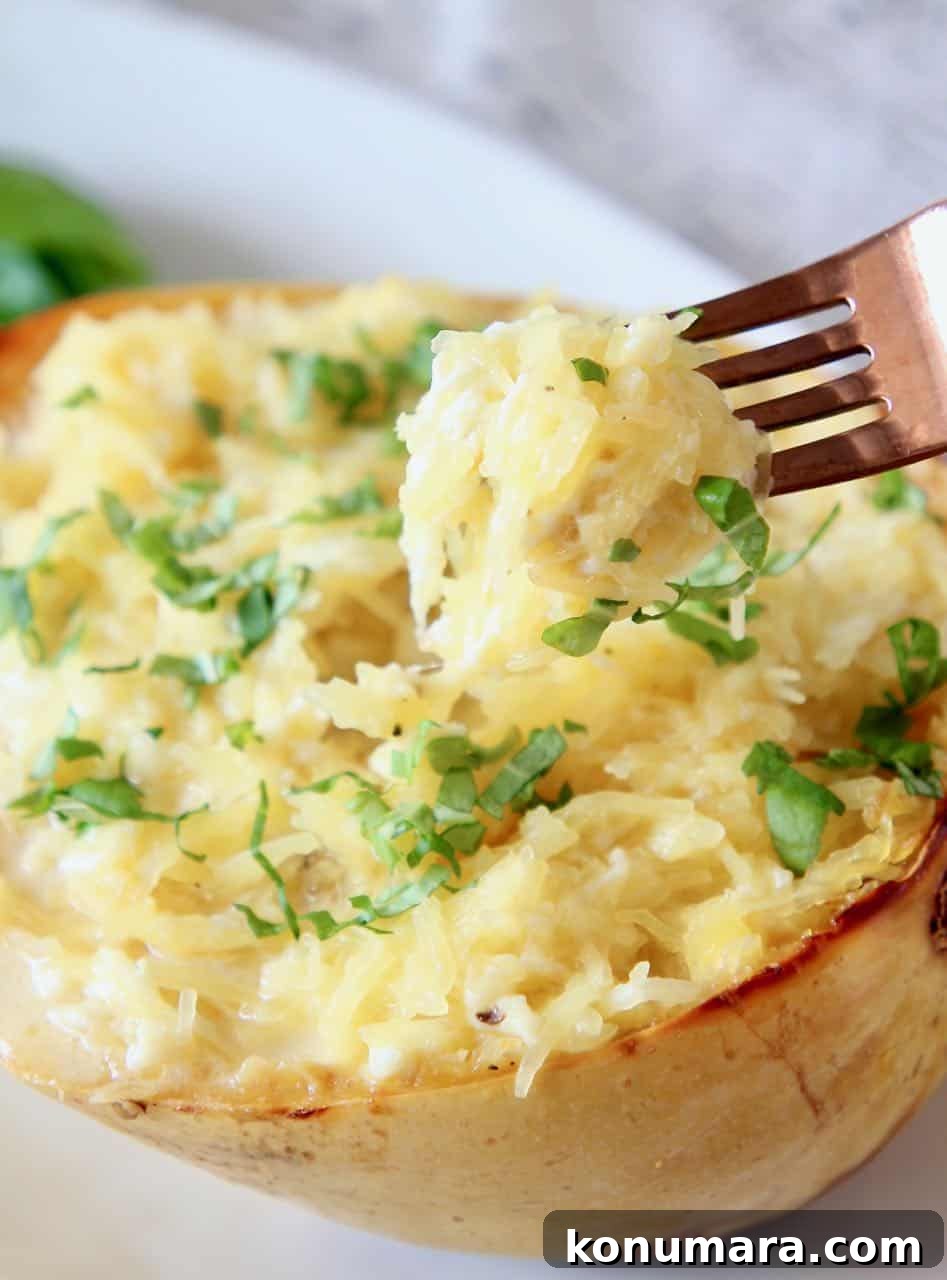
If you love classic mac and cheese but want a lighter option, spaghetti squash is the perfect swap for traditional pasta. It creates tender, noodle-like strands that hold sauce well while dramatically cutting calories and carbs. Combining several lower-fat cheeses keeps the dish creamy without the heaviness of full-fat cheese and béchamel-based recipes.
To give perspective, a typical rich restaurant side of macaroni and cheese can be extremely high in fat, calories, and sodium. By replacing pasta with roasted spaghetti squash and using part-skim and fresh cheeses, this recipe reduces fat and calorie content significantly for a comparable portion size — making it an excellent choice if you want cheesy comfort without overdoing it.
Table of contents
- Step by step instructions
- Frequently asked questions
- Optional additions
- What to serve with it
- More spaghetti squash recipes
Step by step instructions
- Prepare the squash. Slice a large spaghetti squash in half lengthwise. Remove the seeds with a fork. Brush the cut surfaces with olive oil and season lightly with kosher salt and black pepper.
- Roast. Place the squash halves cut-side down on a parchment-lined baking sheet. Roast in a 400°F (200°C) oven for about 45 minutes, until the flesh is tender and pulls away into strands.
- Create the noodles. Remove the squash from the oven and use a fork to scrape out the spaghetti-like strands into a large bowl.
- Make the white cheese sauce. In a medium saucepan over medium heat, combine shredded part-skim mozzarella, grated Parmesan, ricotta, and goat cheese. Add the milk and stir constantly until the mixture forms a smooth, creamy sauce. Keep the heat moderate to avoid separating the cheeses.
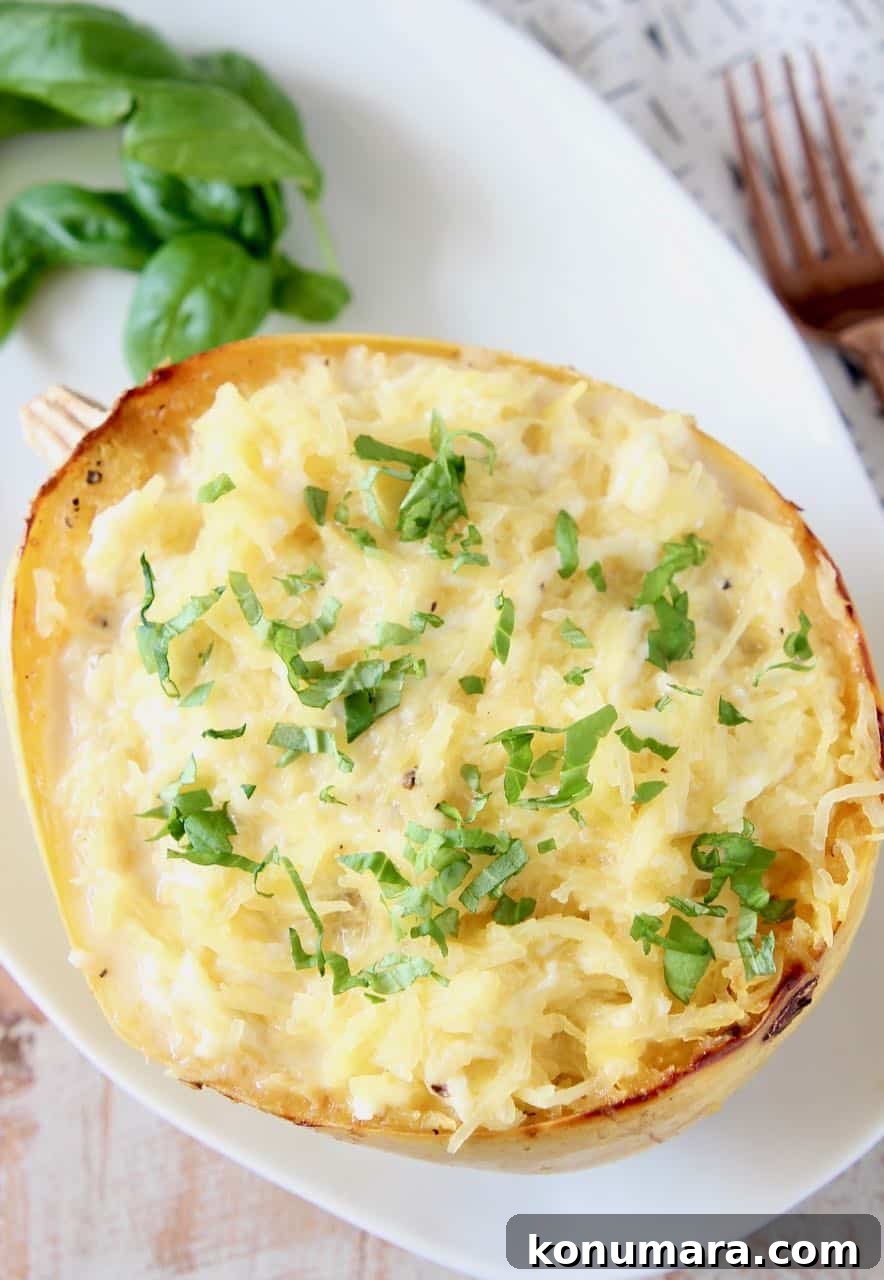
- Combine and finish. Add the roasted spaghetti squash strands to the cheese sauce and toss gently to coat. Taste and adjust seasoning with salt and pepper. Garnish with fresh chopped basil if desired. Serve in bowls or spoon the mixture back into the cleaned squash shells for an attractive presentation.
Frequently asked questions
- Does this recipe make good leftovers? Yes. Stored in an airtight container, leftover spaghetti squash mac and cheese keeps well in the refrigerator for up to five days. The texture softens a bit, but the flavors remain excellent.
- How should I reheat it? Reheat gently: warm the leftovers on the stove over medium heat, stirring frequently for 5–10 minutes until heated through. Alternatively, place in an oven-safe dish, cover with foil, and bake at 350°F (175°C) for about 15 minutes. For a quick option, microwave in a covered bowl for 1–2 minutes, stirring halfway.
- What’s an easy way to cut a raw spaghetti squash? If you find raw squash difficult to slice, prick several holes in the skin and microwave it for a few minutes to soften slightly before cutting. An electric knife can also make slicing safer and easier.
Optional additions
This dish adapts well to extra vegetables and proteins. Roasted broccoli, cauliflower, or sautéed mushrooms add color, texture, and nutrition. To roast vegetables with the squash, toss them in olive oil, season with salt and pepper, and place them on the baking sheet for the last 20 minutes of cooking time. Fold the roasted vegetables into the cheese sauce along with the squash.
For added protein, grilled or shredded chicken pairs nicely—seasoned or marinated chicken brings savory depth and makes the dish more substantial as an entrée.
What to serve with it
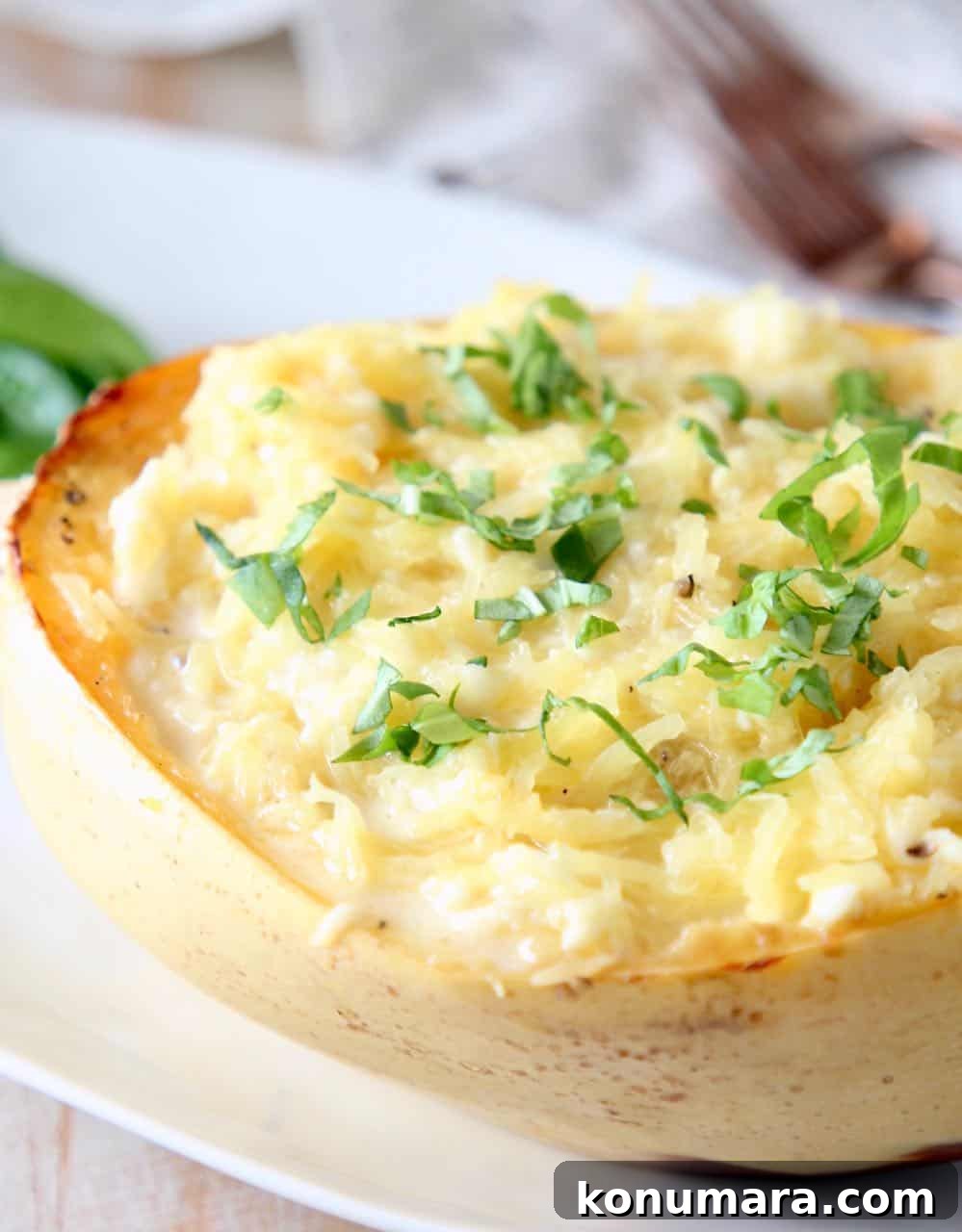
Spaghetti Squash Mac and Cheese works as either a side or a main. When served as a side, try pairing it with hearty proteins such as marinated sirloin steak, lemon rosemary chicken, smoked pulled pork, or oven-roasted turkey breast. Each of these mains complements the creamy, mellow flavors of the squash and cheese.
More spaghetti squash recipes
If you enjoy the versatility and nutrition of spaghetti squash, try variations like turkey chili with spaghetti squash, vegan Mexican stuffed squash, cilantro-lime shrimp with spaghetti squash, green chili chicken spaghetti squash, spinach artichoke stuffed squash, or a fresh Caprese-style squash bowl.
Spaghetti Squash Mac and Cheese
Summary: A lighter, gluten-free version of mac and cheese that uses roasted spaghetti squash and a creamy white cheese sauce. Low-carb, vegetarian-friendly, and easy to prepare.
Servings: 5 cups
Prep Time: 15 minutes
Cook Time: 45 minutes
Total Time: 1 hour
Author: Whitney Bond
Ingredients
- 1 spaghetti squash (about 4–5 lbs)
- 1 tbsp olive oil
- 1 tsp black pepper
- 1 tsp kosher salt
- 1 cup part-skim mozzarella, shredded
- 1/4 cup Parmesan, grated
- 1/4 cup ricotta cheese
- 1/2 cup goat cheese
- 1/4 cup milk
- 1 tbsp fresh basil leaves, chopped (optional)
Instructions
- Preheat the oven to 400°F (200°C).
- Slice the spaghetti squash lengthwise and remove the seeds.
- Brush the cut sides with olive oil and season with salt and pepper.
- Place cut-side down on a parchment-lined baking sheet and roast for 45 minutes, or until tender.
- Remove squash and scrape the strands into a large bowl.
- In a saucepan over medium heat, combine mozzarella, Parmesan, ricotta, and goat cheese. Add milk and stir until smooth and creamy.
- Toss the roasted squash strands with the cheese sauce until evenly coated.
- Finish with salt, pepper, and fresh basil if desired. Serve warm.
Notes
- An electric knife or softening the squash briefly in the microwave can make slicing easier and safer.
- To add vegetables, roast broccoli or cauliflower on the same sheet for the last 20 minutes and fold them into the sauce.
Nutrition Facts (per cup)
Calories: ~251 kcal | Carbs: ~15 g | Protein: ~14 g | Fat: ~16 g | Sodium: ~816 mg