
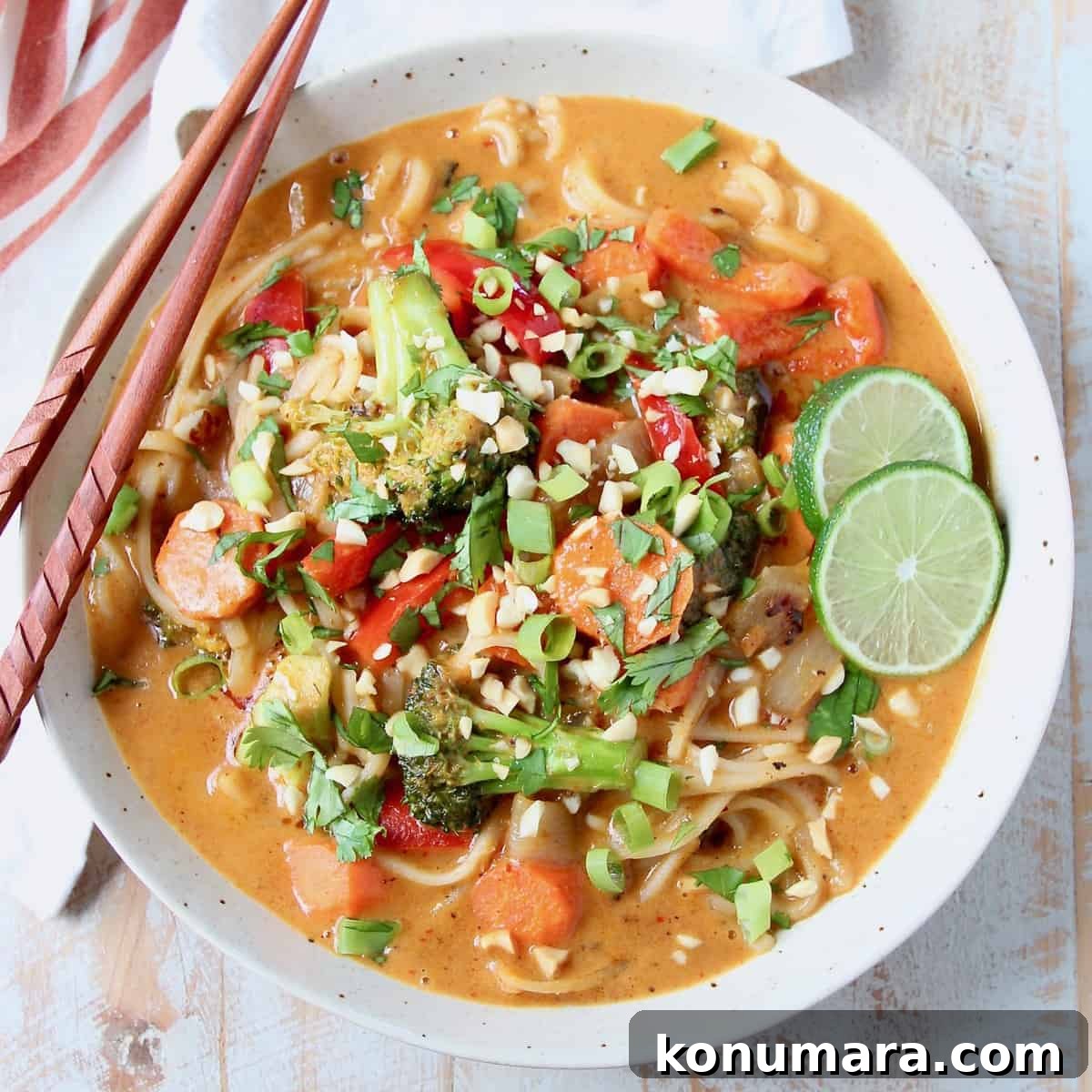
Massaman curry is a rich, mildly sweet Thai curry that makes a wonderful sauce for rice noodles and vegetables. This vegetarian, gluten-free-friendly version can be prepared in about 29 minutes and relies on a good prepared curry paste to keep the recipe quick and simple.
Using a ready-made massaman curry paste shortens the prep time dramatically while still delivering authentic flavor. Below you’ll find ingredient notes, step-by-step instructions, serving suggestions and optional variations so you can customize the dish to your taste.
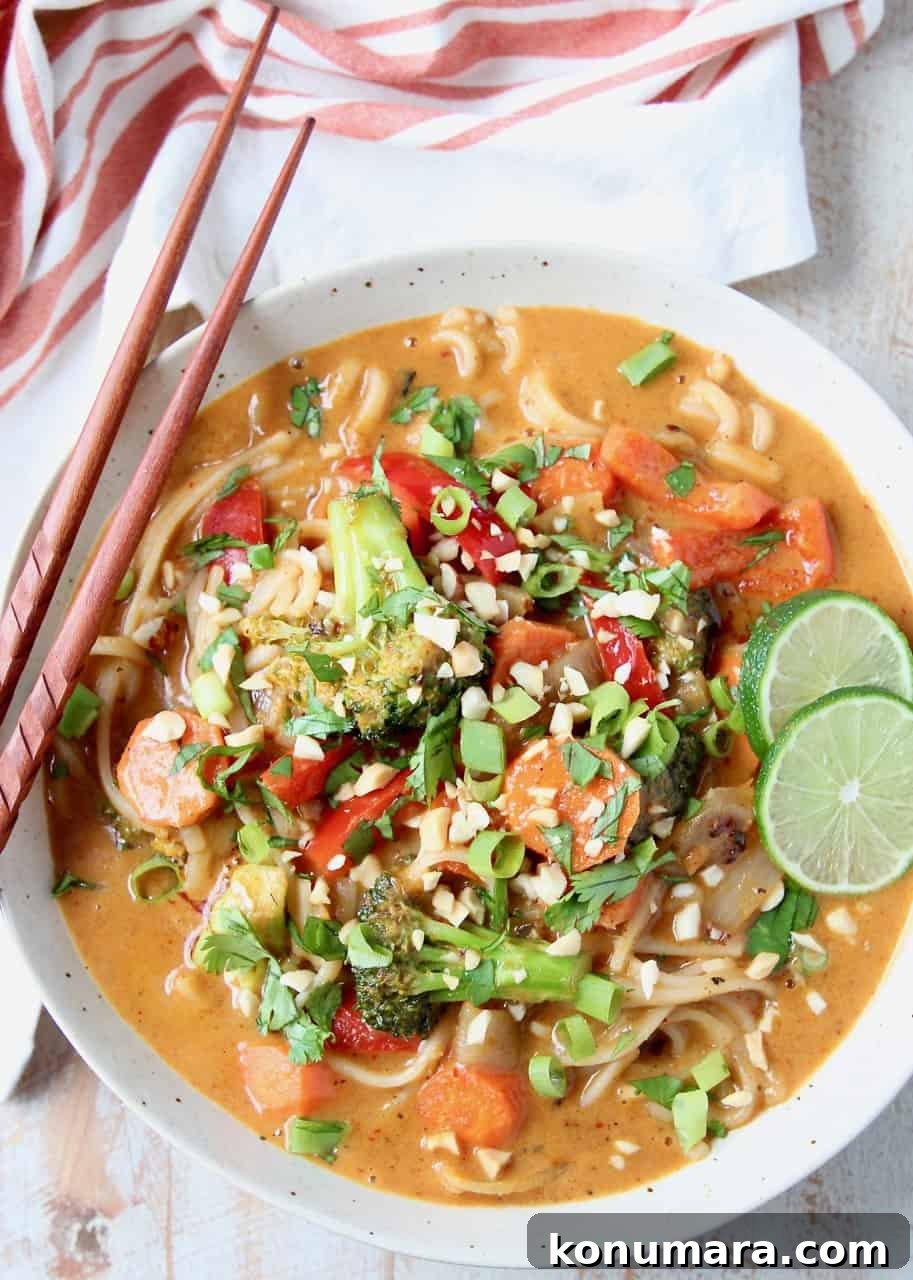
When I can’t decide between noodles and curry at a Thai restaurant, I often order both—so combining them into a single dish made perfect sense. This recipe creates a comforting massaman curry noodle bowl with tender vegetables and a creamy, balanced sauce. While the version below is vegetarian, you can easily add chicken, shrimp or beef if you prefer. The real highlight is the curry sauce: by starting with a high-quality prepared paste, you get complex flavor without hours of prep.
Two good options for prepared massaman curry paste are Maesri (vegetarian, without shrimp paste) and Mae Ploy (traditional flavor that may include shrimp paste). If you are keeping this dish vegetarian or vegan, choose a paste that does not contain shrimp paste or anchovy. Always check labels if you need gluten-free or allergen-free options.
Massaman curry is typically mild and slightly sweet, with warming spices and a creamy coconut base. This recipe balances the sauce with tang from lime or tamarind, salt from soy sauce (or tamari for gluten-free), and a touch of sweetness. It comes together in under 30 minutes—perfect for a weeknight dinner that feels special without extra effort.
Table of contents
- What is massaman curry?
- How to make it
- Is it gluten free?
- What to serve with it
- More Thai recipes to try
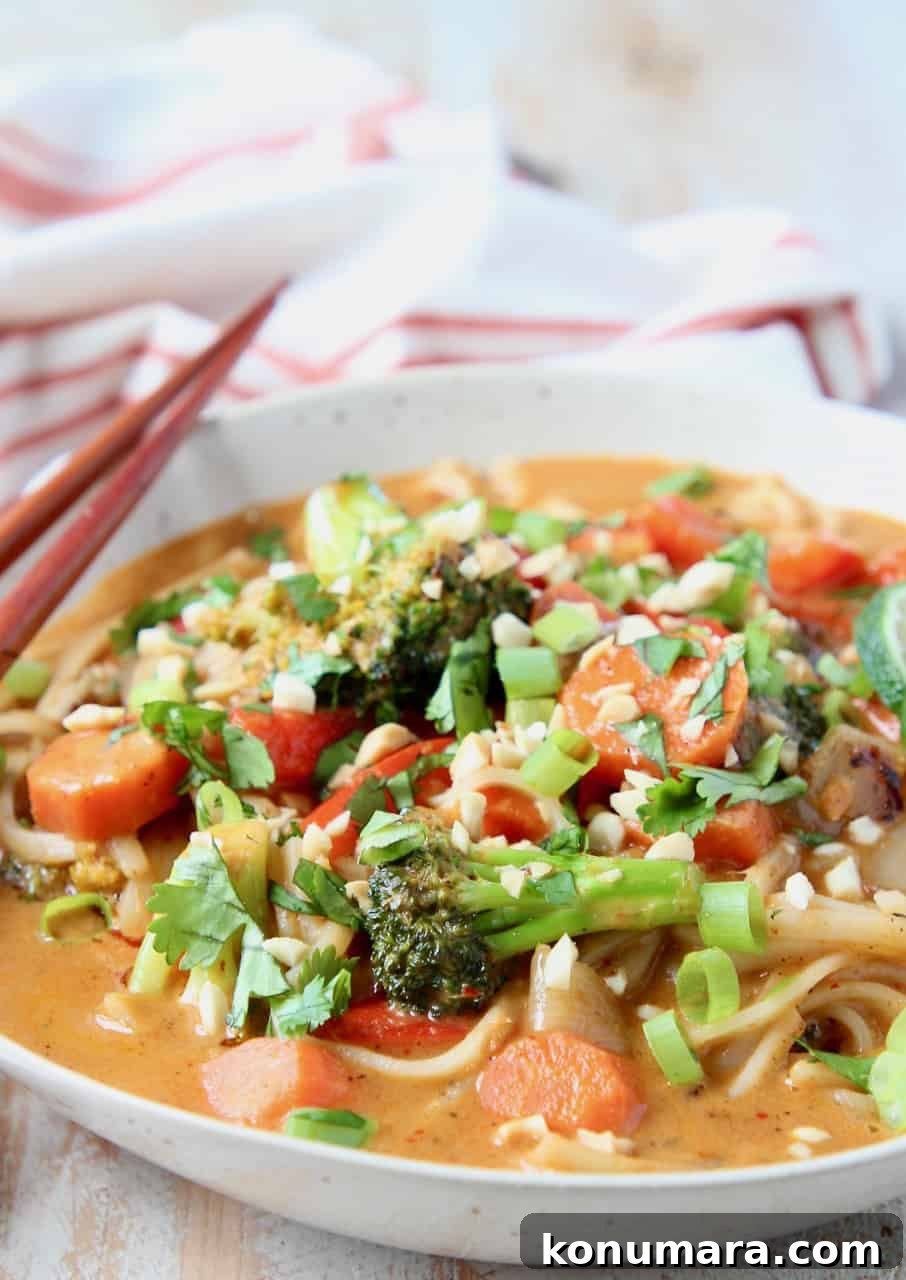
What is massaman curry?
Massaman curry is a Thai curry with clear influences from Indian spice blends. It typically features a red curry base—dried chilies, garlic, galangal and lemongrass—combined with warm Indian spices like coriander, cumin, cinnamon and cardamom. The result is a complex, aromatic curry that tends to be milder and slightly sweeter than other Thai curries.
Traditional massaman is made with meat or vegetables simmered in the curry sauce and served over jasmine rice. The sauce is rounded with coconut milk and often balanced with fish sauce or soy sauce, tamarind or lime juice, and some sugar. Roasted peanuts or peanut butter are also common additions, contributing texture and a nutty richness.
How to make it
- Heat 1 tablespoon of oil in a large skillet or wok over medium-high heat. Coconut oil adds a nice flavor; olive or avocado oil work as well.
- Add 1 cup diced onion and 1/3 cup massaman curry paste. Sauté 2–3 minutes to bloom the spices and deepen the paste’s aroma.
- Add about 1 cup each of broccoli florets, diced carrots and sliced bell pepper. Sauté for 3 minutes to begin softening the vegetables. You can substitute cauliflower, green beans, sugar snap peas or eggplant based on preference.
- Pour in a 15-ounce can of unsweetened full-fat coconut milk, then stir in 2 tablespoons sugar, 2 tablespoons peanut butter and 1 teaspoon soy sauce (or tamari). Bring the mixture to a gentle simmer.
- Reduce heat and simmer the vegetables in the curry for 10–12 minutes, until just tender. Using full-fat coconut milk gives the sauce the creamiest texture.
- While the curry simmers, prepare 8 ounces rice noodles: place them in a large pot of boiling water, then remove from heat and let them soak for 8–10 minutes until tender. Reserve 1 cup of the noodle soaking water before draining.
- Add 1 cup of the reserved noodle water to the curry to loosen the sauce if needed, then drain the noodles and add them to the skillet. Toss to combine and finish with 2 teaspoons lime juice.
- Serve the massaman curry noodles in bowls and garnish with chopped fresh cilantro, sliced green onions and chopped peanuts. Offer lime wedges alongside for extra brightness.
Is it gluten free?
This massaman curry noodle recipe can be made gluten free. Make sure to use a massaman curry paste and soy sauce (or tamari) that are labeled gluten free. Choose rice noodles, which are naturally gluten free, and verify that any packaged ingredients you buy do not contain hidden gluten.
What to serve with it
Massaman curry pairs beautifully with soft flatbreads such as roti or with steamed jasmine rice. It’s also delicious as a noodle bowl like the version here. For a full Thai-style meal, start with a fresh salad like green papaya salad or a light soup such as Tom Kha. Simple, crisp sides help balance the curry’s richness.
If you’d like to add protein, stir in cooked chicken, shrimp or thinly sliced beef toward the end of the simmer time so it heats through without overcooking. Tofu is an easy vegetarian option—pan-fry or bake it first for a firmer texture.
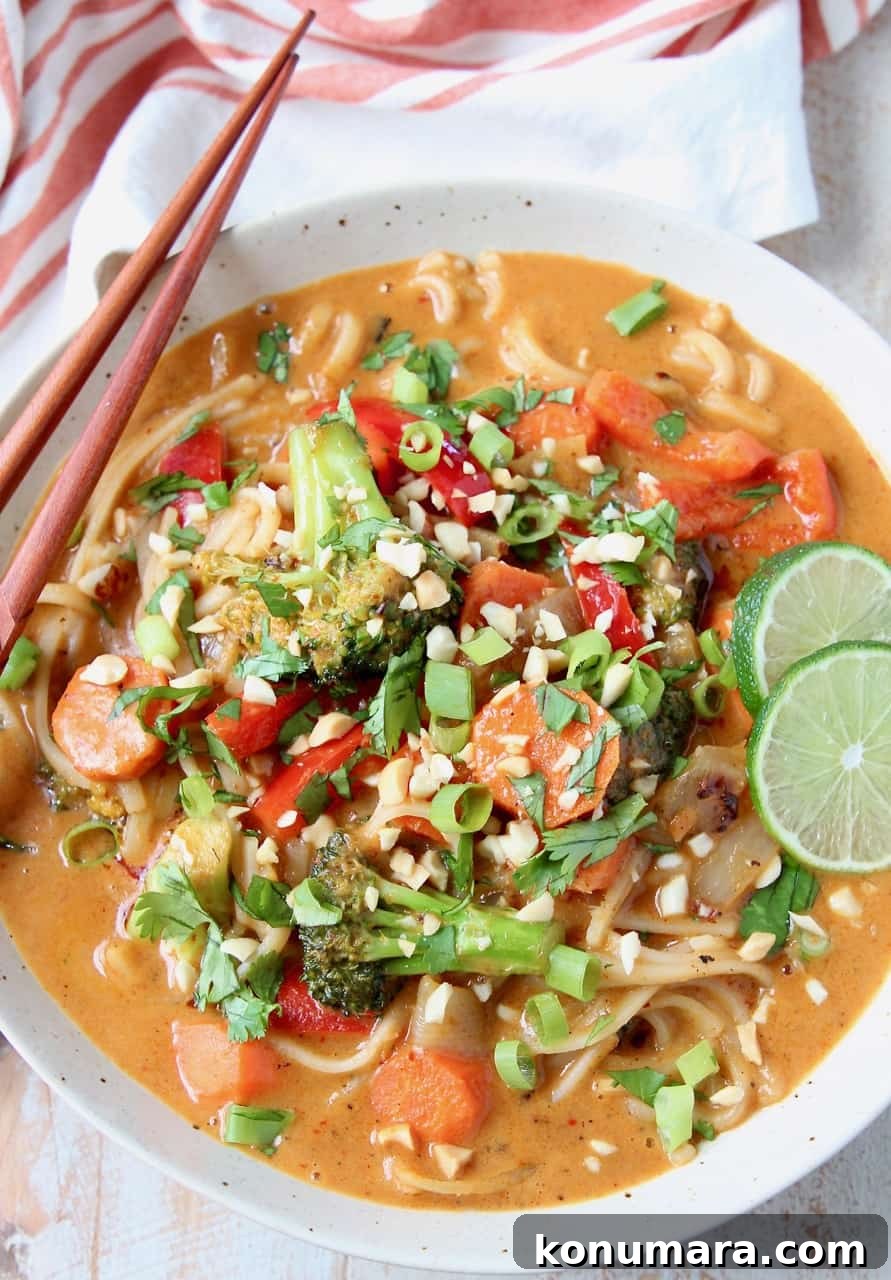
More Thai recipes to try
For other simple, flavorful Thai recipes, consider classic noodle and sauce dishes like drunken noodles, peanut sauce for dipping or stir-frying, and a quick vegetarian pad Thai. Thai yellow curry and coconut-based soups with potstickers are also great options for weeknight meals.
Vegetarian Massaman Curry Noodles
Ingredients
- 1 tbsp coconut oil (or olive/avocado oil)
- 1 cup onion, large dice
- 1/3 cup massaman curry paste (choose vegetarian paste if needed)
- 1 cup broccoli florets
- 1 cup carrots, large dice
- 1 cup bell pepper, sliced
- 15 oz can unsweetened full-fat coconut milk
- 2 tbsp sugar
- 2 tbsp peanut butter
- 1 tsp soy sauce (use tamari for gluten-free)
- 2 tsp lime juice
- 8 oz rice noodles
- 1 cup cooking water reserved from the rice noodles
Toppings
- 1/4 cup fresh cilantro, chopped
- 1/4 cup green onions, chopped
- 1/4 cup peanuts, chopped
- 1 lime, sliced into wedges
Instructions
- Bring a large pot of water to a boil for the rice noodles.
- Heat the coconut oil in a large skillet or wok over medium-high heat.
- Add the diced onion and massaman curry paste and sauté for 2–3 minutes to release the paste’s aroma.
- Add the broccoli, carrots and bell pepper and sauté for 3 minutes.
- Pour in the coconut milk and stir in the sugar, peanut butter and soy sauce. Bring the sauce to a simmer.
- Reduce heat and simmer the vegetables for 10–12 minutes until tender.
- While the curry simmers, add the rice noodles to the boiling water, remove from heat, and let them soak for 8–10 minutes until tender. Reserve 1 cup of the noodle water before draining.
- Add the reserved noodle water to the curry if the sauce needs loosening. Drain the noodles and add them to the skillet, tossing to coat.
- Stir in the lime juice, then transfer the curry noodles to serving bowls and top with cilantro, green onions and chopped peanuts.
- Serve with lime wedges for squeezing over each portion.
Notes
- Gluten Free: Use a gluten-free curry paste and tamari in place of soy sauce if needed. Verify labels on all packaged ingredients.
- Vegan: Choose a curry paste that does not contain shrimp paste or fish products to keep the dish vegan.
- Vegetable substitutions: Swap in cauliflower, sugar snap peas, green beans or eggplant to vary the vegetables based on season and preference.
- Protein options: Add cooked chicken, shrimp, beef or firm tofu to increase the protein content. Add pre-cooked proteins at the end of simmering to warm through.
- Storage: Store leftovers in an airtight container in the refrigerator for a few days. Reheat gently on the stove, adding a splash of water or coconut milk if the sauce has thickened.
Nutrition Facts
Calories: 681 kcal (34%)
Carbohydrates: 76 g (25%)
Protein: 11 g (22%)
Fat: 40 g (62%)
Saturated Fat: 28 g (140%)
Sodium: 276 mg (12%)
Fiber: 9 g (36%)
Sugar: 17 g (19%)
Vitamin A: 9827 IU (197%)
Vitamin C: 83 mg (101%)
Calcium: 107 mg (11%)
Iron: 4 mg (22%)